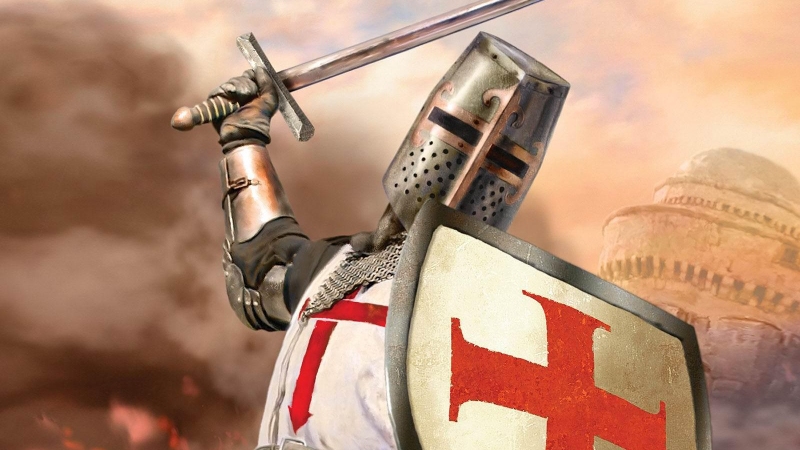

THE CHURCH KILLED
Christians today are blaming the Islams for their killings and forceful ways they react with people of the opposite religions and beliefs, however, I wrote this article to equally point out to the Christians that whatever the Muslims are doing today, they learnt it from Christianity, because Christianity killed thousands, mothers and children to spread their religion, and they secretly still do.

ISSUE 13
THE CHURCH REALLY DID KILLED: Faith Took Up the Sword and Called the Bloodshed Holy
Written By Knight Fredel
Welcome to another edition of Awake Afraka Magazine, where we do not decorate inherited ideas merely because they arrived before us wearing religious garments. We examine them. We turn them toward the Light. And when necessary, we ask the uncomfortable questions that polite society quietly hides beneath the church carpet.
The purpose of this article is not to mock Christianity, abuse Christians or promote Islam. I am not a Muslim missionary waiting behind the paragraph with a conversion form. I am a non-religious mystic whose concern is the awakening of the human mind and the evolution of the Soul.
My objective is to disturb lazy conclusions. Not to brainwash you, for a washed brain is still a brain somebody else has handled, but to encourage you to think independently, investigate history and view inherited beliefs from a higher perspective.
In our society and across social media, many Christians speak about terrorism, suicide bombing, persecution, forced marriage and the mistreatment of girls as though violence entered human history wearing an Islamic name tag. These acts are evil and must be condemned without hesitation. A bomb does not become less wicked because somebody recites scripture before pressing the button. Sexual violence does not become sacred because a religious authority has found a verse, tradition or political excuse with which to defend it.
But Islam as a whole is not identical to the terrorists who invoke it. Muslims are not one mind, one culture or one political programme. Indeed, many victims of extremist organizations are themselves Muslims. In the same way, Christianity is not identical to the inquisitor, crusader, slaveholder, colonial administrator or violent preacher who used its language. Terrorism must be named by the acts, networks and ideologies responsible for it—not poured over an entire religion containing billions of different human beings.
The point of this lecture is therefore not that Christianity was wicked and Islam is innocent. History will not cooperate with that childish arrangement. Christian empires have killed. Muslim empires have killed. Secular governments have killed. Traditional societies have killed. The human ego has never required a particular scripture before becoming dangerous; scripture simply gives it better vocabulary.
My question is narrower and sharper: when Christians condemn violence committed in the name of Islam, are they willing to examine the violence committed in the name of Christianity? Can they denounce the suicide bomber and still remember the crusader? Can they oppose forced conversion in one religion while admitting that Christian institutions once made conversion a matter of survival? Can they grieve for a church attacked today while also grieving for the mosque, shrine, village, library and human body destroyed yesterday beneath a cross?
Past Christian violence does not excuse present Islamist violence. That would be moral nonsense. If one criminal says, “But another person killed before me,” the judge does not congratulate him for historical awareness. Yet present-day terrorism cannot be used to erase the Church’s violent past either. Two bloodstained hands do not wash each other clean by pointing.
This article concerns what happens when a spiritual movement becomes an institution, the institution marries political power, political power acquires soldiers, and the soldiers are promised heaven for doing what ordinary conscience would call murder. That pattern belongs to no single religion. It is the ancient disease of certainty armed with authority.
Now that this is clear, sit calmly, take a deep breath and continue. History is about to enter the room, and unlike a motivational speaker, she has brought documents.
1. BEFORE YOU POINT: RELIGION AND THE MIRROR OF VIOLENCE
People often speak of religions as though religions walk around independently committing crimes. We say Christianity killed, Islam attacked, the Church conquered, the mosque oppressed. Yet institutions act through human beings. A sacred text does not hold a sword by itself. A building does not organize an army. Human beings interpret, command, obey, finance and strike.
This does not remove institutional responsibility. When religious leaders authorize violence, bless conquest, protect abusers, punish dissent or present political expansion as Divine duty, the institution becomes more than an innocent spectator. Its theology supplies moral permission. Its rituals calm the conscience. Its symbols turn ordinary aggression into sacred performance.
The most dangerous person is not always the one who knows he is doing evil. Sometimes it is the person who is convinced that evil has become holy because God has joined his political party.
Christianity began as a persecuted movement within the Roman world. Its earliest followers possessed no imperial army and often suffered imprisonment, exclusion and execution. The central figure of their faith was killed by state power. Yet centuries later, Christianity became entangled with the very machinery that had once persecuted Christians. When the cross entered the palace, it gained protection, wealth and influence—but it also inherited the palace’s appetite for control.
This transformation did not happen in one afternoon. Christianity was never one perfectly united institution. Bishops disagreed. Churches divided. Emperors intervened. Doctrines were debated. Communities followed different traditions. But as certain forms of Christianity became legally favoured and politically powerful, the meaning of heresy changed. A theological disagreement could now become a crime against social order.
Once a religion believes it possesses the only road to salvation, coercion can disguise itself as compassion. The persecutor says, “I punish your body to rescue your Soul.” He confiscates your property for your eternal good. He silences your ideas because freedom might lead you into error. He burns your books to protect society from dangerous thoughts. If necessary, he burns you also—apparently because Divine Love has a very strict enforcement department.
The same psychology appears in modern extremism. The fanatic does not see the victim as a complete human being. He sees an unbeliever, heretic, contaminant, enemy of God or obstacle to a promised future. A label replaces a face. Once the face disappears, cruelty becomes easier.
This is why Christians cannot simply say, “Those violent crusaders were not true Christians,” while insisting that every terrorist who uses Islamic language reveals the true character of Islam. That is not historical reasoning. It is religious public relations. If violent Muslims automatically define Islam, then violent Christians must automatically define Christianity. If violent Christians can be separated from the deepest teachings of Jesus, violent Muslims can also be distinguished from the everyday faith of Muslims who reject terrorism.
The fair position is to examine both the teaching and its historical use. What does a tradition say about human dignity, enemies, conversion, women, power and war? How have believers interpreted those teachings? Which interpretations became institutions? Who benefited? Who suffered? And when harm was done, did the community repent—or merely edit the family album?
Jesus is remembered as teaching love of neighbour, mercy, forgiveness and even love of enemies. These principles stand in direct tension with forced conversion, torture and massacre. Therefore the Christian should not fear Church history. He should judge the institution by the light of the Master it claimed to serve.
The Muslim should do the same within Islam. No community receives spiritual exemption from self-examination. If a teaching is used to justify terrorism, enslavement, forced marriage or the abuse of women and children, believers must confront that interpretation rather than accuse every critic of hatred. Defending a religion must never require defending cruelty.
Tolerance is not silence before evil. It is the ability to condemn an act without condemning an entire population. It distinguishes the terrorist from the Muslim, the inquisitor from the Christian, the fanatic from the sincere believer and the institution from the Infinite Reality it claims to represent.
When we fail to make these distinctions, religion becomes tribal identity. My group’s violence becomes a regrettable misunderstanding; your group’s violence becomes proof of permanent wickedness. My scripture requires context; yours apparently arrived without any. My ancestors were complicated people; yours were demons who woke each morning looking for civilizations to ruin.
This is not enlightenment. It is prejudice with footnotes.
2. WHEN THE ALTAR FEARED THE TELESCOPE

The history of Christianity and science is not a simple war between intelligent scientists and ignorant priests. Christians helped preserve manuscripts, establish schools and universities, study Nature and develop scientific thought. Many scientists were religious, and many clergy contributed to astronomy, mathematics, medicine and philosophy.
Yet Church authorities also censored ideas, prohibited books and punished thinkers when knowledge appeared to threaten doctrine or institutional power. We do not need to invent executions to prove this. The documented cases are serious enough.
Nicolaus Copernicus proposed that Earth moves and that the planets orbit the Sun. But he was not killed by the Church. He was a Catholic canon and died in 1543 after illness, around the time his great work, On the Revolutions of the Heavenly Spheres, was published. The Catholic Church did not formally suspend the book until 1616, more than seventy years after his death, when heliocentrism became entangled with the Galileo controversy.
Copernicus also did not prove that Earth was spherical against a universal Christian belief in a flat Earth. Educated medieval Europeans generally knew Earth was spherical. His revolutionary contribution concerned Earth’s movement and the arrangement of the heavens, not the invention of planetary roundness.
This correction matters. If we say the Church murdered Copernicus, a historian can dismiss the accusation in one sentence and ignore the genuine censorship that followed. False evidence does not strengthen truth; it gives falsehood a place to hide.
Galileo Galilei later used an improved telescope to observe the heavens. He did not invent the first telescope; versions had appeared in the Netherlands before he constructed his own. His achievement was to improve the instrument and direct it toward the sky with extraordinary scientific purpose. He observed mountains on the Moon, phases of Venus and moons orbiting Jupiter—evidence that challenged the simple picture in which every heavenly object circled Earth.
Galileo argued for the Copernican system and entered a complicated conflict involving scientific evidence, biblical interpretation, personal rivalry and Church authority. In 1633, the Roman Inquisition found him strongly suspected of heresy and forced him to recant. His Dialogue Concerning the Two Chief World Systems was prohibited. His sentence was imprisonment, soon commuted to house arrest, under which he remained until his natural death in 1642.
He was not assassinated by the Church, but this does not make the affair harmless. An elderly scholar was interrogated, threatened with severe consequences, compelled to deny conclusions he believed true and forbidden full intellectual freedom because an institution guarded an approved cosmology. The Church did not need to kill Galileo’s body to demonstrate its power. It attempted to discipline his voice.
The tragedy was not merely that Church officials made a scientific error. Every age makes errors. The deeper tragedy was the belief that authority could settle a question about Nature by commanding evidence to behave. The planets did not stop moving because a court disliked the arrangement. Jupiter’s moons did not apply for ecclesiastical permission before completing their orbits.
Isaac Newton was also not killed by the Church. He died in 1727 at the age of eighty-four after becoming president of the Royal Society, Master of the Royal Mint, a knight and one of Europe’s most celebrated intellectual figures. He studied alchemy extensively and held private theological views that departed from orthodox Trinitarian Christianity. Much of that work remained unpublished during his lifetime, partly because alchemy was secretive by nature and his theology could have endangered his Cambridge position.
Newton demonstrates that the border between scientist, theologian, mystic and alchemist was once more porous than modern textbooks suggest. But we should not turn every scientist into a hidden initiate merely to make mysticism look impressive. Albert Einstein, for example, was not an alchemist hiding beneath physics. His work transformed modern understanding of space, time, energy and gravity through theoretical physics. The name is Albert, not “Albeit”—although even great men have been forced to endure creative spelling after death.
Alchemy deserves serious treatment without fictional ancestry. It combined laboratory practice, philosophy, metallurgy, medicine, symbolism and spiritual transformation in different periods and cultures. Some alchemical experiments contributed to techniques later used in chemistry. Other claims were symbolic, speculative or unsuccessful. The spiritual alchemist sought not only to change matter but to refine consciousness—the transformation of the base personality into a more illuminated being.
The Church’s suspicion of magic, divination, heterodox mysticism and forbidden knowledge did lead to persecution. Yet not every physician was secretly an alchemist, and not every alchemist was condemned to death. History is powerful enough without making everybody wear the same hidden robe.
Joan of Arc offers another genuine case of religious authority used in political violence. She was not the first human being to report visions or inner voices. Visionaries, prophets, mystics and oracles existed long before fifteenth-century France. But Joan’s experiences were extraordinary in their historical effect. She said saints instructed her to support Charles VII and help drive English forces from France.
Captured during the Hundred Years’ War, she was tried in 1431 by a pro-English ecclesiastical court. Her visions, clothing and refusal to submit to the court’s interpretation became part of the prosecution. She was convicted of heresy and burned at the stake. Twenty-five years later, another Church-authorized proceeding nullified the conviction as unjust and procedurally corrupt. Centuries later, the Catholic Church canonized her as a saint.
The same institution that permitted a woman to be burned eventually placed a halo around her memory. History occasionally writes sarcasm without needing my assistance.
Giordano Bruno provides an even clearer example of the Church killing a thinker. Bruno was a Dominican friar, philosopher, esotericist and cosmological speculator who defended an infinite universe and a plurality of worlds while also holding theological positions condemned as heretical. After a lengthy Roman Inquisition trial, he refused full recantation and was burned in Rome in 1600.
It would be inaccurate to say he died only for heliocentrism; the charges involved theology, philosophy, cosmology and religious doctrine. But it is equally dishonest to pretend that burning a philosopher after years of imprisonment has nothing to do with the suppression of thought. The flames did not distinguish neatly between his metaphysics and his astronomy.
So yes, the Church killed. It killed Joan. It killed Bruno. Ecclesiastical courts cooperated in systems that imprisoned, tortured and executed people for heresy. Church authorities prohibited books and attempted to control what could be taught. But Copernicus, Galileo, Newton and Einstein must not be placed on the list of Church assassinations. The truth is not a market where we add famous names to make the stall look full.
The spiritual lesson is larger than Christianity. Any organization—church, mosque, temple, mystery school, government or scientific institution—becomes dangerous when it declares itself incapable of error. Authority without humility fears the independent mind because one honest question can expose the entire stage machinery.
3. THE CROSS, THE SWORD AND THE BUSINESS OF HOLY WAR

The Crusades were not one continuous invasion carried out by a single army with a simple purpose. They were a series of military campaigns shaped by religion, pilgrimage, territory, dynastic ambition, trade, fear, honour, survival and political opportunity. Popes offered spiritual rewards. Kings pursued influence. Nobles sought land or reputation. Ordinary people carried sincere devotion, poverty, desperation and prejudice into the movement.
Complexity, however, does not erase blood.
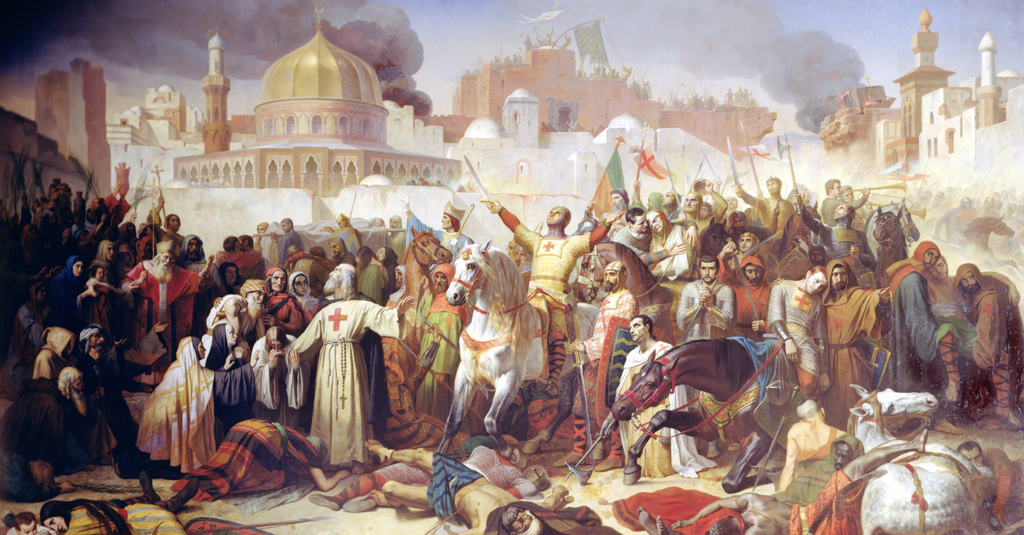
In 1095, Pope Urban II called western Christians to armed action in the East, responding partly to Byzantine requests for military assistance and directing energy toward Jerusalem. When crusading forces captured Jerusalem in 1099, Muslim and Jewish inhabitants were massacred. Religious victory entered the city through slaughter, and those responsible understood the conquest through sacred language.
This was not an army of Jesus gently persuading unbelievers with parables. These were military forces carrying crosses, weapons and the belief that war could serve salvation. The symbol of a man executed by empire became an emblem carried by armed men building new states.
The Crusades also turned against other Christians. In 1204, the Fourth Crusade—originally intended for campaigns connected with the Holy Land—ended in the sack of Constantinople, one of the greatest Christian cities in the world. Crusaders looted a Christian capital, desecrated holy places and deepened the division between Latin and Eastern Christianity. Apparently, when debt, strategy and treasure entered the sanctuary, Christian brotherhood became temporarily unavailable.
The Knights Templar were a Catholic military order founded in the crusading world, initially associated with protecting Christian pilgrims and later deeply involved in warfare and finance. Calling every Templar a simple assassin is historically crude. They were monks, soldiers, administrators and participants in a military-religious system. Yet polishing the title does not remove the sword. They fought within campaigns sanctioned through sacred authority.
Nor is there evidence that all crusading treasure was transported into the Vatican, where every stolen African and Eastern secret now waits beneath a dramatic red curtain. The Vatican Library contains an enormous collection of manuscripts acquired through many routes across centuries, and institutions often possess materials shaped by unequal power. But specific claims require specific evidence. Mystery is not a licence to invent an inventory.
The well-documented truth is already disturbing: religious warfare permitted conquest, dispossession, pillage and massacre under the sign of the cross. Papal authorization helped transform violence into penitential duty. A warrior might believe that joining a campaign benefited his Soul. Once heaven becomes part of military compensation, peace has a serious accounting problem.
The Iberian Peninsula presents another history too complicated for slogans. Muslim-ruled societies, Christian kingdoms and Jewish communities lived through centuries of conflict, alliance, exchange, scholarship and shifting power. “The Moors” were not one unchanging group, and medieval Spain was neither a permanent paradise of tolerance nor an endless simple war between two pure civilizations.
When Granada surrendered to Ferdinand and Isabella in 1492, agreements initially promised protections to its Muslim population. Those protections were later undermined. Cardinal Francisco Jiménez de Cisneros pursued aggressive conversion policies, and Arabic books were publicly burned in Granada around 1499–1500, while some medical works were reportedly preserved. Forced conversion, restrictions and rebellion followed.
The popular claim that exactly 80,000 scientific, astrological and agricultural scrolls were burned is not securely established. The number and categories vary wildly in later accounts. We can truthfully say that large numbers of Arabic manuscripts were destroyed as part of an assault upon religion, language and cultural memory. We do not need an impressive round number marching in ceremonial uniform.
Book burning is spiritual violence because memory is part of a people’s life. Destroy a library and you attack conversations across generations. Burn the language, forbid the ritual, rename the sacred places and teach the conquered child that civilization arrived only with the conqueror—then the body may remain alive while ancestral consciousness is placed under arrest.
The Spanish Inquisition and related institutions investigated converts suspected of secretly practising Judaism or Islam, as well as Christians accused of heresy and other forbidden beliefs. Procedures varied across time, and popular culture often exaggerates particular numbers and devices. Yet imprisonment, confiscation, public humiliation, torture and execution were real. The institution made conformity a matter not only of belief but of security, ancestry and social survival.
This is what happens when religion merges with the state’s machinery of punishment. The priest decides what heaven accepts; the government supplies the cell. The doctrine identifies the heretic; the court handles the property. Each side can then pretend the other performed the unpleasant portion.
Muslim empires also expanded through warfare, imposed hierarchies and committed atrocities. Islamic history contains conquest, forced pressure, enslavement, persecution and sectarian violence alongside philosophy, medicine, art, trade, scholarship and periods of coexistence. Christianity contains crusade and charity, inquisition and sanctuary, enslavement and abolition. Human traditions are rarely pure rivers. They carry medicine and poison according to the hands governing the channel.
The honest response is not a competition over whose ancestors spilled more blood. A corpse does not care whether the weapon was carried by a crusader, jihadist, colonial soldier or revolutionary atheist. The Soul sees the same human failure: power without compassion, conviction without humility and identity without recognition of the One Life.
4. HOW DID THE CHURCH ENTER AFURAKA?

The question must first be corrected. Christianity did not enter Africa for the first time with modern European missionaries. Christianity has ancient African roots. Egypt became one of the earliest centres of Christian thought. North Africa produced influential theologians. The kingdom of Aksum adopted Christianity in the fourth century, making Ethiopia home to one of the world’s oldest continuing Christian civilizations. Nubian kingdoms also developed Christian cultures long before Europe’s colonial partition of Africa.
Therefore Christianity in Africa is not simply a white religion imported yesterday. African Christianity existed while several European peoples were still undergoing their own conversion. The Black Christian of Ethiopia does not require permission from a nineteenth-century missionary to claim historical belonging.
But this truth does not absolve European missionary activity during the age of empire.
In many regions, missionaries travelled with or shortly before merchants, soldiers and colonial administrators. They studied African languages and customs, established churches and schools, translated texts, condemned indigenous practices and promoted European moral systems. Some sincerely opposed slave trading, defended African communities, delivered education or medicine and criticized colonial abuse. Others treated African spirituality as darkness, assisted cultural conquest or gave empire a moral vocabulary called “civilization.”
The missionary and colonial officer were not always the same person, but their projects often occupied the same road. The missionary might say, “We have come to save your Soul.” The administrator arrived later to organize the land, labour and taxes. One carried a Bible, another carried a flag, and eventually somebody discovered that both were interested in the same village.
This relationship must be examined without turning every missionary into a nighttime slave kidnapper. There is no evidence that missionaries as a single group secretly selected African scientists and astrologers, abducted their families and tortured wives to obtain advanced knowledge. Enslaved Africans were captured through wars, raids, kidnapping, judicial punishment, debt and markets involving African and foreign actors. They came from diverse occupations and social backgrounds. Many possessed valuable agricultural, metallurgical, artistic, commercial, intellectual and spiritual knowledge, but they were not systematically chosen as a hidden scientific class.
The reality is terrible without the embellishment. European demand transformed human beings into transatlantic commodities on an enormous scale. African rulers, merchants and raiders participated in supplying captives. European traders financed, transported, insured and profited from the system. Colonial racial ideologies later attempted to justify domination by describing Africans as inferior. Christian scripture and institutions were sometimes used to defend slavery; Christian conviction also motivated some abolitionists to oppose it.
History refuses to provide one convenient villain wearing a single uniform.
Africans who sold captives bear moral responsibility. European powers that created vast markets, armed networks, transported millions and built economies upon enslaved labour bear responsibility. Religious institutions that blessed hierarchy, demanded obedience from the enslaved or remained silent bear responsibility. The fact that some Africans cooperated does not erase European power; the fact that Europeans drove the Atlantic system does not erase African agency.
Cause and effect must be studied together. Disunity, warfare, greed and betrayal within African societies created openings that external powers exploited. But this should never become the foolish statement that Africans simply enslaved themselves and Europe happened to provide transportation. A buyer funding a violent market is not an innocent taxi driver.
Mission Christianity also produced deep cultural wounds. Indigenous names were condemned. Deities were translated as demons. Sacred groves were cut or abandoned. Initiatory knowledge was mocked as superstition. European images of holiness entered African homes, while African spiritual forms were presented as evidence of backwardness. The colonized person was encouraged to meet God by first becoming ashamed of his ancestors.
Yet Africans did not remain passive. They translated Christianity into local languages, formed independent churches, reinterpreted scripture, resisted missionary racism and created religious movements shaped by African rhythm, prophecy, healing and community. The imported faith was itself transformed by the people expected merely to receive it.
This complexity matters to Awake Afuraka. Returning to our roots does not require hatred of every Christian or white person. Hatred is another chain, and painting it Black does not turn it into freedom. An awakened African studies history to recover agency, protect culture and rebuild consciousness—not to manufacture a new race of enemies.
If Christianity helps a person become compassionate, disciplined, truthful and useful to humanity, I shall judge the fruit. If it teaches a person to despise his ancestors, threaten questioners, celebrate the suffering of unbelievers and surrender reason to a commercial prophet, I shall also judge the fruit. The label cannot frighten the scale of Ma’at.
The same standard applies to Islam, African traditional systems, mystery orders and every spiritual institution. No robe receives immunity from cause and effect. No scripture cancels conscience. No ancient lineage makes abuse sacred. The Light does not ask which building issued your membership card; it reveals what your actions have become.
So, can Christians stop assigning collective guilt to Muslims for terrorist attacks? Can Muslims confront extremist doctrines and abuses without treating every question as an attack upon Islam? Can both remember that criticizing violence is not hatred of believers? Can religious people finally learn that the Infinite does not require human beings to protect Divine dignity with bombs, swords, threats and social-media curses?
When a Christian sends a death threat to somebody who questions Christianity, he has already defeated his own sermon. When a Muslim threatens violence against a critic in the name of defending God, he has reduced the Almighty to a fragile ruler needing human rage for security. If your God created galaxies but cannot survive an article, perhaps what you are defending is not God. Perhaps it is your ego wearing God’s identity card.
The Church killed. This is historically true when we speak of particular institutions, courts, campaigns and authorities. But the Church also contained people who healed, taught, preserved knowledge, resisted slavery, sheltered the vulnerable and challenged injustice. Islam has produced extremists and peacemakers, conquerors and mystics, rulers and reformers. Human beings keep carrying both darkness and light into the institutions they build.
Therefore, the final lesson is not that Christianity is evil or Islam is good. It is that spirituality becomes dangerous when certainty loses humility and power loses conscience.
Before pointing at another religion, examine your own history.
Before quoting judgment, examine your conduct.
Before defending God, ask whether God requested violence—or whether violence was already inside you looking for a holy excuse.
One finger points outward. Three return toward the hand. The fifth finger stands aside, perhaps wondering why humanity still requires this demonstration.
Let Christians follow the mercy they attribute to Jesus. Let Muslims defend the dignity and compassion they attribute to Allah. Let traditionalists honour the balance of Nature. Let mystics raise consciousness instead of building more intelligent forms of pride.
Nobody wins a holy war. One side merely survives long enough to write the hymn.
May this article become an added Light unto you—not a weapon against your neighbour, but a mirror placed before your own Soul.
MAN, KNOW THYSELF.
AFURAKA, REMEMBER THYSELF.
Best Wishes, with Love and Light.
Written by Knight Fredel © 2019–2026
Editorial reference points
- Copernicus was a Catholic canon who died from illness in 1543; his work was prepared for publication around the time of his death rather than after a Church execution: Vatican Observatory.
- Galileo was tried in 1633 and remained under house arrest until his death in 1642; he was not assassinated: Stanford Encyclopedia of Philosophy and PBS NewsHour.
- Newton lived until 1727, served as president of the Royal Society and pursued scientific, theological and alchemical studies: Isaac Newton Institute for Mathematical Sciences.
- Joan of Arc was executed following a politically entangled ecclesiastical trial; a later proceeding nullified that judgment: History Today.
- Giordano Bruno’s Roman Inquisition trial involved theology, philosophy and cosmology; he was executed in 1600: Stanford Encyclopedia of Philosophy.
- The capture of Jerusalem during the First Crusade in 1099 was followed by a massacre of inhabitants: World History Encyclopedia.
- Scholarship documents the surrender of Granada, the weakening of promised protections and later campaigns of coercive conversion and cultural suppression: Cambridge University Press.
- Christianity had major African centres long before modern European colonial missions; Aksum became one of the earliest Christian states in the fourth century: The Metropolitan Museum of Art.
- Transatlantic captives entered slavery through several processes, including warfare, kidnapping, pawning and judicial sentencing—not through one systematic selection of scientists: UNESCO, Slave Voyages.
- The United Nations emphasizes that terrorism cannot and should not be associated with an entire religion, nationality, civilization or ethnic group: United Nations.








Bravo. This is nice. I love this article.
THANK YOU SHEILA
Well done Sun of the night, keep going and I will keep following…
You are welcome brother, don’t forget to add us your email to our news letters, subscription to news letters are free