
REINCARNATION AND KARMA – From the book, “The Ogbanje Child

ISSUE 018
The Reincarnation and Karmic Principle: The Memory of The Soul and The Justice That Death Cannot Cancel
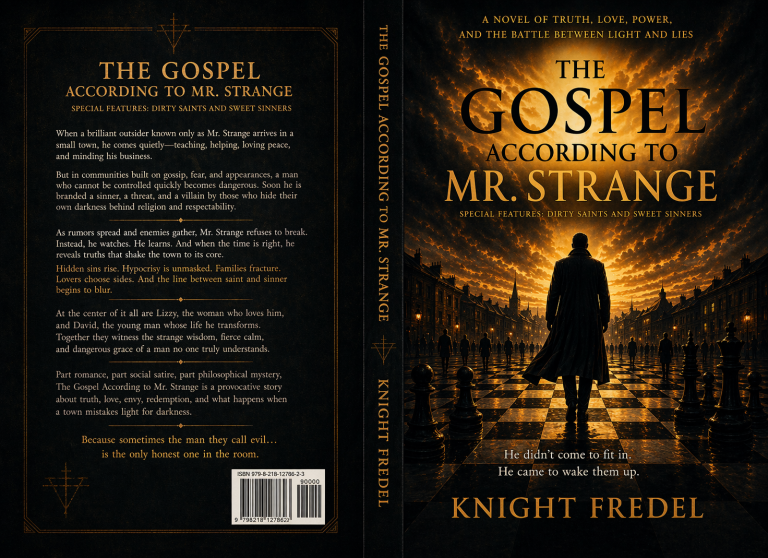
From the book The Ogbanje Child and the Four Elements — By Knight Fredel

Welcome home.
Today, I present to you an expanded chapter from my book, The Ogbanje Child and the Four Elements. This is not merely a discussion about dying and returning. It is an examination of the great Reincarnation Principle: the spiritual law through which consciousness takes form, gathers experience, withdraws from the body, reviews its lessons and, when its education remains incomplete; returns to embodiment once more.
Many people still find it difficult to accept the possibility that a person may die and later return through another body. The difficulty is understandable. Human beings have been trained to identify the Self with the body. We look into a mirror, see flesh, colour, height, age and facial features, and declare, “This is me.” Yet the mystic asks a more disturbing question: Who is the one observing the face in the mirror?
The body changes from childhood to old age. Cells change, beliefs change, desires change and even personality can change. Still, beneath these movements there remains an inward witness; the quiet awareness that says, I am. The mystical teaching identifies that enduring centre with the Soul-consciousness. The body is its garment, its instrument and its temporary house. It is precious and must be protected, but it is not the whole occupant.
We are spiritual beings undergoing physical experience. We are higher consciousness temporarily operating through a dense biological form in the realm commonly described in esoteric language as the third dimension. Birth is therefore not the beginning of the Soul, just as death is not its destruction. Birth is an entrance into a particular classroom. Death is the removal of the uniform after the lesson.
The uniform falls. The student remains.
None of us is necessarily new to this Earth, or, within the wider esoteric view, to other worlds and planes of manifestation. We are Souls moving through cycles of experience, consequence, service and awakening. We are not here simply to eat, acquire property, produce children, quarrel about religion, pay bills and then disappear. If that were the entire cosmic programme, one must admit that the Infinite possesses a rather peculiar sense of project management.
We are here to evolve and enhance our consciousness. To learn what power means, what love demands, what freedom costs and what every choice sets into motion. We are here to become capable of carrying greater Light without turning that Light into ego.
How, then, do we reincarnate? What is karma? Why are the two laws interwoven? What does the Ogbanje mystery reveal about repeated embodiment? Can a Soul incarnate beyond Earth? And what can science honestly say about any of this?
These questions must be handled with courage, depth and precision. Spiritual knowledge should enlarge the mind, not give imagination a laboratory coat and send it outside to impersonate science.
1. THE REINCARNATION PRINCIPLE: THE SOUL DOES NOT BEGIN AT THE CRADLE
The word reincarnation points toward embodiment again: the return of a Soul or centre of consciousness into another physical vehicle. The first taking-on of flesh may be called incarnation; a later return to embodiment is reincarnation. But the principle is much larger than vocabulary.
The Reincarnation Principle teaches that one human lifetime is rarely sufficient for the complete education of a Soul.
Consider the ordinary human life. A person may spend the first twenty years merely learning how to function in society. Another twenty may be consumed by survival, ambition, family responsibilities and mistakes. Wisdom sometimes begins to arise when the body is already losing strength. Just as the student finally discovers which questions matter, the examination supervisor announces that time is up. If the development of consciousness were expected to reach perfection inside that single crowded interval, most Souls would leave the classroom while still searching for a pen.
Reincarnation offers continuity. It does not teach that the same personality returns unchanged, wearing a different face and continuing yesterday's gossip. Personality is shaped by body, family, culture, memory and circumstance. The deeper Soul carries tendencies, impressions, unfinished lessons, developed qualities and karmic causes. A new personality is then formed around these inner seeds.
This is why a child may display an unusual gift without obvious training, a powerful fear without a known present-life origin, a strange attraction toward a culture or place, or moral maturity that seems older than the child's years. Such experiences do not automatically prove reincarnation. Genetics, family influence, imagination, coincidence and hidden learning must be considered. The true mystic does not fear alternative explanations. Truth has no need to hide from examination.
Nevertheless, the reports are significant enough to deserve study.
For more than half a century, researchers associated with the University of Virginia's Division of Perceptual Studies have collected more than 2,500 cases involving children who reported apparent memories of previous lives. Investigators have examined statements, behaviours, fears, family details and, in some cases, birthmarks or physical features said to correspond with a deceased person. The existence of these cases is documented. Their ultimate explanation remains debated.
That distinction is important. Science has investigated reports suggestive of reincarnation; science has not issued a final certificate declaring the doctrine proven. The work challenges the lazy claim that no evidence has ever been examined, but it does not remove every possible psychological, cultural or methodological question.
Research into near-death experiences also keeps the door of inquiry open. Studies of some cardiac-arrest survivors have documented memories ranging from dream-like experiences to transcendent recalled experiences of death. Again, these findings do not by themselves prove that consciousness permanently survives death. They do show that the relationship between consciousness, brain function, dying and memory is not as simple as the materialist slogan, “The machine stopped, therefore the mystery is over.”
The awakened mind does not need to choose between blind belief and blind denial. It can stand in the doorway and observe.
Within the mystical account, death begins a transition rather than an extinction. The physical senses close. The astral or subtle vehicle separates from the biological form. The Soul moves through conditions corresponding to its consciousness, attachment and level of development. Many traditions describe a period of orientation, rest, review or assimilation before another incarnation.
The life just completed is then understood from a wider perspective. Deeds once defended by ego are seen through the experience of those affected. Joy given to another is felt as expansion. Pain inflicted is no longer a statistic; it is known from within. This is sometimes called a life review.
Clinical studies of near-death experiences have recorded some accounts resembling panoramic memory or moral review, but no researcher can honestly claim that every person undergoes one identical post-death procedure. The detailed map belongs to spiritual tradition and testimony, not established laboratory consensus. We may honour the teaching without forging a signature from science.
The purpose of review is not heavenly entertainment. It is integration. The Soul must know what it made through its choices. It sees where love was refused, where courage was developed, where power was abused and where an old pattern was finally overcome. From that higher vision arise the conditions of future growth.
Reincarnation is therefore not random recycling. It is directed education.
The Soul may be drawn toward a family, culture, body and historical period whose conditions correspond with its unfinished development. It may need to experience authority after misusing weakness, dependence after abusing power, responsibility after avoiding duty, or service after a lifetime built entirely around self. It may return close to former associates because love, hostility, obligation and shared purpose can create strong magnetic bonds.
This does not mean every relationship is a dramatic “soul contract” written in golden ink before birth. Sometimes your difficult neighbour is simply difficult. Not every inconvenience requires a council meeting in the astral realm. Spiritual maturity includes knowing when mystery is present and when somebody merely needs boundaries.
Nor does reincarnation remove free will. A new incarnation brings tendencies and circumstances, not a finished script. Karma may arrange the classroom, but the Soul still chooses how to answer the questions. Two people can meet similar hardship and form different characters from it. One becomes compassionate; another becomes cruel. The condition influences them, but it does not completely decide them.
The goal is not endless return. The purpose is progressive mastery. Through many lives, the Soul develops the ability to express wisdom, love, justice and creative power without being enslaved by appetite, fear and ignorance. When the lessons requiring dense physical embodiment are completed, consciousness rises beyond compulsory reincarnation. It may continue its evolution in subtler orders of existence or return voluntarily in service.
Reincarnation is not a carousel built to amuse the universe. It is a ladder. We circle only because each circle can carry us higher.
2. KARMA: THE MEMORY THAT DEATH CANNOT ERASE
Reincarnation explains continuity. Karma explains why continuity is necessary.
Karma is the universal law of cause, consequence and compensative adjustment. Every deliberate action releases a quality of force into the web of life. The force may be physical, emotional, mental, moral or spiritual. It touches others, changes the person who released it and sets conditions into motion. What is sent outward eventually seeks balance.
This principle is often reduced to a threatening slogan: “Do bad and something bad will happen to you.” That is kindergarten karma. The deeper law is neither a divine policeman nor an angry ancestor hiding behind a cloud with a notebook. Karma is the memory of consciousness. It is the intelligence through which actions are educated by their consequences.
What you sow, you reap—not because the Universe is offended, but because experience must reveal the true nature of the seed.
If you plant deceit, you build a consciousness that cannot rest easily in trust. If you exploit weakness, you strengthen separation and create conditions through which the meaning of power must eventually be relearned. If you give courage, knowledge or protection, those forces also enter the karmic field. Karma is not interested only in punishment. Love has consequences too.
The relationship is sometimes compared with Newton's third law of motion: for every action there is an equal and opposite reaction. This can be a useful metaphor, but it is not a scientific definition of karma. Newton's law describes forces acting between physical bodies; it does not measure moral debt across lifetimes. Physics has not yet designed a machine that weighs betrayal in kilograms. Let us use the analogy without pretending the laboratory has verified the metaphysical law.
Karma does not always return immediately. This delay is one of its most misunderstood characteristics.
A person commits a terrible act and continues living comfortably. Another person behaves kindly and enters hardship. The human observer concludes that justice is asleep or absent. Yet, within the reincarnation doctrine, one lifetime is only one chapter. A cause may be created in conditions that do not yet contain the people, psychology, body, society or historical circumstances required for an instructive return.
Karma waits, not from weakness, but from precision.
A man may murder another and live out the rest of his present years without suffering an equivalent loss. Human courts may fail. Witnesses may disappear. Money may purchase silence. The murderer may grow old, eat well and die in his bed while offended relatives ask whether the Universe has gone on leave.
According to the karmic teaching, death does not cancel the account. If the present lifetime cannot house an adequate and meaningful adjustment, the causal debt passes with the Soul. In another incarnation, the person may be guided by tendencies and circumstances toward the environment in which the lesson can mature. He may experience the terror, helplessness and loss of life he once imposed. In the strict traditional expression: kill, and be killed.
But this principle must be handled with spiritual intelligence.
It does not give us permission to look at every murdered person and declare, “He must have killed somebody in a past life.” That is not enlightenment; that is cruelty pretending to possess secret records. No human observer knows the full karmic history of another Soul. Violent death may involve another person's present misuse of free will, collective conditions, sacrifice, interrupted probability or causes we cannot see. Karma should make us more compassionate toward suffering, never more eager to accuse the sufferer.
Likewise, belief in future karma must never replace human justice. If a murderer walks free, society should not fold its arms and say, “The next incarnation will handle customer service.” Courts, protection, accountability, rehabilitation and prevention are human duties. Cosmic law does not excuse civic laziness.
The deeper doctrine is that nothing essential is escaped. A cause may be postponed, transformed, inwardly atoned for or balanced through service, but it cannot simply be deleted by changing bodies.
Here we encounter the difficult teaching that a man errs in ignorance and must often be redeemed in ignorance.
What does this mean?
When a person kills, betrays or oppresses another, he acts from ignorance, not necessarily ignorance of a law written by society, but ignorance of oneness. He does not truly understand what it means to be human. He sees the other person as separate, disposable or less real than himself. Even when he knows that murder is legally wrong, he may remain spiritually ignorant of the fact that the life he destroys participates in the same Divine Ground as his own.
If karma returned instantly and announced itself beforehand, “Tomorrow at 4:17 p.m., this event will occur because of the man you killed in 1823”—the personality might endure it as a transaction rather than gain consciousness. It could calculate, complain, perform goodness for strategic reasons and remain inwardly unchanged.
Therefore the veil of forgetfulness has a function.
The returning personality generally does not remember the former crime. It enters the balancing condition as a new human identity and experiences from within what the earlier personality refused to understand. The lesson is no longer theoretical. Helplessness becomes real. Loss becomes intimate. Mortality is no longer something that happens to other people.
The offender erred while spiritually ignorant; the Soul is led toward redemption through an experience whose old cause is hidden from the new personality. In that sense, ignorance meets ignorance. The lesson arrives unexpectedly because the original act was committed without full knowledge of its spiritual meaning.
This is why the mill is said to grind slowly but exceedingly fine. Karma does not forget. It chooses time, relationship, capacity and circumstance so that consequence can become instruction.
However, karmic compensation need not always reproduce an event with crude literalism. A man who killed need not necessarily be stabbed in precisely the same location on precisely the same weekday while wearing the same colour of shirt. Karma seeks adequate realization, not theatrical repetition. The debt may return through physical death, profound loss, the responsibility of protecting lives, an inward transformation of overwhelming force or another condition capable of producing the necessary awakening.
In some teachings, sincere repentance, restitution and service can modify how a debt is balanced. This is not an escape hatch for eloquent offenders. Regret is not atonement merely because tears appeared. Real penitence changes conduct, repairs what can be repaired and turns the former destructive power toward life.
The Soul that once destroyed may become the Soul that protects. The one who caused fear may spend a life giving safety. The one who stole knowledge may dedicate another life to teaching freely. Karma can convert the weapon into a tool.
This is why karma is redemptive rather than revengeful.
In Mansions of the Soul, the Rosicrucian writer H. Spencer Lewis, whose name is sometimes mistakenly reversed as “Lewis Spencer”, describes karma in the following terms. Because this is a quotation, the original wording supplied in this chapter has been retained:
“Karma is not revengeful. It would be self annihilation if revenge or retribution were its motives. It can only be re-creative and constructive. The progressive evolution and advancement of the personality is its sole purpose.
It demands not an eye for eye and a tooth for a tooth as does the law which man invented as his imitation of the law of compensation. It demands only justice to all the sinners and the one sinned against, the benefactor and the one benefited. It has the power to carry out its principles. It leaves nothings to the judgment of man, for he had his choice and decided; it retains the sole responsibility for its operation, for man agreed to this when he decided.
Its aim is guidance, its methods are instructive; its functions are redeeming. Such is the law of karma.
It selects for the its propitious time to exact compensation or bestow blessings that moment in the period of the souls residence within the physical body when the personality will profit most by the lesson to be learned, the experience to be realize ,or the reward to be utilized to the betterment of all concerned.
It selects for its means of action or medium of performance those channels which will afford the utmost of efficiency and direction in compensative adjustment, with consideration for every living creature.Since karma seeks neither revenge nor retribution, but exact only an adequate adjustment of conditions, a balancing of realization-that man may become more perfect in conduct-it may elect to suspend an objective compensation in favor of a subjective penitence.
If the personality of man is brought face to face with a situation in life which clearly reveals itself as karmic dept to be cancelled by a trying experience, it may find the experience modified, the test lightened, or the suffering ease, by acknowledging the justice of the dept, and discovering the lesson contain therein, with appreciation for the knowledge, and with penitent heart for the error previously committed, the personality may find that the end of justice and karma have been satisfied.
Thus the principle of salvation by grace, and redemption by atonement, has their real origin in the just working of a great law.We discover in reincarnation and karma the only rational and acceptable explanation and cause for the seeming injustice of the inequalities of life.
Some are born in wealth, some in abject poverty; some are born with every advantage educational and advancement, some with no opportunity at all.
One is born crippled, handicapped, and physical and mentally; another was born ideally.In a given family of four children, one is strong and healthy of body but mentally defective; another was born sickly and with a weak body, but brilliant in mind; one is born cruel, men, sordid tendencies, bringing shame to all the others, and the fourth is serious and noble, with religious ideals”.
This passage expresses a metaphysical interpretation of inequality; it is not a scientific finding, and it must never be weaponized against people living with poverty, disability or illness. We do not know the hidden causes of another person's suffering. Social injustice, genetics, disease, violence and political choices remain real present-life causes demanding present-life action. The doctrine of karma should expand responsibility, not give comfortable people a mystical excuse to ignore the wounded.
Karma is personal, relational and collective. Nations also set causes into motion. A society that normalizes corruption creates institutions incapable of trust. A community that abandons children later faces adults shaped by abandonment. A civilization that poisons its rivers eventually drinks the consequence. These effects need no past-life theory; we can watch them unfolding before breakfast.
Yet reincarnation extends the arc. The Soul returns because the field it created has not finished teaching it. Life after life, it meets its own consciousness in different clothing until knowledge becomes wisdom and wisdom becomes conduct.
3. OGBANJE: THE MYSTERY OF THE SOUL THAT COMES AND GOES
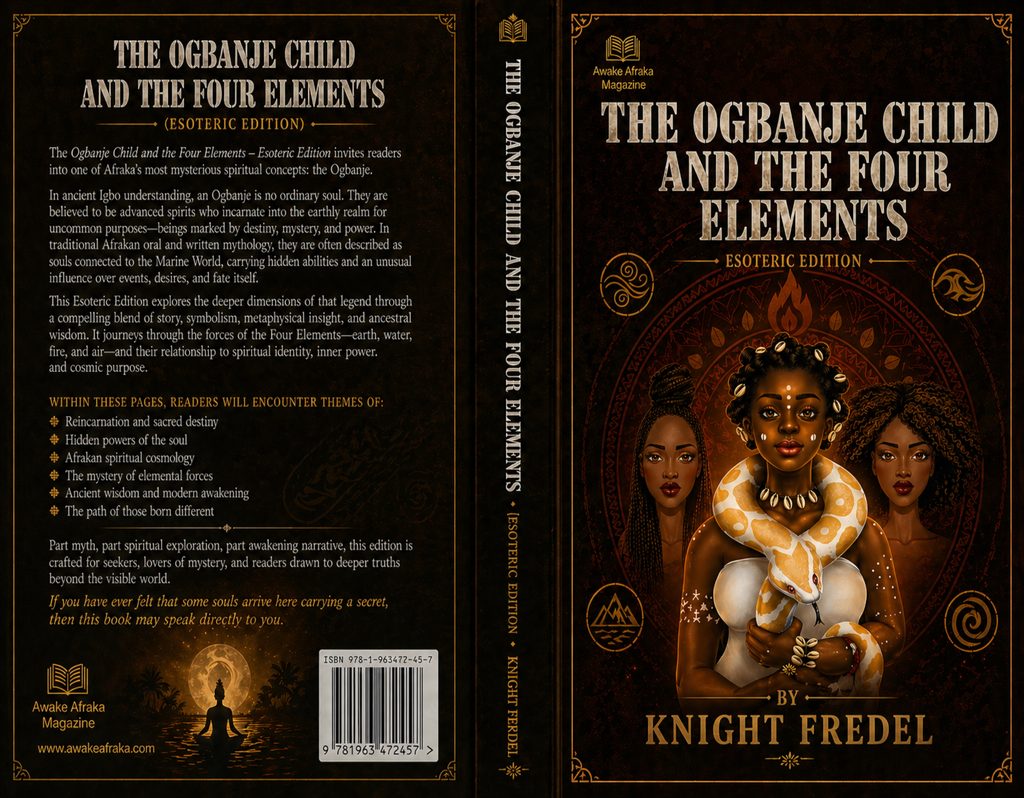
Here: https://www.amazon.com/dp/1699479372
The Ogbanje Child and the Four Elements
Written by Knight Fredel,
Esoteric Edition 2019
Revised for Second edition 2026
The concept of Ogbanje cannot be understood properly without first understanding reincarnation and karma. Ogbanje is not the whole Reincarnation Principle. It is a particular spiritual pattern within Igbo cosmology: the child who repeatedly enters a family, dies young and returns, causing a cycle of hope and grief.
The word is commonly understood through the idea of one who comes and goes. The ordinary reincarnating ancestor returns through the larger movement of life, continuity and lineage. The Ogbanje pattern is more troubled. It is traditionally associated with repeated childhood death, spiritual agreements, a company of spirit companions and an object or bond called iyi-uwa, believed to connect the returning child to the cycle.
The grief at the centre of the belief must not be forgotten.
Before modern medicine understood sickle-cell disease, genetic inheritance, infections, malnutrition, complications of birth and other causes of infant mortality, families could witness several children die in repeated patterns without knowing why. A mother might carry life, name it, love it, bury it and then face the same terror again. Ogbanje cosmology gave spiritual language to a mystery medicine could not yet explain.
That historical and medical understanding does not automatically erase every spiritual interpretation. It tells us to avoid using one explanation where another can save a life. A child suspected of being Ogbanje still needs proper medical diagnosis and care. Spiritual belief must never justify abuse, mutilation, neglect or the withholding of treatment. The Divine gave us intelligence; refusing to use it is not devotion.
At the mystical level, Ogbanje represents a disturbed relationship with incarnation.
The ordinary Soul enters embodiment to remain long enough for its lessons. The Ogbanje, in the traditional narrative, does not anchor fully. It stands near the threshold, attracted to Earth yet tied to a nonphysical company or agreement. It comes close enough to taste the world but withdraws before the incarnation matures. The family becomes the repeated doorway.
Why would a Soul do this?
Different traditions offer different answers. Some describe a pact among spirit companions. Some speak of attachment to the nonphysical realm, resistance to earthly limitation or a karmic bond with the family. Others interpret the cycle as a spiritual drama through which the household itself encounters hidden causes, ancestral patterns or necessary transformation.
No single human explanation should be treated as a complete census of the invisible world. The mystery is older than our confidence.
The iyi-uwa can be understood on more than one level. Traditionally, it is a hidden object whose discovery and destruction can sever the Ogbanje's agreement and break the cycle. Symbolically, it is an anchor: the concealed point at which a recurring pattern attaches itself to the world.
Every repeated human pattern has something like an iyi-uwa.
A family repeats violence across generations; somewhere there is an unexamined wound anchoring it. A community repeatedly produces corrupt leaders; somewhere there is a culture rewarding corruption. A person keeps entering the same destructive relationship under different names; somewhere a hidden belief says pain is love. Find the anchor and the coming-and-going pattern can be interrupted.
In this symbolic sense, the Ogbanje mystery is not only about children who die. It is about recurrence without resolution.
Reincarnation itself can resemble a cosmic Ogbanje cycle when the Soul refuses its lesson. It comes, repeats the attachment, suffers the consequence, dies, rests and returns to perform the same drama with a new cast. The names change. The costume department receives a larger budget. The plot remains embarrassingly familiar.
Karma is what presses the Soul toward resolution. It does not permit endless repetition to remain meaningless. The recurring pattern grows clearer, heavier or more urgent until consciousness finally asks the correct question: What am I refusing to learn?
The Ogbanje theme also illuminates the difference between reincarnation and resurrection. Resurrection is commonly imagined as the restoration or transformation of a particular person. Reincarnation is a new embodiment through which the deeper Soul expresses another personality. The child may carry traces, tendencies or recognitions, but it is not simply the old personality returning with all memories intact.
Igbo accounts of reincarnation sometimes identify a returning ancestor through physical resemblance, birthmarks, behaviour, statements, divination or family recognition. Such recognition strengthens continuity between the living and the dead. Yet Ogbanje stands at the edge of that continuity because its repeated departure interrupts the expected flow of lineage.
This is why the subject belongs inside a larger teaching on the Soul. If it is isolated and sensationalized, Ogbanje becomes a frightening village tale. When placed within the Reincarnation Principle, it becomes a profound meditation on embodiment, attachment, repetition, family karma and the possibility of breaking a cycle.
The purpose of the teaching is not to make parents suspect mysterious beings inside their children. Its purpose is to show that the border between the visible and invisible may be more active than ordinary consciousness assumes—and that every cycle, whether spiritual, psychological or ancestral, must eventually meet understanding.
To break the cycle is not to defeat a child. It is to bring continuity where there was interruption, healing where there was grief and conscious choice where there was compulsion.
This is the higher Ogbanje lesson.
4. FROM EARTHLY RETURN TO STELLAR REINCARNATION
If the Soul is not manufactured by the physical body, why should its journey be limited permanently to one planet?
This question opens the Reincarnation Principle into a cosmic dimension.
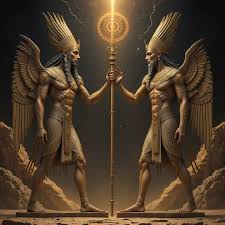
Ancient and modern esoteric traditions have spoken of Souls associated with stars, planetary spheres, invisible schools and non-Earthly civilizations. Contemporary spiritual language sometimes calls such beings star Souls or starseeds. Sirius, the Pleiades, Arcturus and the Andromeda Galaxy frequently appear in these teachings. Some mystics describe Earth as one station within a far larger network of consciousness. Under this view, a Soul may incarnate in different worlds or return after death to a stellar order with which it has an ancient resonance.
This is what I call stellar reincarnation: the possibility that reincarnation is universal rather than exclusively terrestrial.
But we must keep our terms clean.
Sirius is a star system within our Milky Way. Andromeda is an entire galaxy approximately 2.5 million light-years away. Astronomy establishes their physical existence, location and characteristics through observation. Astronomy has not discovered Souls travelling to them after death. No telescope has photographed a departing consciousness entering Andromeda, and no spacecraft has returned with a passenger list from Sirius.
The claim belongs to esoteric cosmology, visionary testimony and metaphysical interpretation—not confirmed modern science.
Science can investigate measurable reports: children describing apparent past lives, unusual memories, brain activity during resuscitation and the psychology of near-death experiences. It can search for patterns and test competing explanations. It currently has no accepted instrument for identifying a Soul, measuring its postmortem movement or assigning it a stellar destination.
This boundary should excite the genuine mystic rather than offend him. Mystery begins where certainty ends. To admit “we do not yet know” is not weakness; it is intellectual cleanliness. The person who labels every spiritual impression a scientific discovery does not make spirituality stronger. He merely puts false spectacles on the mystery and hopes nobody checks the prescription.
How, then, can stellar reincarnation be understood spiritually?
First, it proposes that consciousness may precede and exceed terrestrial biology. Earth would be one field of experience among many. Souls incarnating here may have different histories, capacities and reasons for entering this density. Some may be deeply bound to Earth's cycles. Others may enter from subtler or non-Earthly orders to serve, observe, learn or participate in a collective transition.
Second, it expands the idea of “home.” A person may feel an intense, unexplainable attraction toward the stars or a particular stellar symbol. In esoteric interpretation, this may represent resonance with another field of consciousness. Psychologically, it may also arise from imagination, mythology, alienation or the human longing to belong somewhere larger. Both possibilities should be examined without mockery.
Third, it suggests that death may involve movement by frequency rather than physical distance. A nonphysical Soul would not necessarily travel through space like a rocket. “Returning to Sirius” may describe entry into a corresponding level of consciousness rather than crossing kilometres through a subtle spaceship. Spiritual realms are often represented through physical symbols because human language must borrow from the visible world.
Fourth, stellar reincarnation places karma within a cosmic school. If consciousness can embody in more than one planetary field, then causes and lessons may also extend across those embodiments. A Soul might carry wisdom developed elsewhere into Earth, or enter Earth precisely because this realm offers conditions unavailable in a subtler world: limitation, separation, mortality, desire, uncertainty and the pressure of dense matter.
Earth is difficult because consequence is difficult to ignore here. Hunger, pain, time and death give choices weight. Love expressed in a realm of limitation becomes a powerful achievement. Courage matters because fear feels real. Compassion matters because another person's suffering can be physically encountered.
This may explain why some esoteric schools call Earth a school of accelerated evolution. Of course, judging by the daily news, some students appear determined to repeat the semester. Yet the difficulty itself can refine consciousness.
When death occurs, the Soul may return to an intermission state matching its true vibration. Those strongly linked with Earth's karmic field may prepare for another terrestrial embodiment. Others, according to stellar teachings, may return to a non-Earthly home or continue in another order of manifestation. Some may move between fields across great cycles.
The phrase “return to the stars” must therefore not be confused with the biological body becoming stardust, though physically our elements do have cosmic origins. The spiritual claim is about consciousness and origin. It remains a metaphysical claim—one worthy of contemplation, but not one that should be sold as settled science.
The most responsible conclusion is this: modern research has made the study of claimed past-life memories and near-death experiences more serious than many critics admit. It has not verified stellar destinations. Esoteric knowledge expands the map; science examines the territory accessible to its instruments. One day the two may meet more fully. Until then, honesty must stand between them as a guardian.
The vastness of the cosmos nevertheless strengthens a philosophical possibility. If billions of stars and planets exist, it would be intellectually arrogant to assume that consciousness, life and spiritual evolution must be confined forever to this small world. Possibility is not proof, but neither is it foolishness.
The universe is larger than our theology and stranger than our certainty.
THE TEACHING OF FR. BIGSAM O. ON REINCARNATION AND KARMA
The following contribution from Fr. Bigsam O., a teacher of mysticism, is retained as quoted in the original chapter:
“Reincarnation cannot be talked about without giving an explanation about what prompted it into activity, which about 90% of it, has to do with Karma.
Before going further, it is best that we give a definition to both words, which the topic is based upon.Reincarnation: First before talking about Reincarnation, which is the combination of two words...
Re which is the short form of Repeat, and the word.... Incarnation... Which means, A person who embodies in flesh a Deity, spirit or Quality..
So, in conjunction with the both words of Re & Incarnation, let us see what the dictionary meaning has for it.
It means the rebirth of a Soul into another body.For a better understanding, the first time that we took up an earthly body, it is called... Incarnation, then from the second time of our revisit to the flesh, it is now called a reincarnation.
As said, that Reincarnation which is the rebirth of a Soul into another body, a logical student should have gone forward to ask.... What is the cause of this phenomenal?
Though, it is said in the Christian Bible that, It is appointed unto man to die once, and after that, comes judgment, I still don't think that there is time to convince them of this truth, which their master Jesus even talked about during the conversation with his disciples about John
Who did you go forward to seek, a man clothed in linen? Such should be found in the King's Palace.
Of all born of women, there has never been any greater than John, for the prophets have said it.
If you would believe it, he is Elijah that was to come (Prophet Malachi has said it in the past)
Now, let me try to see if some points or reasons for this repeating of an earth life (Reincarnation) can be brought to light.Why are we Here in this 3D world, and not remained in our spiritual abode, which many sacred writings have attributed to be our original home?
Man's Golden wedding garment cannot be weaved or make to be pure in just a single incarnation here on earth because Karma, which is the law of Cause and effect, which to science, it is known as Newton's law of motion, states that: Action and Reaction are equal but opposite.Whatsoever a Man sows, that he shall reap, even in greater proportion, is exactly the replica of the law of Karma that brought about this beautiful rule from the Masters, with the name..... The Golden Rule, which states...
Do unto others, as you would want them first to do unto you...
Death is not the End of a man's life, Soul, or journey, but a time to drop an earthly cloak, rest for a time being and experience his Soul essence, and see clearly the earth life that he has just concluded..Time will not permit me to give the inner workings or details of what happens just after death, but have it that, a replay of the entire life just lived, will be played back to you, up to when you were born, and all the joy and pains you've done prior to Earth life will be experienced and felt, and during such playback, a complete silence should be observed, so that no interruption should be pragmatic, which can deterred or disturb the process, which that Soul do need for its next incarnation.
Let us take another look from the perspective of Karma, for instance, a man happens to commit a murder, and just before the reaping process began the Man dies, now tell me, do you think that such a man have escaped the penalty that is attached to that Karmic debt?
The answer is No.
For the mill of the Lord grinds slowly, but grinds exceedingly smooth.Always keep in mind that, death is not a punishment, and death does not also stop the process of reaping one's Karma.
Read again the statement of....As known by many, Karma and Reincarnation, is interwoven”.
The biblical passages concerning John the Baptist and Elijah have more than one interpretation. A mystical reading may see the return of an earlier spiritual identity or current; conventional Christian theology usually interprets John as coming in the spirit and power of Elijah rather than as Elijah reincarnated. The passage remains valuable because it demonstrates that identity, prophetic continuity and return were not absent from early religious discussion.
The quotation's comparison between karma and Newton's law should also be understood symbolically. The moral law of cause and effect may resemble action and reaction, but it is not the same physical law. The distinction allows both science and mysticism to remain honest within their proper fields.
THE FINAL REALIZATION: DEATH CLOSES A BODY, NOT AN ACCOUNT
We can now see the architecture of the teaching.
Reincarnation is the continuity of the Soul's education. Karma is the continuity of the Soul's causes. Ogbanje is a specialized mystery of repeated return, attachment and interrupted embodiment. Stellar reincarnation is the esoteric possibility that the Soul's journey extends beyond Earth into other worlds, systems and levels of consciousness.
Together they reveal one uncompromising truth: death does not make an unfinished Soul complete.
The man who loves does not lose the quality of love he has built. The woman who develops wisdom does not leave wisdom inside the grave. The tyrant does not escape the structure of tyranny merely because his heart stops. The murderer does not erase blood by changing dimensions. Consciousness carries what it has become.
This is the true Book of Judgment—not necessarily a giant volume placed before a celestial courtroom, but the Soul itself. Every action writes upon consciousness. Every habit shapes the writer. At death, the personality can no longer hide behind position, money, religion, tribe or public reputation. It meets the vibration it cultivated.
Karma then asks one question: What experience will turn this unfinished knowledge into conscious understanding?
If the lesson can be learned through remorse, restitution and service, the path may be softened. If pride refuses understanding, consequence becomes heavier. If the present life cannot provide the needed conditions, another life receives the seed. The time of return is not chosen for revenge but for efficiency.
This is why karma may seem silent while it is arranging the loudest lesson.
The person who committed evil in ignorance may meet the balancing condition without remembering its ancient cause. He once failed to recognize another person's humanity; now life places him inside the vulnerability he ignored. The hiddenness is part of the teaching. He must discover compassion not because somebody handed him the answer sheet, but because experience awakens it from within.
Yet even here, free will remains. Suffering alone does not automatically produce wisdom. Some people suffer and become more harmful. The karmic opportunity must be consciously received. This is why meditation, self-examination, service, honest repentance and spiritual instruction matter: they help the personality discover the lesson before pain has to shout.
Do not wait for karma to become dramatic before you become attentive.
If you have harmed someone, repair what can be repaired. If you carry hatred, study it before it becomes an action. If you possess power, use it as though you may one day stand beneath the power of another—because within the reincarnation cycle, you may. If you desire mercy, practise mercy. If you desire truth, stop feeding on convenient lies.
The Golden Rule is therefore not merely religious kindness. It is intelligent karmic engineering: do unto others as you would have others do unto you, because the line separating “others” from “you” is thinner than the physical senses admit.
The stranger may have been family. The enemy may return as a child. The person you oppress may become the keeper of a future door. But even beyond these possibilities, all beings arise within the One Life. What is done to another enters the field in which you also exist.
This teaching should not make us frightened of living. It should make us conscious while living. Karma is not stalking you through the universe like a furious debt collector who has obtained your new address. It is guiding the Soul toward wholeness. Its justice is exact because its purpose is love—not sentimental love, but the severe Love that refuses to let consciousness remain permanently deformed.
We reincarnate not because the Creator enjoys watching us struggle, but because unfinished divinity seeks expression. We return because a single life cannot always carry the complete transformation. We return because the Soul is greater than one failure. We return because justice and mercy are not enemies; justice teaches, while mercy preserves the opportunity to learn.
And perhaps, beyond the final Earthly incarnation, the great journey opens into worlds whose stars we have only begun to observe, Sirius, Andromeda or realms for which human astronomy has no name. That possibility belongs to the sacred frontier. We approach it with wonder, not counterfeit certainty.
What we can know here is enough to transform conduct:
You are more than the body, but you are responsible for what you do through it.
Death is more than an ending, but it is not permission to waste life.
Karma may be patient, but patience is not forgetfulness.
Reincarnation may offer another opportunity, but wisdom does not deliberately postpone today's lesson until tomorrow's body.
Turn on the Light now.
Know yourself now.
Correct the cause now, before the effect must cross a grave to find you.
FROM THE WRITER OF THE OGBANJE CHILD AND THE FOUR ELEMENTS
Best wishes, with Love and Light.
Written by Knight Fredel © 2019–2026
SEE ALSO: HOW DO MYSTICS PRAY - By Knight Fredel
CLICK HERE TO READ...
Editorial Reference Points
- University of Virginia Division of Perceptual Studies: Children Who Report Memories of Past Lives
- The Ogbanje Child and The Four Elements - By Knight Fredel
- University of Virginia: The Belief in Reincarnation Among the Igbo of Nigeria
- Scientific scoping review of academic studies on claimed past-life memories
- PubMed: AWARE II study of consciousness and awareness during cardiac arrest
- The Rosicrucian Order, AMORC: Mansions of the Soul by H. Spencer Lewis
- NASA: The Andromeda Galaxy
- Bible Gateway: Matthew 11:14 and Matthew 17:10–13
Editorial distinction: The sources above document astronomical facts, cultural beliefs, clinical research and investigations of claimed memories. Stellar reincarnation is presented in this chapter as an esoteric teaching and metaphysical possibility.