
MASTERS AND STUDENTS

ISSUE 24
MASTERS AND STUDENTS
By Knight Fredel
In the world of Masters and Students, especially upon the paths of Mysticism, Spirituality and the Esoteric Sciences, there has been a great misunderstanding. Some people have misunderstood the meaning of a Master. Others have misunderstood the duty of a Student. Many have confused humility with slavery, secrecy with manipulation, payment with exploitation and initiation with the collection of impressive titles.
For the sake of clarity, therefore, I present this discourse.
This article is not written to mock anyone, nor is it an insult directed at any teacher, student, school, tradition or Order. It is a lamp placed in a room where too many people have been touching the furniture in darkness and then quarrelling with the table.
For months, Awake Af’raka Magazine has reflected upon this matter through ancient writings, living traditions, historical forms of apprenticeship and the experiences of modern seekers. One truth appears repeatedly: real knowledge requires relationship, value, time, discipline and transformation.
Many people want to develop great spiritual power with little implication, little investment and very little time. They want the Third Eye opened before the weekend, astral mastery before the next public holiday and the title of Grand Cosmic Master before they have mastered the simple mystery of waking up when the alarm rings.
They ask for the highest techniques, but they will not perform the smallest exercise.
They request hidden knowledge, yet cannot keep an ordinary conversation private.
They want to command elemental forces, but anger commands them every afternoon.
They wish to travel consciously through the astral world, but cannot travel ten minutes away from their phones without suffering withdrawal from notifications.
This is not a condemnation. It is a diagnosis.
It is possible to accelerate one’s development through focused practice, sincere guidance and disciplined living. But self-implication cannot be avoided. No teacher can breathe on laziness until it becomes mastery. No initiation can permanently give you what your character is unwilling to sustain. No amount of money can purchase the inner condition that only repeated practice can build.
The Master may show the road.
The Student must walk.
The Master may light the lamp.
The Student must learn how to keep it burning.
The Master may give a key.
The Student must open the door—and must also possess the wisdom not to open every door simply because a key fits.
This is the sacred relationship we are about to examine.
1. THE SACRED RELATIONSHIP: WHO IS A MASTER, AND WHO IS A STUDENT?
The word Master frightens some people and excites others. It frightens those who have seen authority abused. It excites those who wish to surrender responsibility for their lives to somebody who appears powerful. Both reactions can lead to misunderstanding.
A true Master is not the owner of another person’s Soul.
A true Master is not a replacement for the Student’s conscience.
A true Master is not an infallible god wearing human clothes and waiting to be worshipped by people with lower subscription plans.
A Master is one who has developed a significant degree of understanding, discipline and practical competence within a particular path. The Master has travelled far enough to recognize certain dangers, patterns and thresholds. He or she can guide another person through territory already encountered, although no honest Master claims to have exhausted the Infinite.
There are Masters of meditation, ritual, symbolic interpretation, healing arts, divination, alchemy, philosophical inquiry, sacred music, breath, movement, herbs, dreams and many other fields. Mastery in one field does not automatically make a person master of every field. A man may understand astrology and still be a terrible businessman. A woman may be highly sensitive to subtle energies and still need to learn emotional regulation. One may possess deep ritual knowledge and know absolutely nothing about treating malaria.
The Infinite is too wide for one human personality to become its final customer-care department.
Therefore, the first mark of a true Master is not the claim to know everything. It is the wisdom to know the boundaries of what has been mastered.
The ancient Kemetic wisdom tradition understood teaching as the transmission of character and right conduct, not merely facts. In the Teaching of Ptahhotep, the elder instructs the younger not to become proud because of knowledge. The text teaches that no one is born wise and that the student must learn to hear. It also declares, in essence, that every person teaches through conduct.
This is important. A Master teaches even when the formal lecture has ended. The way the teacher responds to criticism is a lesson. The way the teacher handles money is a lesson. The way the teacher treats a powerless person is a lesson. The way the teacher admits an error—or performs Olympic-level spiritual gymnastics to avoid admitting it—is also a lesson.
The Student is watching more than the ritual.
This is why the title Master carries responsibility. It should not be worn merely because a person has read many books, memorized difficult words, collected certificates or attracted followers online. Information can make a person impressive without making him transformed. One may speak fluently about ego while being ruled by it. One may teach compassion in the morning and terrorize the household by evening.
Mastery must enter behaviour.
The true Master is therefore not simply a distributor of occult information. The Master is a guide, mirror, custodian and living standard of practice. The Master demonstrates how knowledge behaves when it enters a human life.
And who is the Student?
A Student is not an empty vessel without intelligence. A Student is not a slave. A Student is not a customer who has purchased automatic enlightenment. A Student is a conscious participant in a process of transformation.
The word Student should not be interpreted as weakness. To become a serious Student is one of the strongest decisions a person can make, because it requires the courage to admit: there are things I do not yet know; there are capacities I have not yet developed; there are illusions within me that I may not see without assistance.
The fool pretends to have arrived.
The Student begins travelling.
However, humility does not mean abandoning discernment. A true Student listens deeply, asks sincere questions, tests principles through responsible practice and observes results over time. The Student respects the teacher without switching off the inner intelligence. If a teaching contradicts conscience, safety, evidence or the dignity of another person, the Student is allowed to pause and inquire.
Any teacher who becomes angry whenever a Student asks an honest question may not be protecting sacred knowledge. He may simply be protecting a fragile ego from ventilation.
There is a difference between a question asked to understand and a question asked to perform superiority. A good Master can usually sense it. The sincere question opens a door. The proud question arrives with its own answer and merely wants an audience.
Likewise, there is a difference between obedience to a training method and blind obedience to a personality. If the teacher says, “Perform this breathing exercise for seven days and record your experience,” following that instruction may be necessary for the training. But if the teacher says, “Never think without my permission, abandon everyone who disagrees with me and hand over your entire life,” the Student is no longer being trained. The Student is being captured.
A Master guides consciousness; a controller replaces it.
The proper Master–Student relationship rests upon consent, clarity, boundaries and purpose. The teacher explains the nature of the path. The Student understands what is expected. Both respect the dignity of the other. The teacher does not use spiritual authority to demand sexual access, financial ruin, political loyalty or personal worship. The Student does not use the teacher’s openness to steal, distort or publicly expose restricted instruction.
It is a covenant of responsibility.
In many African knowledge systems, apprenticeship was not limited to verbal teaching. The learner observed, imitated, served, practised and gradually received greater responsibility. Among Yoruba traditional healers, historical research describes long periods of training involving observation, practical preparation, diagnosis, memorization, divination procedures and formal recognition at the end. Among the master masons of Djenné, apprenticeship has involved not only technical skill but social understanding, bodily discipline and knowledge of what the community recognizes as responsible craft. In Ifá, a vast oral and symbolic corpus has been preserved through generations of trained practitioners.
These examples reveal something modern education sometimes forgets: knowledge is not always separable from the person who must carry it.
You can memorize the recipe and still lack judgment.
You can know the symbol and still misread the moment.
You can repeat the words and still fail to embody their meaning.
The Master helps the Student cross the distance between information and wisdom.
That crossing requires time.
It also requires trust—but never stupid trust.
Trust should grow through consistency. A teacher earns deeper trust by demonstrating competence, honesty, discretion and respect over time. A Student earns deeper instruction by demonstrating sincerity, stability, discipline and proper use of what has already been received.
This is why a responsible Master may not immediately reveal every technique requested. The refusal is not always selfishness. Sometimes it is assessment.
Would you give a sharp surgical instrument to a child merely because the child asked politely?
Would you teach an unstable person a method designed to intensify altered states without first establishing grounding, emotional balance and supervision?
Would you reveal another person’s private spiritual condition to a gossip simply because the gossip paid a fee?
No.
Readiness is not punishment. It is protection.
However, the same principle must never be used to hide exploitation. “This is a secret teaching” is not an acceptable answer when someone asks why money disappeared, why abuse occurred or why a teacher violated agreed boundaries.
Secrecy may protect sacred methods. It must never protect misconduct.
This distinction is essential. Some spiritual communities have allowed teachers to behave terribly because questioning the teacher was called disrespect. That is not a sacred tradition. That is organizational failure wearing incense.
The Master must be accountable to truth, to ethics, to the purpose of the teaching and, where applicable, to a lineage or responsible community. The Student must also be accountable for practice, conduct and the use of knowledge.
Neither side is exempt from the Law of Cause and Effect.
The Master plants through teaching.
The Student plants through application.
Both will harvest what they place into motion.
2. VALUE, EXCHANGE AND THE SENSE OF THE SACRED

It is important to recognize value in the sacred knowledge one receives.
What the mind regards as worthless, the life will usually treat carelessly. If a Student receives a teaching with no attention, no gratitude and no intention to practise, the knowledge may remain in memory as decoration. It will be quoted, posted, admired and eventually forgotten.
Sacred knowledge should not be treated like a leaflet pushed beneath every door.
This does not mean truth belongs only to rich people. It does not mean every mystery must be locked away. It does not mean a teacher should manufacture scarcity so that ordinary information can be sold at the price of a small automobile. It means that knowledge capable of affecting consciousness, conduct or another person’s life must be approached with respect, context and responsibility.
We call this inner attitude the Sense of the Sacred.
The Sense of the Sacred is not fear. It is not superstition. It is not trembling before the teacher’s chair because somebody said thunder would locate you if you asked for clarification.
The Sense of the Sacred is the recognition that certain things possess consequence.
Fire is sacred because it can warm or burn.
Speech is sacred because it can heal or wound.
Sexual energy is sacred because it can create life, pleasure, attachment, trauma or transformation.
Knowledge is sacred because it can liberate, manipulate, heal, destroy, guide or confuse.
When the Student recognizes consequence, attention changes. The notebook is no longer opened casually. The exercise is no longer performed as entertainment. The altar is no longer treated as furniture. The private teaching is not scattered among people who will mock, mutilate or misuse it.
Occult knowledge—meaning knowledge that is hidden, interior or reserved—has often been protected because its usefulness depends upon preparation. Some truths are hidden by teachers. Others are hidden by their own depth. You can publish a mystical principle on the front page of a newspaper and it will remain invisible to a person who has not developed the experience required to recognize it.
This is one reason the ancients used symbol, story, ritual, repetition and initiation. The symbol carried several levels at once. The beginner received one meaning. The advanced Student, having changed inwardly, returned to the same symbol and discovered that it had changed—although in reality the Student was the one who changed.
The eye sees according to the consciousness behind it.
The Master therefore reveals according to readiness. First the foundation, then the weight. First the alphabet, then the manuscript. First the discipline, then the power.
Modern Students sometimes consider this insulting. They attend one class and ask for the “highest secret.” When given a breathing exercise, they say it is too simple. They were expecting perhaps a crystal staircase to open above the teacher’s head while seven archangels presented a confidential password.
But the simple exercise may contain the foundation of everything that follows.
A person who cannot hold attention upon the breath for five minutes is not being oppressed when asked to practise concentration. The teacher is testing the instrument through which every later method must operate.
If the mind cannot remain still, every symbol will be distorted by distraction.
If the emotions cannot be regulated, every energetic sensation may be interpreted through fear or excitement.
If the ego cannot accept correction, every spiritual experience may become a coronation ceremony.
The foundation is not beneath the teaching. The foundation is the teaching.
What Is Balanced Exchange?
In older societies, Students sometimes brought food, labour, materials, service or gifts to a teacher. An apprentice might help maintain the place of learning, prepare tools, assist with ordinary work or support the elder whose time was being given. In other settings, the family supported the apprenticeship. In modern schools, exchange may take the form of tuition, membership, books, donations or agreed service.
The outward form changes. The principle is balance.
The teacher gives time, preparation, experience, correction, responsibility and sometimes access to teachings gathered over decades. The Student gives attention, discipline, respect and an agreed form of material support where required. There must not be abuse in the exchange, but there must be recognition that real teaching carries cost.
The teacher eats.
The website costs money.
The classroom uses electricity.
The manuscript must be preserved.
The teacher’s hour is still an hour of human life.
Spirituality does not make rent imaginary.
Some people happily pay enormous sums for entertainment, fashion, alcohol, data and devices, then become philosophers of universal abundance when a teacher charges a modest fee. Suddenly they announce, “Knowledge should be free!” Usually while typing on a phone that was certainly not free.
Yet the teacher must also examine motive. A fee can support a sacred work; greed can corrupt it. A true teacher does not deliberately keep Students frightened so that they will continue paying for protection. A true teacher does not divide one simple lesson into twenty-seven expensive “levels” merely because the cosmic finance committee has discovered recurring revenue.
Payment does not prove authenticity. Free teaching does not prove purity. Some valuable knowledge is freely given. Some nonsense is very expensive. Some excellent teachers charge because teaching is their work. Some exploitative teachers use “donation” while applying so much pressure that the donation develops muscles and becomes a compulsory fee.
Discernment must examine the whole relationship.
A balanced exchange should be:
- Clear: the Student understands what is being offered and what is expected.
- Proportionate: the fee or service reasonably relates to the teaching, time and context.
- Voluntary: donations are truly voluntary, not forced through fear, prophecy or public shame.
- Non-destructive: the Student is not instructed to neglect food, rent, children, medicine or essential responsibilities merely to prove devotion.
- Ethical: no sexual access, illegal act, humiliation or surrender of basic rights is disguised as spiritual payment.
- Reciprocal: the teacher provides the promised instruction and the Student participates sincerely.
You must never ruin yourself to acquire occult knowledge. A teacher who tells a poor Student to borrow recklessly, sell essential property or abandon dependants in order to pay for “urgent initiation” should be questioned carefully. The Universe does not require your child’s school fees as proof that your Crown Chakra is serious.
At the same time, the Student should not confuse inability with entitlement. If a programme costs more than one can afford, the mature response may be to wait, save, request an ethical arrangement, use available introductory materials or develop the disciplines already received. Insulting the teacher does not create affordability.
Sacrifice is not the same as destruction.
A sacrifice gives up something of value for something of higher value. It may mean waking earlier, reducing distraction, setting aside money gradually, travelling, reading difficult material, serving a community or resisting habits that weaken concentration. Destruction damages the life one is supposedly trying to improve.
The Master must know the difference.
The Student must also know the difference.
Why Not Reveal Everything to Everyone?
There is a modern belief that withholding any spiritual method is automatically elitist. This view ignores context.
Medicine is knowledge, yet not every drug is placed in every hand without instruction. Engineering is knowledge, yet an untrained person is not invited to alter a bridge because equality is beautiful. A ritual or consciousness technique may be less physically obvious, but it can still affect emotion, belief, sleep, relationships and mental stability.
Knowledge should be shared according to capacity, purpose and safety.
The worthy seeker is not necessarily the wealthy seeker, the educated seeker or the person who kneels most dramatically. Worthiness in this context means readiness: sincerity, respect, stability, patience and demonstrated responsibility.
The Master may test readiness by giving a small instruction and observing whether it is practised. This is not always a game. Why should a teacher place ten more techniques upon a Student who ignored the first one?
Some Students collect exercises the way others collect shoes. Their shelves are spiritually well dressed, but their consciousness remains barefoot.
The true Student values one method enough to discover what it can actually do.
This is the Sense of the Sacred in action: protect, practise, reflect, integrate and reveal responsibly.
3. TIME, WILLPOWER AND THE ALCHEMY OF REPETITION
You will not develop psychic sensitivity, deep concentration or spiritual stability by practising a method for five minutes once and then spending three weeks checking whether you have become powerful.
You will not perform one hour of meditation, receive no trumpet from the astral realm and conclude that the Universe has poor customer service.
Development requires rhythm.
The physical body grows by processes repeated over time. A musician develops through rehearsal. An athlete develops through training. A craftsperson develops by performing, failing, correcting and performing again. The spiritual faculties are also educated through attention, repetition, reflection and ethical living.
This is why ancient paths valued regularity.
Regular practice tells the conscious and subconscious mind that this work matters. It creates an appointed space in the life. At first, the Student struggles to enter silence. Later, the body recognizes the time, the place, the posture and the intention. The practice becomes a threshold.
Modern research on skill development calls structured repetition with feedback deliberate practice. It is not merely doing the same thing carelessly. It involves focused work upon a defined ability, observation of errors, correction and repeated performance. Research also shows that practice is important without being the only factor in mastery. Guidance, health, opportunity, temperament, environment and quality of method matter too.
This supports a truth the esoteric schools have long understood: effort is necessary, but blind effort can waste time. The Student needs a suitable method and must know what is being trained.
Five minutes of true concentration may be more useful than one hour of spiritual daydreaming.
One month of a clearly recorded practice may teach more than a year of jumping randomly between techniques.
The Minimum Flame
For the beginner, I recommend a minimum of five minutes each day.
Five minutes appears small, but its purpose is continuity. It defeats the excuse that one has no time. It creates a daily appointment with the inner life. A simple practice may include:
- A respectful salutation at the altar.
- Five minutes of quiet breathing.
- Concentration upon one symbol, flame or sacred word.
- A short gratitude practice.
- Conscious observation of thought without immediate reaction.
- A brief review of one’s conduct before sleep.
- The reading and contemplation of one paragraph of a sacred discourse.
This is a minimum, not a magical guarantee. Five distracted minutes performed resentfully will not make one an adept. But five sincere minutes can keep the path alive on a difficult day.
Once each week, where health and responsibilities permit, set aside one consecutive hour for deeper practice, study and reflection. This period should not be spent constantly changing methods. Enter with a clear intention.
For faster development, a disciplined Student may practise for twenty minutes each day for one full month. Some may choose thirty minutes daily and a longer period during the weekend. The exact schedule should match the method, the Student’s condition and the guidance received.
But listen carefully: a schedule does not place the Universe under contract.
No honest teacher can promise that everyone will have the same experience after thirty days. One Student may become calmer. Another may remember dreams more clearly. Another may recognize destructive emotional patterns. Another may experience subtle bodily sensations. Another may first encounter restlessness, grief or resistance that had been hidden beneath constant distraction.
All of these can be part of the work.
Transformation is not always fireworks.
Sometimes the first sign of spiritual development is that you no longer send the message you would once have sent in anger.
Sometimes power appears as the ability to remain silent.
Sometimes intuition appears as a quiet recognition that a familiar choice is unwise.
Sometimes awakening is simply seeing one’s own hypocrisy without immediately inventing an excuse.
That may not look impressive on Instagram, but the Soul recognizes it as progress.
What Repetition Does to Consciousness
Every repeated act cuts a path.
In the beginning, attention wanders because wandering has been practised for years. The Student then complains that the mind refuses to obey. Of course it refuses. You trained it to run in twenty directions at once and have now held one meditation meeting to announce new management.
Be patient.
Each return of attention is part of the practice. When the mind wanders and you return it to the breath, symbol or sacred word, you are strengthening the act of return. Do not measure success only by how long you remained undistracted. Also measure how consciously you came back.
This is the alchemy of repetition:
Attention becomes steadier.
Observation becomes finer.
Reaction becomes choice.
Choice becomes character.
Character becomes destiny.
Spiritual practice also exposes material hidden beneath noise. When the outer world becomes quiet, neglected emotions may rise. The Student may discover fear, anger, shame, longing or grief. This does not necessarily mean the practice has failed. The Light entering a dark room reveals dust that was already present.
But discernment is required. Not every unusual feeling is a spiritual initiation. Tingling may arise from posture, breathing, anxiety or circulation. Vivid images may be imagination, memory, dreamlike mentation, symbolism or a meaningful inner experience. The mature Student records first and interprets carefully.
The person who feels warmth in the forehead once and immediately changes his name to Supreme Solar Oracle has moved faster than the evidence.
The Master helps the Student distinguish experience from interpretation.
Keep a Record
A serious Student should keep a practice journal. Record:
- Date and time.
- Duration.
- Method used.
- Physical and emotional condition before practice.
- Significant sensations, thoughts, dreams or insights.
- Conduct changes noticed during ordinary life.
- Questions to discuss with the teacher.
The journal reveals patterns memory may distort. It also protects the Student from exaggeration. Human beings are excellent editors of their own past. After one dramatic dream, a person may remember that “this always happens,” while the notebook quietly shows it happened once after eating heavily at midnight.
The sacred record brings humility to interpretation.
Care for the Instrument
The body is the instrument through which earthly practice occurs. Therefore, take care of it.
Sleep matters.
Food matters.
Hydration matters.
Movement matters.
Mental health matters.
Medication prescribed for a genuine condition should not be abandoned merely because someone declared treatment “low vibration.” A competent spiritual teacher knows the boundary between spiritual guidance and medical care. If a practice causes severe insomnia, panic, confusion, loss of functioning or frightening experiences, pause and seek qualified professional support as well as responsible spiritual guidance.
The path of Light should increase integration, not glorify collapse.
There are teachers who interpret every psychological crisis as proof that a Student is becoming powerful. This can be dangerous. Spiritual language should not prevent appropriate care. The Soul may be eternal, but the nervous system still has operating requirements.
Take care of the vessel.
Willpower Is Built, Not Awaited
Many Students say, “I will practise when I feel motivated.” Motivation is a visitor. Discipline has a key.
Willpower develops when a person repeatedly honours a conscious decision despite changing feelings. Begin small enough to remain consistent. Attach practice to an existing rhythm: after bathing, before breakfast, at sunset or before sleep. Prepare the place in advance. Remove unnecessary distraction. Let the body recognize the signal.
If you miss one day, return the next day without performing a three-hour ceremony of guilt. Guilt can become another method of avoiding practice. Correct the interruption and continue.
The path is not destroyed because one day was weak. It is weakened when one weak day becomes permission to disappear for three months.
Determine yourself and do it.
If you take only five minutes per day and keep the sacred attitude—valuing what you receive, recording it, applying it and protecting it—you are establishing a foundation. If you can practise twenty minutes daily for a month, you may begin to notice meaningful inner changes. If you continue for years with good guidance, ethical conduct and intelligent correction, the person who entered the path may gradually become unrecognizable to the habits that once ruled him.
That is power.
Not the ability to frighten neighbours with mysterious claims.
The ability to govern oneself.
4. FALSE MASTERS, IMPATIENT STUDENTS AND THE SPIRITUAL MARKETPLACE
Wherever people seek healing, meaning, power or hope, somebody will eventually open a shop.
The spiritual marketplace contains sincere teachers, genuine traditions, useful books, confused enthusiasts, wounded healers, talented performers, opportunists and a special category of people who became Masters shortly after designing their own certificate.
Discernment is therefore necessary.
The existence of false teachers does not mean all teachers are false. The existence of exploitative doctors does not make medicine unreal. The existence of fraudulent traders does not make every market a crime scene. We must examine character, method, boundaries and results.
Signs of a False or Dangerous Master
A dangerous teacher often makes the Student increasingly dependent upon the teacher’s personality. The Student is told that leaving will bring curses, madness, spiritual attack or immediate destruction. Every success is credited to the Master; every failure is blamed upon the Student’s insufficient obedience.
The false Master may:
- Claim absolute and unlimited knowledge.
- Demand worship rather than respect.
- Isolate Students from family, friends or other sources of information.
- Use fear and prophecy to extract money.
- Promise impossible results within guaranteed deadlines.
- Demand sexual access as “initiation,” “energy exchange” or proof of surrender.
- Encourage Students to abandon necessary medical or psychological care.
- Punish sincere questions.
- Reveal private confessions to control or shame Students.
- Use secrecy to conceal wrongdoing.
- Treat every disagreement as spiritual rebellion.
- Create endless paid emergencies that only the teacher can solve.
The Master who constantly discovers a new curse immediately before the next payment date may be experiencing a revelation from the Spirit of Invoicing.
Run the audit.
A true teacher may charge. A true teacher may correct. A true teacher may require disciplined confidentiality. A true teacher may even tell a Student that a method is not yet appropriate. But the pattern of the relationship should move the Student toward greater clarity, responsibility, strength and freedom—not deeper terror and dependency.
The Master Is Human
Students also create false Masters by projecting perfection upon ordinary human beings. They observe one genuine ability and imagine universal perfection. The teacher gives an accurate reading, so the Student assumes the teacher can never make a poor financial decision, become tired, misunderstand a message or have a difficult relationship.
This is unfair to both parties.
A Master remains human. Respect should not become fantasy. When the fantasy eventually cracks, the Student may swing from worship to hatred because the teacher failed to match an image the teacher never honestly claimed.
See the teacher clearly.
Honour what is worthy.
Question what is questionable.
Do not manufacture a god and then punish the human being for failing the audition.
Signs of an Unserious Student
It is easy to discuss abusive teachers because authority carries greater responsibility. But Students also bring disorder into the relationship.
The unserious Student may:
- Demand advanced methods while ignoring foundational practice.
- Move from teacher to teacher whenever correction becomes uncomfortable.
- Collect titles instead of developing ability.
- Share restricted material to appear important.
- Distort a teaching and blame the teacher for the distortion.
- Treat payment as the purchase of guaranteed powers.
- Compare constantly with other Students.
- Gossip about private processes.
- Refuse ethical discipline while demanding energetic techniques.
- Expect the Master to repair every consequence of the Student’s choices.
- Call laziness “divine timing.”
- Call impatience “high vibration.”
- Call ego “knowing my worth.”
Some Students arrive with a simple corporate proposal: the teacher supplies twenty years of knowledge, the Student supplies two weekends of irregular attention, and the Universe supplies mastery by Monday morning. When results fail to meet quarterly expectations, management is blamed.
No.
The sacred path is not a vending machine. Payment may open access to instruction; it cannot perform the instruction inside you.
If you pay for piano lessons and never practise, the piano is not betraying you. If you join a school of meditation and spend the practice period arguing online, the silence has not rejected your application.
The Student must participate.
The Disease of Spiritual Shopping
There is a stage in many seekers’ lives when they taste many paths. Exploration is natural. But endless exploration can become avoidance.
The Student attends one class on chakras, two on Ifá, one weekend of ceremonial magic, three videos on Kabbalah, a podcast on shamanism and half a book on alchemy. By Sunday evening, everything has been combined into a new system called Quantum Ancestral Angelic Cosmic Technology.
Nothing has been deeply understood.
Every tradition possesses language, context, ethics and internal relationships. Comparative study can be valuable, but comparison requires first understanding what is being compared. Otherwise, sacred systems become ingredients in a spiritual soup whose only consistent flavour is the ego of the cook.
Choose carefully. Study deeply. Let experience mature before declaring equivalence.
The Master can help the Student recognize which practices are compatible, which require separation and which belong to stages not yet reached.
Titles Without Transformation
The modern spiritual world loves titles. Prophet. Seer. Oracle. Apostle. Grand Master. High Priest. Cosmic Ambassador. Supreme Light Commander.
A title may indicate a real office or achieved degree within a tradition. It may carry duties and lineage. But a title without function is a costume.
Ask what the title means.
What was studied?
What was practised?
Who recognized the competence?
What responsibilities accompany it?
How does the person serve?
If the entire qualification is that the individual felt special during a dream, perhaps congratulations should wait until after breakfast.
The true path is less concerned with appearing powerful than becoming responsible for power.
In the esoteric sciences, power without character magnifies imbalance. If a jealous person develops influence, jealousy gains tools. If an angry person develops psychic sensitivity, anger gains new interpretations. If a greedy person learns persuasive ritual, greed acquires sacred vocabulary.
Therefore, ethical development is not an optional subject added to make the course look respectable. It is containment.
The Master who teaches technique without ethics gives a sharp blade without a handle.
The Student who seeks power without self-examination is asking the Universe to enlarge what has not yet been purified.
This is why ancient schools tested patience, silence, service and conduct. Not every test was wise, and no tradition should be romanticized merely because it is old. Abuse remains abuse even when performed beside an ancient statue. But the underlying insight is valid: capacity must grow together with responsibility.
5. FROM OUTER MASTER TO MASTER WITHIN
The final purpose of a true Master is not to create permanent spiritual children.
It is to awaken mature consciousness.
At the beginning, the Student depends heavily upon instruction. The teacher defines the exercise, corrects posture, explains symbols, identifies errors and provides structure. Over time, the sincere Student develops internal observation. The principles once spoken from outside begin to speak from within.
This inner voice is not every desire that crosses the mind. It is not the ego declaring itself divinely approved. The Master Within is the refined faculty of conscience, discernment, intuition and alignment with higher law. It becomes clearer as noise reduces and character strengthens.
Many people claim to follow the Master Within when what they actually follow is personal preference wearing spiritual robes.
How can one tell the difference?
The ego usually seeks immediate comfort, superiority and confirmation. The inner Master may ask for patience, honesty, correction and responsibility. The ego announces that everyone else is wrong. The inner Master reveals where you must grow. The ego flatters. The inner Master illuminates.
The outer Master helps the Student learn this distinction.
Eventually, the Student should be able to practise without constant supervision, evaluate experience with sobriety, make responsible choices and continue learning without emotional dependence upon the teacher. Respect may remain. Gratitude may deepen. The relationship may evolve from instruction to collaboration or spiritual friendship.
This is graduation.
A teacher who feels threatened by the Student’s maturity has forgotten the purpose of teaching.
A Student who rejects the teacher the moment strength develops has forgotten the value of gratitude.
The river does not insult the spring because it has become wide.
The spring does not imprison the river because it fears being forgotten.
Both fulfil their nature.
The Student May One Day Teach
When a Student becomes capable of teaching, another responsibility begins. The new teacher must not merely repeat information. He must understand what can be adapted, what must be preserved and what remains beyond his competence.
This is where lineage becomes meaningful. Lineage is not only a list of impressive names. It is continuity of tested understanding, ethical responsibility and transmission. A lineage may be ancestral, institutional, initiatory, philosophical or practical. Its value lies in what it preserves and how responsibly it lives—not merely how ancient it claims to be.
The new teacher should remember the confusion of being a beginner. This protects compassion. He should remember the sacrifices of his own teachers. This protects gratitude. He should remember his teachers’ human limitations. This protects discernment. He should continue learning. This protects the teaching from becoming a museum guarded by ego.
No genuine Master graduates from being a Student of the Universe.
The higher one climbs, the more visible the horizon becomes. Greater knowledge reveals greater mystery. This is why true Masters often carry humility. They have seen enough to understand how much remains unseen.
The beginner knows ten things and feels complete.
The Master knows ten thousand and stands in wonder before the Infinite.
The Inner School
Every serious practice eventually reveals an inner classroom.
Life becomes the instructor.
Relationships reveal attachment.
Conflict reveals hidden emotion.
Success reveals character.
Failure reveals foundation.
Waiting reveals patience.
Power reveals ethics.
Loss reveals what the identity was holding.
Silence reveals the noise within.
The outer Master teaches the Student how to read these lessons. Without awareness, the same event repeats and is called bad luck. With awareness, experience becomes instruction.
This does not mean every suffering should be romanticized or every injustice quietly accepted. Wisdom may require protest, protection, departure or repair. The lesson is not always “endure.” Sometimes the lesson is “set a boundary.” Sometimes it is “speak.” Sometimes it is “leave.” Sometimes it is “apologize.” Sometimes it is “stop trying to save a person who refuses responsibility.”
The Master does not dictate every answer. The Master trains discernment.
Self-Mastery Is the First Great Power
People often enter occult study seeking abilities: visions, intuition, energy work, astral awareness, manifestation or influence. These interests are understandable. But the first and greatest power is self-mastery.
Can you direct attention?
Can you govern speech?
Can you observe emotion before it becomes action?
Can you remain ethical when nobody is watching?
Can you receive correction without collapsing or attacking?
Can you hold knowledge without using it to appear superior?
Can you possess power without needing to display it?
If not, the foundation remains unfinished.
The person who claims to command spirits but cannot command appetite is still an apprentice.
The person who predicts the future but repeats the same destructive relationship every year should consult the oracle within.
The person who sees auras but cannot see his own manipulation has opened the wrong eye.
Self-mastery is not glamorous, but it is the throne upon which every safe spiritual faculty must sit.
A PRACTICAL COVENANT FOR MASTERS AND STUDENTS
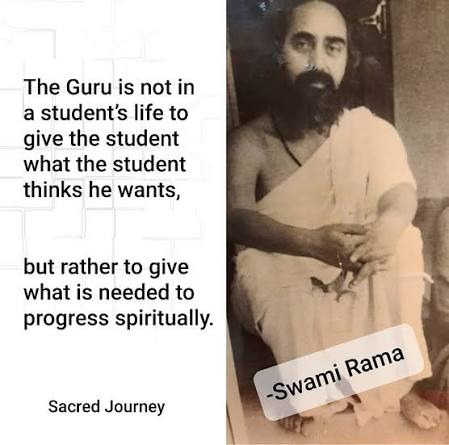
To bring this discourse into practice, I offer a simple covenant.
The Master Should:
- Teach only what has been responsibly understood or clearly identify what remains belief, interpretation or exploration.
- Respect the Student’s dignity, consent, privacy and freedom.
- Explain fees, expectations, risks and boundaries honestly.
- Correct without humiliation.
- Refuse techniques that are inappropriate for the Student’s condition.
- Protect sacred knowledge without using secrecy to conceal wrongdoing.
- Avoid promises of guaranteed powers or impossible deadlines.
- Admit error and remain a Student of truth.
- Refer the Student to qualified medical, psychological, legal or technical professionals when the issue lies outside spiritual competence.
- Guide the Student toward maturity, not permanent dependence.
The Student Should:
- Enter with sincerity rather than hunger for titles.
- Practise consistently before demanding more methods.
- Keep appropriate teachings confidential.
- Ask honest questions and listen deeply.
- Pay agreed fees or perform agreed service responsibly.
- Refuse exploitation without confusing every boundary with oppression.
- Record experiences before exaggerating them.
- Care for body, mind, relationships and ordinary responsibilities.
- Apply ethics together with technique.
- Accept responsibility for choices and consequences.
Both Should:
- Honour truth above personality.
- Honour service above spectacle.
- Honour transformation above titles.
- Honour balance in every exchange.
- Remember that all power returns to the Universal Law from which it came.
This covenant is not a law imposed upon every tradition. It is a lamp for discernment.
CONCLUSION: WHEN THE STUDENT IS READY
It is often said that when the Student is ready, the Master appears.
This does not always mean a mysterious stranger will knock on the door at midnight wearing a long robe and carrying a staff. The Master may appear as a book, a teacher, a tradition, an experience, a question, a disciplined community or an ordinary person whose one sentence changes the direction of your thought.
Readiness changes recognition.
The unready person may stand before wisdom and see inconvenience. The ready person may discover a life-changing instruction inside five simple minutes of silence.
But there is another part of the saying:
When the Student is truly ready, the Student also becomes willing to work.
The true seeker values knowledge. The true seeker protects it. The true seeker exchanges fairly. The true seeker practises. The true seeker does not ruin himself financially, emotionally or physically in the name of devotion. The true seeker does not hand over conscience to a personality. The true seeker receives the outer lamp and uses it to discover the Light within.
The Master has duties.
The Student has duties.
The sacred path is the meeting of those responsibilities.
If you wish to develop quickly, increase sincerity, regularity and attention. Begin with five minutes every day. Give one longer period each week. Where possible, practise twenty minutes daily for one month and record what changes—not only during meditation, but in speech, conduct, emotion and decision.
Do not chase sensation.
Build capacity.
Do not worship the title.
Become worthy of the work.
Do not demand the highest secret while neglecting the smallest discipline.
The smallest discipline may be the door to the highest secret.
I am certain this discourse has added a Light unto yours, for it is said upon an ancient path that:
When a Light is added unto another Light, it makes it brighter.
If this magazine and its discourses have added value to your path, you may freely support Awake Af’raka Magazine through a donation. No amount is too small, and no sincere support is regarded as insignificant. Such assistance helps us preserve, research and publish more teachings for seekers who are ready to receive them.
Give freely, never through fear.
Receive gratefully, never through greed.
Teach responsibly.
Learn sincerely.
Practise consistently.
And above all:
MAN, KNOW THYSELF.
LOVE AND LIGHT.
Written by Knight Fredel © 2019–2026
RESEARCH AND FURTHER READING
- The Teaching of Ptahhotep — University College London, Digital Egypt — a translation of an ancient Kemetic wisdom text concerned with listening, humility, conduct and the transmission of instruction.
- Ifá Divination System — UNESCO Intangible Cultural Heritage — an overview of the extensive Ifá corpus and its preservation through trained Yoruba practitioners.
- The Method of Training Traditional Healers and Midwives among the Yoruba of Nigeria — research describing observation, practical work, memorization, diagnosis and long-term apprenticeship.
- Negotiating Licence and Limits: Expertise and Innovation in Djenné’s Building Trade — an examination of how apprenticeship forms technical competence, social knowledge and bodily discipline.
- Deliberate Practice and Acquisition of Expert Performance — K. Anders Ericsson — research on structured practice, feedback and repeated performance in the development of expertise.
- Deliberate Practice and Performance: A Meta-Analysis — evidence that deliberate practice matters while remaining only one of several factors influencing achievement.
- Neurophysiological Mechanisms of Focused-Attention Meditation — Systematic Review — a review of research on focused-attention meditation, including important methodological limitations and evidence gaps.