
JUJU AND VOODOO: THE SECRET WITHIN THE AF’RAKAN SANCTUARY
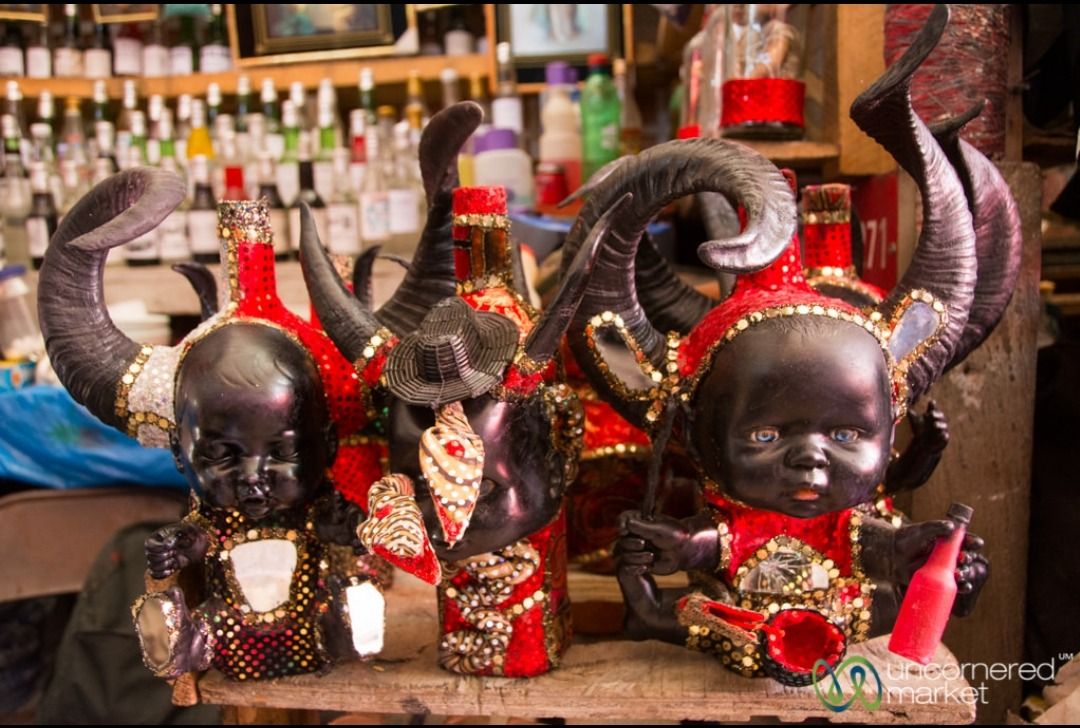
Juju and Vodou are not the same. In this mystical teaching, Juju is a charged spiritual medium—especially one connected with lower fourth-dimensional entities—while Vodou is a broader system involving spirit communion, spells, psychic reading, herbs, invocation, banishing and ancestor relationship. An altar is a consecrated point of contact; a sanctum is the sacred space surrounding it; and a shrine, within this discourse, is a place maintained for lower entities through sacrifice.

ISSUE 71
The Hidden Difference Between Juju, Vodou, Altars, Sanctums, Shrines and Spiritual Incense
By Knight Fredel
AWAKE AF’RAKA MAGAZINE — SPECIAL EDITION
A spiritual object is not powerful merely because it looks mysterious. Its power depends upon what it was prepared to receive, the realm it contacts and the consciousness standing before it.
— Knight Fredel 2021
Welcome to another special edition of Awake Af’raka Magazine, where we do not merely repeat what has been said; we enter the sanctuary, light the lamp and examine what has been hidden behind the language.
Today, we are entering one of the most misunderstood chambers of African Spirituality: Juju, Vodou, altars, sanctums, shrines and incense.
These words have been thrown around so carelessly that almost anything African and spiritual is now called Juju. A person sees a white cloth, one candle and a bowl of water and immediately announces, “Juju!” Another sees a priest wearing beads and decides that Voodoo has arrived. Someone enters a room containing an altar and begins looking for the nearest exit, as if the furniture has already opened a file against him.
Calm down.
Not everything sacred is Juju. Not every shrine is an altar. Not every altar is active. Not every spirit medium contacts the same realm. And certainly, not every person burning incense knows what the smoke is doing. Some simply enjoy the fragrance—which is acceptable—but fragrance alone does not turn a bedroom into a sanctuary. If perfume were initiation, every cosmetics shop would be a mystery school.
This discourse will clear the confusion by examining the matter from the inner, mystical position. I will explain:
- what an African altar truly is;
- why a table covered with cloth may be symbolic but not yet spiritually active;
- how Juju functions as a charged medium rather than a god;
- why Juju and Vodou are not the same thing;
- how lower and higher dimensional contacts differ;
- why a sanctum and a shrine can look similar while serving different spiritual purposes;
- how incense alters the energetic atmosphere of sacred work; and
- why every sincere practitioner must first master purity, intention and elemental alignment before seeking power.
Public dictionaries give us an outer definition. Encyclopaedia Britannica describes Juju as an object deliberately infused with magical power, the power itself or the belief system involving its use. Merriam-Webster describes Vodou as a religion rooted in African spiritual traditions and ancestor veneration, especially associated with Haiti, while popular usage has also attached the word to spells, charms and sorcery.
These descriptions are useful, but they remain descriptions from outside the sanctuary. They tell you the name written upon the door. They do not necessarily explain the spiritual mechanism operating behind it.
In this teaching, we will go deeper.
Read slowly. Spiritual knowledge is not an emergency announcement to be consumed between two social-media arguments. Return to difficult passages. Compare them with your dreams, experiences and observations. The awakened student does not rush sacred knowledge and then blame the teacher because wisdom refused to enter at 5G speed.
Let us begin.
WHAT IS JUJU AND VOODOO?
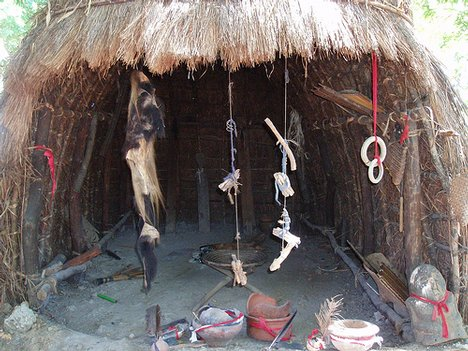
Many of you may have heard the words "juju" and "Voodoo" but then do you have an idea about what they really are? Some of the few people I have come across always claim that Voodoo is an updated version of Juju, but then, is that the truth? Is Juju really an outdated version of Voodoo?
Ok, before we proceed further, let me first of all quote from the Dictionary Britannica: Juju, an object that has been deliberately infused with magical powers or the magical power itself; it also can refer to the belief system involving the use of juju. Juju is practiced in West African countries such as Nigeria, Benin, Togo, and Ghana, although its assumptions are shared by most African people. It is neither good nor bad, but it may be used for constructive purposes as well as for nefarious deeds. A monkey’s head is probably the most common juju in West Africa. The word juju is believed to be derived from the French joujou (“plaything”), though some sources claim it is from the Hausa language, meaning “fetish” or “evil spirit.”
So, that is a dictionary definition of Juju, now let's also find out what they said about Voodoo:
By looking from the Merriam Webster Dictionary online, it defined Voodoo as follows:
- Vodou \ vō-ˈdü \ : a religion that is derived from African polytheism and ancestor worship and is practiced chiefly in Haiti.
- A person who deals in spells and necromancy.
- A sorcerer's spell: HEX.
- A hexed object: CHARM...
Ok, with these definitions we can now clearly see that yes, truly, they are both not the same thing, and neither of them are an outdated version of the other, or the updated version of the other, they are both two different paths of spirituality!
Now that we know they are two different things, let's now talk about them from an advanced point of view. We will also talk about altars and shrines, to know if there are differences between them. Therefore, let us proceed at once.
1. THE AFRICAN SANCTUARY:
WHY AN ALTAR IS MORE THAN A DECORATED TABLE
Before discussing Juju or Vodou, we must understand the sacred space in which spiritual contact takes place.
Many beginners believe that an altar is simply a small table covered with white or red cloth. They add a mirror, candle, cup of water, perhaps a crystal, a photograph and two objects purchased because an online seller described them as “highly spiritual.” Then they step backwards, admire the arrangement and declare the altar activated.
It may be beautiful. It may assist meditation. It may remind the mind to enter a sacred mood. But beauty, symbolism and activation are not identical.
A basic altar can be created for prayer, contemplation, ancestral remembrance, simple rites and spiritual study. Such an arrangement has value because symbols speak to the subconscious mind. A candle concentrates attention. Water represents purification, memory and the feminine current. Earth or salt speaks of stability and manifestation. Incense announces Air and subtle movement. A flame introduces Fire and transformation. A mirror may represent reflection, the unseen double or the threshold between inner and outer consciousness.
However, an advanced altar is more than an arrangement of symbols. It is a dedicated field of contact.
The table is only the physical support. The altar itself is the invisible relationship established through consecration, intention, elemental alignment, repeated devotion and the installation of an appropriate spiritual medium. In other words, the wood is not the altar any more than the human body is the entire Soul. The visible structure houses an invisible function.
This is why two altars may look almost identical but carry completely different energies. One may feel calm, clear and expansive. Another may feel heavy, demanding and crowded. The eyes see two tables; the psychic body encounters two worlds.
An altar becomes spiritually active when it has been prepared according to the laws governing the path, the element and the spiritual intelligences it is meant to contact. The exact procedures are not thrown carelessly into public articles because consecration is not a cooking recipe. A person should not gather ingredients, imitate a photograph and begin inviting beings whose nature he cannot identify.
The unseen realm is not a public bus where you shout a destination and enter whatever stops first.
Before an advanced altar is established, the practitioner must understand his or her elemental source, personal spiritual companions, Chi, ancestral current and the kind of work that will occur within that space. The altar of a Water-born practitioner will not be arranged upon exactly the same principles as that of an Earth-dominant practitioner. The altar of a healer may differ from that of a diviner. The altar of a student is not identical to the altar of an ordained Light Worker.
This is not spiritual classism. It is function.
A medical student, a surgeon and a pharmacist may all work around healing, but they do not use every instrument in the same manner. Likewise, sacred tools correspond to training, responsibility and spiritual capacity.
The first dedication of the serious practitioner’s altar should recognise the elemental current attached to the incarnation. If Water governs your primary structure, the altar must first be placed in rapport with the appropriate Water elementals, your personal elemental companions and the higher governing Intelligence of that element. If Earth is dominant, the same principle applies through the Earth current, its elemental companions and the Earth Goddess associated with fertility, sexuality, form, abundance and manifestation.
Fire and Air follow their own laws, symbols and spiritual relationships.
The altar therefore becomes a meeting place between your physical consciousness and the hidden forces assigned to your journey. It is not a cage trapping a spirit. It is a prepared address through which rapport can be maintained.
Think of it as a spiritual communications centre. The spirits do not live permanently inside the bowl, statue, mirror or stone. Those objects function as points of sympathy—physical forms prepared to carry the signature of an invisible relationship. The medium assists the biological mind in focusing upon a current that ordinarily exists outside the range of the five senses.
Historical and museum accounts preserve the outer evidence of this principle. The Metropolitan Museum of Art notes that ancient Ile-Ife contained domestic and communal altars alongside an extensive network of shrines, and describes sacred spaces as physical abodes through which the Yoruba pantheon is served and encountered (The Met, Arts of Africa). Smarthistory similarly explains that royal ancestral altars in Benin functioned as points of contact with deceased kings and the spiritual realm (African Religion and the Spiritual Realm).
What modern eyes call an art object may therefore have once been a working spiritual medium. Remove it from the altar, place it beneath museum lighting and describe the material from which it was made, and you have explained its body while remaining silent about its life.
The Sacred Space Around the Altar
Every sincere practitioner should create a sacred space at home, no matter how modest.
If you have an entire room, excellent. Let it become a true sanctum: clean, private, properly ventilated and protected from careless traffic. If you live in one room, dedicate a corner. Greatness does not refuse to enter because your rent is still negotiating with your destiny.
I once lived in a single room and placed my altar at one side. Some friends visited less frequently after seeing it. That was useful; the altar performed social purification before I even began the ritual.
People fear what they do not understand. They look from a distance, manufacture a conclusion and then become loyal to their own imagination. But as I often say:
You cannot know the name of a tree merely by staring at it from afar. You must move closer, examine it and understand its nature; otherwise, your confident conclusion may simply be ignorance wearing shoes.
A sacred space should be treated as a living spiritual environment. Cleanliness matters. Order matters. The conduct brought into the room matters. Constant quarrelling, sexual misuse, intoxication, cruelty and careless visitors disturb the field you are attempting to build.
The altar remembers repetition. Every sincere meditation, invocation, contemplation and elemental exercise strengthens the atmosphere. Over time, entering the space may immediately quiet the mind because the room has become saturated with a particular current.
This is why home altars are found across cultures. The Smithsonian’s Folklife Altar Project observes that devotional objects in public and domestic spaces can deepen encounters with the sacred and help people memorialise, contemplate and offer devotion (Smithsonian Center for Folklife and Cultural Heritage). The outer forms differ, but the underlying principle remains: human beings create marked spaces in which ordinary attention can cross into sacred awareness.
Within pure African Spirituality, however, the altar is not merely emotional. When properly dedicated, it establishes a consecrated energetic field. It strengthens the practitioner’s connection to the Chi, elemental companions, ancestors and higher spiritual source. It can improve psychic discipline, sharpen intuition and create a stable centre from which the practitioner meditates, studies and performs spiritual work.
Such an altar may also discourage incompatible external forces. This does not mean a piece of furniture becomes a military checkpoint issuing visas to spirits. It means that a consistently purified and properly charged environment develops a frequency that lower forces find difficult to inhabit.
Light does not wrestle darkness for ownership of a room. It simply arrives, and darkness discovers that its accommodation has expired.
Still, an altar will not compensate for a corrupt practitioner. You cannot maintain hatred, deception and spiritual abuse throughout the week, then light one candle on Sunday and expect the sanctuary to applaud. The strongest consecration begins inside the person.
The altar outside must reflect an altar within.
Purity does not mean perfection. It means sincere alignment, self-examination and the discipline to correct oneself. A cluttered mind will eventually clutter the sacred space. An ego hungry for control will attract forces that flatter control. A consciousness seeking wisdom will gradually become compatible with wiser intelligences.
This is why the mystery schools did not begin by giving every new student an advanced spirit medium. The student first learned basic meditation, sacred conduct, elemental principles, concentration and the meaning of spiritual responsibility. The medium came when the student could carry the relationship without turning it into an instrument of ego.
Some people want the advanced altar on the first day because it will look impressive in photographs. They have not mastered five minutes of silence, but they are ready to command twelve dimensions before lunch.
The universe remains wonderfully patient with human comedy.
The serious seeker proceeds by degrees. First, learn to make yourself a sanctuary. Then prepare the room. Then understand the symbols. Then, under correct guidance, establish the medium suitable for your level and elemental path.
With that foundation, we can now enter the mystery of Juju.
2. JUJU:
THE CHARGED MEDIUM AND THE REALM OPERATING BEHIND IT

The first error we must remove is the idea that Juju is automatically the name of a god.
Within this discourse, Juju is first a medium: an object or constructed vessel prepared, charged and spiritually linked to a particular entity or current. By extension, people may call the power working through it Juju, and they may call an entity contacted through it a Juju spirit. But the material object is not necessarily the deity itself.
This distinction is essential.
A telephone is not the person speaking through it. Destroying the telephone may end that particular conversation, but it does not erase the caller from existence. In the same way, the spirit medium provides a channel of contact. Its material ingredients, symbols, consecrations and repeated offerings create sympathetic rapport with the being operating behind it.
The public dictionary definition comes close to this outer structure by describing Juju as an object deliberately infused with magical power. But the mystical student asks the next questions:
Who infused it?
What intelligence receives the contact?
From which dimension does that intelligence operate?
What sustains the connection?
What does it demand in exchange?
Two objects may both be called spirit mediums, but if one connects to a pure fifth-dimensional intelligence and the other to a lower fourth-dimensional entity, they are not spiritually equivalent. The appearance may confuse the eye; the frequency does not confuse the Soul.
The Ancestral Mediums Before the Fall
Long before the period remembered through colonial records, our ancient Ancestors were deeply connected to nature, the stars, the elemental worlds and the Great Gods and Goddesses. I use the word Ancestors deliberately here, not merely forefathers. I refer to the far older spiritual civilisation whose initiates investigated nature as scientists of both matter and consciousness.
They did not separate science from spirituality as modern society does. To them, the herb, the star, the body, the dream, the element and the Soul belonged to one vast field of knowledge. Their journeys were not limited to walking upon soil. Through inner projection, consciousness travel and technologies now forgotten, they explored realms and worlds modern civilisation still struggles to approach.
Their sacred mediums were built to maintain communion with higher elemental beings, pure spirits and divine intelligences. The medium was not designed merely to obtain money, kill an enemy or frighten a neighbour. It was part of a larger system of knowledge, protection, healing, initiation and cosmic relationship.
But civilisations decline when the people abandon the principles that sustained them.
Later generations—our forefathers closer to the period of enslavement and foreign invasion—entered cycles of greed, rivalry and warfare. Kingdom fought kingdom. Brother betrayed brother. Captives were enslaved. Sacred responsibilities were exchanged for political ambition. Once unity fractured, the protective spiritual structure fractured with it.
The foreign invader did not create every weakness. He observed the weakness, entered through it and built a palace inside it.
During this disorder, many original ancestral mediums were lost. Some were stolen. Some were destroyed. Some were acquired through manipulation and corrupt exchange. Others became inaccessible because the knowledge of their preparation had disappeared with killed priests, displaced mystery schools and broken lineages.
When later generations sought to reconnect during the violent period of enslavement and colonisation, many no longer possessed the original media of contact. According to the esoteric history preserved within this teaching, replacement mediums were brought from outside, including from India and other locations where occult technology had survived in different forms.
But these were not always the mediums of the higher ancestral path.
Many were designed to contact lower fourth-dimensional forces—the same class of forces some African kingdoms had already employed against one another during periods of war. These imported and adapted media became what is now commonly recognised within this discourse as Juju mediums.
The tragedy is not merely that an outside medium entered. Spiritual knowledge has always travelled between peoples. The deeper problem is that a lower instrument was mistaken for the complete ancestral inheritance.
It is like losing an entire library, recovering one violent chapter and announcing that the civilisation wrote nothing else.
Why the Juju Medium Requires Blood
The ordinary Juju medium discussed here is connected to lower astral beings of the fourth dimension. Because of the vibration of those entities, the medium must be charged through corresponding energetic substances.
Fresh blood carries active life force. Fear, pain and terror release powerful lower astral energy around the act of sacrifice. The entity does not necessarily sit invisibly with a cup and drink the physical blood like a guest at a very disturbing party. It feeds upon the vital charge released through the event.
The blood becomes both carrier and seal.
This explains why many Juju shrines appear bloody, heavy and physically unclean. The medium is repeatedly covered or sprinkled with blood because the practitioner is maintaining the energetic link. Animal remains, feathers, horns, skulls and bones may be retained because they preserve the symbolic signature and lower vibration of the exchange.
The shrine therefore smells according to the work taking place within it. A room cannot be repeatedly fed death and somehow develop the atmosphere of a flower garden. Nature is spiritual, yes, but it is not confused.
Many priests working at this level know the outer procedure without understanding the inner mechanism. They were taught that the spirit demands a goat, chicken, cow or other sacrifice; they repeat the rite because it produces a result. But they may not understand what part of the act nourishes the entity, why terror matters, how the medium stores the charge or what kind of contract is being renewed.
To command the elements and advance within pure spirituality, the student must study both paths. One cannot master balance while pretending that darkness does not exist. But knowing the left-hand path is not the same as serving it.
A physician studies disease in order to heal it. He does not become the disease to prove that his education was practical.
Likewise, the advanced mystic understands how lower forces operate without surrendering the Soul to them.
Revenge Is Not Justice
Some people defend Juju by saying it administers justice. But in the teaching presented here, the ordinary lower Juju current does not represent the higher law of justice. It more often serves revenge, coercion and personal judgment.
Justice seeks balance according to truth.
Revenge seeks satisfaction according to injury.
They may wear similar clothing from a distance, but their intentions are not the same.
The person seeking revenge says, “I have judged this person guilty; let the spirit strike.” The facts may be incomplete, emotion may be inflamed and the petitioner may be responsible for part of the conflict. The Juju spirit does not necessarily hold a cosmic tribunal and invite witnesses. It responds to a transaction.
That is why stories surrounding lower Juju work are filled with striking, killing, frustrating, binding, causing illness and attacking an enemy. The practitioner takes law into personal hands and employs an astral force as enforcer.
The result may appear quickly, but speed does not prove righteousness. A bullet also travels quickly; nobody therefore calls it a philosopher.
When a true Light Worker seeks justice, the petition is placed before higher balance. The request is not, “Destroy my enemy because I dislike what happened.” It is, “Let truth be revealed, let balance return, let each person meet the lawful consequence of his or her actions, and let no innocent being be harmed.”
That difference protects the practitioner from becoming spiritually identical to the person being accused.
Money Rituals and the Law of Exchange
Certain Juju mediums are used to contact lower water entities or other astral beings for material success. The petitioner asks for sudden wealth, influence or opportunity. The priest presents the request, performs the required act and establishes an exchange.
At first, the price may appear manageable: an animal, regular offerings or a ritual obligation. If the material request is granted, the deeper cost may emerge later. Something is withdrawn from the petitioner—peace, health, longevity, fertility, a loved one or the destiny of a descendant.
This is why many priests who perform such work for clients do not perform it for themselves. Even the seller sometimes refuses to eat his own product. That should inspire at least one question.
Lower entities do not run charities. What looks like a blessing may be a spiritual loan whose interest has not yet appeared on the statement.
The person becomes wealthy and assumes the work ended successfully. Meanwhile, the contract remains active. The entity continues collecting energy, attention and sacrifice. If the agreed offerings stop, instability begins. Fear increases. The practitioner returns for another rite, and dependency expands.
In some cases, no human sacrifice is requested at the beginning. Animal offerings open the current. After success comes, the entity selects what is emotionally valuable to the person. The loved one becomes the hidden price.
This is not the abundance of the Great Goddess. Divine prosperity strengthens purpose and does not require the destruction of the innocent as payment. A gift that must bury your household in order to enter your bank account is not a gift. It is robbery with ceremonial lighting.
The law of exchange is universal, but exchange does not always mean blood. Honest work, discipline, study, patience, service, time and generosity are also exchanges. The higher path asks the practitioner to become capable of carrying prosperity. The lower shortcut tries to deliver the object while leaving the consciousness undeveloped.
And because the consciousness remains undeveloped, the person often destroys what was gained.
The Dimensional Limitation of the Juju Medium
The Juju medium described in this teaching does not rise beyond the frequency for which it was prepared. Its construction, offerings and entity-signature bind it to the lower astral realm.
One cannot feed a medium continuously with fear and blood, then expect it to become a doorway to a pure twelfth-dimensional Intelligence. The vibrational mathematics will not agree, no matter how confidently the priest argues.
This does not mean the entity is powerless. Fourth-dimensional beings may know more than the ordinary human personality. They can observe patterns, influence emotion, move through dream fields, create disturbances and sometimes manipulate material conditions through astral pressure. To a person with no spiritual education, such ability appears ultimate.
But a being can possess power and still remain low in consciousness.
A thief may know how to open a locked door; that knowledge does not make him the architect who designed the house.
The mystic therefore judges a spiritual force not merely by what it can do, but by:
- the realm from which it operates;
- the vibration it requires;
- the intention it strengthens;
- the freedom or dependency it creates;
- the effect it has upon the Soul; and
- the consequence attached to its gifts.
With this understanding, Juju can no longer be confused with the totality of African Spirituality. It is a particular medium and a particular level of contact. African Spirituality is infinitely larger than one lower astral technology.
Now we are ready to examine Vodou.
3. VODOU IS A PATH, NOT AN UPDATED VERSION OF JUJU

People frequently speak of Juju and Voodoo as though one were the old software and the other the premium update.
It is not so.
Within this discourse, Juju is principally a charged medium, while Vodou is a wider spiritual path or system of practice. A Vodou practitioner may use a spirit medium, and a practitioner working with lower fourth-dimensional entities may possess a Juju-type medium. But this does not make Vodou itself identical to Juju.
The distinction is similar to the difference between a telephone and the entire profession of communication. One is an instrument; the other includes language, method, training, relationship and purpose.
The spelling also matters. Vodou is the preferred form associated with the Haitian tradition, while Voodoo became common in English and popular culture. Unfortunately, cinema took the second spelling, added dolls, midnight thunder, dramatic eyes and enough fear to supply several generations with nonsense.
Historical accounts describe Haitian Vodou as a tradition rooted in the religions of West and Central Africa and shaped through contact with Roman Catholic forms during colonisation and enslavement. The Smithsonian notes that the tradition developed within the brutal slave society of Saint-Domingue, honouring a Supreme Creator while venerating intermediary spirits, and that outsiders later distorted it into an image of primitive black magic (Smithsonian Magazine, Explore the Timeless World of Vodou).
This history supports an important point already contained in our teaching: Vodou became a meeting place of systems. African cosmology survived inside a world that tried to erase it. Catholic names, images and ritual forms sometimes became outer garments through which older African relationships continued.
The enslaved person could appear to honour a saint while inwardly recognising an African spirit. The coloniser saw obedience; the initiate saw continuity.
That is spiritual intelligence under oppression.
The tradition is therefore not merely a collection of frightening spells. It contains devotion, ancestor relationship, healing, divination, community, sacred music, trance, spirit contact, herbal knowledge and ritual art. UNESCO has supported the safeguarding of sacred Vodou songs in Haiti, recognising them as cultural heritage rather than reducing the entire tradition to the horror-film version sold abroad (UNESCO Intangible Cultural Heritage).
But within this mystical article, we must go further and distinguish levels of practice.
Lower Vodou and the Juju-Type Medium
A Vodou practitioner whose work remains within the lower fourth dimension may use a medium similar to Juju. Such a practitioner may perform blood sacrifice, contact lower astral deities, bind entities, direct attacks or carry out work motivated by revenge, domination and material hunger.
At that level, the practical difference between the Vodou worker and the traditional priest serving a lower Juju spirit may appear small. Both operate through the astral realm. Both may maintain charged vessels. Both may feed the connection through offerings. Both may use spirit possession or trance as a means of contact.
The Vodou practitioner, however, may possess a wider range of ritual knowledge. The craft can include spells, symbols, sacred drawings, herbal preparations, invocation, banishing, divination, necromancy and various psychic arts. The person is not merely attending to one charged medium; he or she is working within a broader magical language.
Still, wider knowledge does not automatically mean higher consciousness.
A person may own an entire toolbox and continue using every instrument to damage the neighbour’s fence.
The determining factor remains the realm, the intention and the spiritual ethics of the work.
Higher Vodou and the Spirit Medium
Advanced practitioners who contact fifth-, seventh- or twelfth-dimensional intelligences do not operate through the same blood-fed medium used for lower astral beings. Their contact is maintained through what I would call a higher spirit medium: an object consecrated to carry rapport with a purer force.
Such a medium is not Juju in the limited sense already explained. It is prepared through different spiritual principles and sustained through a different frequency. Blood is not required because the beings contacted do not feed upon terror or released animal life force.
The altar is maintained through purity, meditation, prayer, elemental harmony, incense compatible with the desired realm, sacred sound, disciplined consciousness and service to the highest good.
This is the advanced aspect of Vodou that comes closer to the pure spirituality of our earliest Ancestors—especially when separated from later Catholic coverings and restored to its deeper African principles.
At this level, the practitioner may work with:
- invocation and respectful communication with higher intelligences;
- banishing of negative or intrusive entities;
- psychic reading and spiritual diagnosis;
- palmistry and symbolic interpretation;
- Akashic reading;
- necromancy, where lawful and where the dead has not reincarnated;
- elemental control and elemental communion;
- healing and restoration;
- spiritual protection;
- purification of people, spaces and ancestral patterns; and
- spells constructed in accordance with natural and universal law.
The word spell frightens people because they imagine that every spell must involve harming someone at midnight. Yet speech itself is a form of spell. A repeated declaration directs attention, emotion and will. Prayer is structured spiritual speech. An affirmation is intentional language. A legal oath binds a person through words. Advertising places carefully selected phrases into the mind until someone buys a product he did not know he needed ten minutes earlier.
Human society is full of spells; it merely changes the names to remain respectable.
The mystical spell differs because it combines directed consciousness with symbols, elemental forces, timing and spiritual rapport. It can be used to heal or harm, attract or repel, reveal or conceal. The morality lies not in the existence of the craft but in the intention, lawfulness and consequence of its use.
Fire cooks food and burns a house. We do not arrest Fire; we train the person holding the flame.
Necromancy, Psychic Reading and the Responsibility of Knowledge
Necromancy is another word damaged by sensational storytelling. In its deeper meaning, it concerns communication with the dead. Within the framework of this article, such communication is only possible where the consciousness has not reincarnated or moved beyond the accessible range.
Not every dream of a deceased relative is necromancy. Some dreams arise from memory, grief or the subconscious. Others may contain genuine contact. The trained practitioner learns to distinguish psychological imagery from an independent spiritual presence through clarity, consistency, information and energetic signature.
Psychic reading carries the same responsibility. Clairvoyance, palmistry and Akashic reading are not party tricks. A reader enters private fields of destiny, emotion, karma and possibility. Careless interpretation can frighten a person, manipulate a decision or create the very fear-pattern the reading claimed to reveal.
This is why training matters.
The person who receives one dream on Monday and opens a prophetic ministry on Tuesday has skipped several useful stages—including common sense.
A genuine practitioner learns silence, verification, spiritual ethics and the difference between probability and fixed outcome. Not every vision must be announced. Not every secret must be exposed. Sometimes knowledge arrives so that the Light Worker can quietly adjust the energetic condition, not so the practitioner can post it online and collect applause.
Why I Can Be Described as a Vodou Practitioner
Because I work within the ancient pure spirituality of our Ancestors, practise sorcery in its disciplined and lawful sense, use spells, psychic readings, necromantic knowledge, elemental communion and contact with higher dimensional deities, I can be described within this broad classification as a Vodou practitioner.
But terminology must not imprison the practitioner.
My path is not limited to the popular image of Haitian Vodou, nor to lower Juju practice, nor to the frightening costume designed by colonial imagination. It belongs to the wider ancestral science of consciousness and nature.
The true practitioner does not collect labels for decoration. He seeks mastery, service and the evolution of the Soul.
If a label helps the student understand the family of practices, use it. If the label begins carrying more authority than the knowledge itself, put it down. The river does not become more powerful because human beings argued successfully about its spelling.
What matters is the current.
Juju and Vodou: The Essential Difference
We can now state the distinction clearly:
Juju is a charged medium, or the power and spirit-contact associated with that medium. In the form discussed here, it operates primarily through lower fourth-dimensional entities and is often sustained through blood, fear and transactional exchange.
Vodou is a broader spiritual path containing devotion, spirit relationship, ritual, spells, psychic arts, herbal knowledge, invocation, banishing and communication with the dead. Its practitioners may work at lower or higher dimensional levels depending upon their consciousness, medium, training and intention.
They overlap, but they are not identical.
Calling every Vodou practitioner a Juju worshipper is like calling every web developer a keyboard worshipper. The keyboard may be present, but it is hardly the entire profession.
Now that this distinction is settled, we can return to the physical sanctuary and examine the places in which these currents are maintained.
4. ALTARS, SANCTUMS, SHRINES AND INCENSE:
READING THE SPIRITUAL SIGNATURE OF A SACRED SPACE

Popular dictionaries may use altar, sanctum, sanctuary and shrine in overlapping ways. From an architectural or religious-studies perspective, all can describe sacred places in which people honour spiritual beings, ancestors or divine realities.
But practical mysticism distinguishes them according to function, atmosphere and dimensional contact.
The Altar
An altar is the prepared point of spiritual focus and communication within a sacred space. It may be simple or advanced, private or communal, temporary or permanent. Its essential purpose is to establish rapport between the practitioner and the spiritual current being honoured.
The true altar of pure spirituality is kept clean because outer order supports inner order. It does not require decomposing remains or layers of blood. Its power comes through consecration, elemental balance, correct symbols, a compatible spirit medium and the consciousness of the practitioner.
At the altar, one may meditate, make petitions, consult the Chi, communicate with elemental companions, perform psychic readings, access the Akashic field, invoke higher intelligences, banish intrusive forces and undertake rites of spiritual development.
The altar is not a vending machine. You do not insert one candle and demand a miracle before the wax reaches the floor. It is the centre of a relationship.
The Sanctum or Sanctuary
A sanctum is the dedicated sacred area containing the altar and supporting spiritual work. In a small home, the altar and sanctum may occupy the same corner. In a larger setting, the sanctum may be an entire room containing ritual tools, spiritual books, elemental stations and space for meditation or initiation.
The word points towards separation from ordinary use. The sanctum is not where visitors drop handbags, children test football skills and relatives store spare cooking pots. It is reserved.
Reservation builds energetic identity.
When a space is repeatedly used for one sacred purpose, the psychic atmosphere becomes coherent. Entering it signals the subconscious mind that ordinary distraction has ended. The breath slows. The inner senses awaken. The practitioner becomes receptive.
This does not require luxury. The spirits are not estate agents. A small, sincere sanctum can carry more Light than an enormous ceremonial hall built by ego.
The Shrine
Within the specific framework of this teaching, a shrine refers to a sacred place dedicated to lower fourth-dimensional entities and maintained through sacrifice, blood offerings and material remains associated with those offerings.
The purpose distinguishes it from the pure altar.
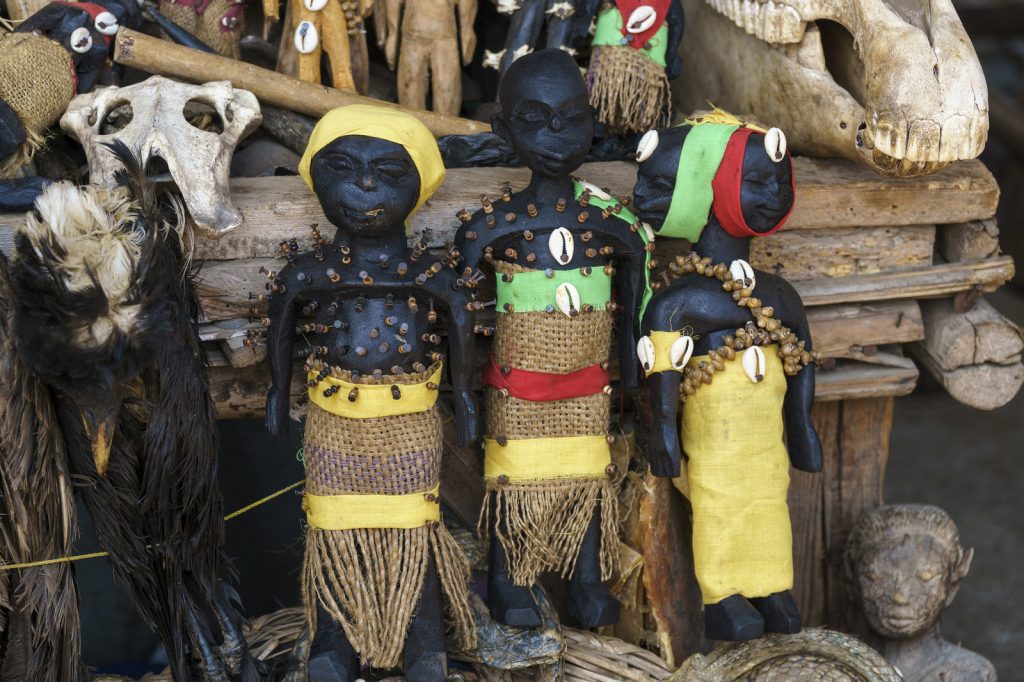
Shrines at this level may contain skulls, bones, feathers, horns, earthen vessels, charged objects and Juju media. These objects preserve the astral signature of the entities served there. Repeated blood offerings lower the vibration of the space into compatibility with the beings being contacted.
Museums and historical sources use the word shrine more broadly. The Metropolitan Museum, for example, describes Yoruba shrines, sacred groves and temples as abodes of divine beings (The Met). That wider cultural usage is valid within its own language. Our distinction here is an esoteric operational distinction: we are separating a clean higher altar from the blood-fed lower astral shrine according to the kind of work performed within it.
The two spaces can share certain features. Both may contain sacred objects. Both may serve consultation. Both may be dedicated. Both may create a concentrated spiritual atmosphere.
But similarity of appearance does not erase difference of purpose.
A courtroom and a classroom both contain chairs and tables. Please do not answer an examination question by shouting, “Objection, My Lord.”
At the altar, a lower entity may be summoned within a controlled boundary for identification and banishing. The practitioner remains in authority and does not feed or worship the intrusive being. At the lower shrine, the entity is served, maintained and invited to remain as patron.
One space removes the force.
The other builds a relationship with it.
That is not a small difference.
Why Some Shrines Affect the Psychic Body
Before I fully understood this distinction, I noticed that entering certain shrines affected me physically. I would leave feeling feverish, weak and chilled, almost as though malaria had arrived without submitting an application.
The reaction was not caused by fear. It happened repeatedly even when my conscious mind remained calm.
A true Light Worker later explained that my psychic body and consciousness were incompatible with the lower vibration concentrated inside those spaces. By entering, my field was forced into contact with an atmosphere beneath its normal frequency. The temporary reduction produced discomfort.
Other highly sensitive people experience similar reactions in spiritually heavy places. They may feel pressure in the head, sudden exhaustion, nausea, anxiety, coldness, confusion or an urgent desire to leave.
The ordinary person may feel nothing because sensitivity differs. Someone who does not smell smoke is not proof that the room contains no fire; perhaps the nose is blocked.
However, discernment is necessary. Not every fever is spiritual, and wisdom does not forbid medical examination. The true mystic respects both the biological and subtle bodies. If symptoms persist, attend to the physical condition while also examining the energetic environment.
Spiritual intelligence is not the art of blaming a ghost for everything medicine can treat.
Incense Is an Energetic Instrument
Incense is one of the most common tools found upon altars and inside shrines, yet many people use it without understanding why.
They light a stick because the fragrance is pleasant. That is one function. Aromatic smoke affects mood, memory, breath and attention. But within spiritual work, incense also carries an elemental and vibrational purpose.
Incense belongs primarily to the Air current, although the burning coal or flame brings Fire, the plant material brings Earth and the released oils carry a fluid essence related to Water. One small act therefore unites the four elements.
Historically, aromatic resins were burned in religious and funerary rituals. The British Museum records the ritual use of frankincense and notes that resins such as pistacia were used as incense in ancient Egypt (British Museum incense burner; ancient Egyptian resins). Ancient images also show priests censing divine figures and sacred spaces.
The public history confirms the practice. Mysticism explains the energetic intention.
When correctly selected, incense changes the atmosphere of the sanctum. Its plant signature, fragrance and consecrated use can:
- clear stagnant or incompatible energies;
- establish the frequency required for a rite;
- assist concentration and psychic receptivity;
- announce the practitioner’s intention to the unseen field;
- create a sympathetic bridge to a particular elemental or spiritual current; and
- make the space more compatible with the beings being invoked.
Incense does not drag a deity from one dimension like airport security pulling a traveller aside. It prepares the atmosphere so that contact becomes easier.
Different incense formulas carry different spiritual signatures. A fragrance suitable for purification may not be suitable for necromantic work. One used to attract lower astral beings should not be burned casually in a bedroom because the packet looked colourful.
This is where knowledge becomes protection.
The Mystery of 999 Incense
Within the esoteric classification taught in this discourse, the incense popularly sold as 999 incense is aligned with the lower fourth-dimensional current. It does not raise the sanctum beyond that astral level. Its signature prepares the space for entities compatible with the lower field.
This is why I advise practitioners of pure spirituality not to use 999 incense or similar formulas unless they are trained and intentionally working at that level.
The problem is not that smoke suddenly becomes evil because a number is printed on a packet. The concern is correspondence: what the formula attracts, what atmosphere it establishes and what ritual tradition charged its use.
Many local priests assume that all incense performs the same function. They select by smell, availability or habit. A priest may maintain a lower blood shrine while burning an incense intended to raise the space towards a higher current. The two instructions fight each other energetically, and the practitioner wonders why the work becomes unstable.
It is the spiritual equivalent of pressing the accelerator and brake together, then blaming the road.
Sandalwood, Rose and Higher Consecration
For pure consecration and work directed towards fifth-dimensional and higher beings, I recommend genuine sandalwood and rose incense within this teaching.
Sandalwood carries a calm, elevating and meditative signature. It assists purification, concentration and the stabilisation of a higher sacred atmosphere. Genuine rose incense resonates with Love, the Divine Feminine, the heart field, grace and refinement.
These incenses do not merely cover an unpleasant smell. They help establish an environment incompatible with many lower entities. As the frequency rises, intrusive forces withdraw or become easier to identify and banish.
Quality matters. Many commercial sticks contain synthetic perfume with little connection to the plant named on the packet. A label saying “sandalwood” does not force the contents to become sandalwood through positive thinking.
Use trusted preparations. Observe how the body, mind and dreams respond. Do not mix ten incenses at once and then complain that the spiritual message lacks clarity. Even the ancestors might step outside for fresh air.
More importantly, incense cannot purify the intention of the person burning it. If you enter the sanctum planning harm, the sweetest rose smoke will not convert the ritual into Love. Tools amplify direction; they do not replace conscience.
Building a True Home Sanctuary
For the sincere practitioner wishing to establish a basic sacred space, the first principles are simple:
- Choose a clean and respectful location. It may be a room, corner or enclosed cabinet, but it should not be treated carelessly.
- Identify the purpose. Is the altar for meditation, ancestral remembrance, elemental communion, psychic work or advanced invocation?
- Understand your elemental current. Do not copy another practitioner’s altar without knowing whether the symbols correspond to your path.
- Begin symbolically and patiently. A candle, water, natural objects and appropriate incense can support basic practice while you learn.
- Do not install an advanced spirit medium without guidance. Contact is responsibility.
- Keep the space physically and energetically clean. Remove dead offerings, spoiled water, dust and objects that no longer serve the work.
- Develop a regular practice. Five sincere minutes daily will build more rapport than one dramatic ceremony every six months.
- Protect the privacy of the work. Not every visitor must inspect your sanctuary or photograph what is sacred.
- Let the altar reflect purity of conduct. A dedicated space cannot substitute for personal transformation.
- Seek knowledge before power. Power received before wisdom usually becomes an expensive teacher.
These are foundational principles, not the advanced consecration procedure itself. The detailed installation of a medium, invocation of specific beings and activation of higher contact belong within guided training where the student’s readiness can be assessed.
Sacred knowledge is not hidden because the teacher enjoys secrecy. It is protected because an immature hand can turn a key into a weapon.
THE SECRET WITHIN THE SANCTUARY
We have now illuminated the central mystery.
Juju is not the totality of African Spirituality. It is a charged medium—or the power and spirit contacted through that medium. In the lower form examined here, it connects mainly with fourth-dimensional astral entities and is maintained through blood, fear and transactional exchange.
Vodou is not simply an upgraded Juju. It is a wider spiritual system shaped by African ancestral traditions and, in its diasporic forms, by contact with Catholic imagery and ritual. It contains devotion, spirit communion, spells, psychic reading, necromancy, herbal knowledge, invocation and banishing. Its practitioners may operate at lower or higher dimensional levels.
An altar is not merely a decorated table. The visible objects become part of an active spiritual centre only through dedication, compatible symbols, regular practice and the installation of a lawful medium appropriate to the practitioner’s element and degree.
A sanctum is the consecrated environment surrounding that work. It separates sacred practice from ordinary distraction and becomes stronger through disciplined use.
A shrine, within the operational distinction of this teaching, is a place where lower astral entities are served through sacrifice and blood. It may resemble an altar outwardly, but purpose and vibration reveal the difference.
Incense is more than perfume. It is an elemental instrument used to alter the energetic condition of a space. The correct incense prepares contact; the wrong incense may invite a current the practitioner neither intended nor understands.
And above all, the practitioner is the first sanctuary.
If the mind is impure, the altar will eventually reflect confusion. If the intention is selfish, lower entities will recognise an open market. If the seeker desires wisdom, discipline and service, the path will gradually reveal higher doors.
Return to your root, but do not return blindly.
Do not worship an object because it frightened you.
Do not call every African spirit a demon because a foreign religion trained your fear.
Do not call every bloody entity an ancestor because it spoke your language.
Do not mistake spiritual power for spiritual evolution.
And do not build what you cannot govern.
The true African sanctuary is a school of consciousness. It teaches the practitioner to live in harmony with nature, honour the elemental forces, maintain communion with the Chi, recognise the many dimensions of existence and use spiritual knowledge for the highest good.
That is the inheritance we must recover.
Not fear.
Not performance.
Not the endless slaughter of innocent creatures to satisfy astral forces whose hunger has no graduation day.
Knowledge.
Purity.
Mastery.
Love.
Light.
If you are sincerely called to this path, begin with understanding. Learn the natural and universal laws. Master the elements. Develop the mind. Know your Chi. Discover your source. Then, when you are ready, enter the sanctuary under proper guidance.
The door is not locked against you.
It is merely waiting for you to arrive with the right consciousness.
MAY THE LIGHT OF THE GREAT GODDESS ILLUMINATE YOUR SANCTUARY.
MAY YOUR CHI GUARD YOUR STEPS.
MAY YOUR ELEMENTAL COMPANIONS RECOGNISE YOUR SINCERITY.
MAY KNOWLEDGE PROTECT YOU FROM POWER WITHOUT WISDOM.
ASEEEEEEE!
Written by Knight Fredel Ijere — The Mystery Teacher
Writer, Author, Metaphysicist, Mystery Teacher and Spiritualist
Awake Af’raka Magazine and Awake Af’raka Community
© 2020–2026 Awake Af’raka Magazine
For private consultation or enrolment into the Advanced Class of Awake Af’raka Community:
- Help Centre: help@awakeafraka.com
- WhatsApp: +2349132816928
- Mystical Discourse: Subscribe to Awake Af’raka Study Discourse
THIS TEACHING CONTINUES. THE SANCTUARY HAS MORE THAN ONE CHAMBER.
REFERENCES AND FURTHER READING
- Encyclopaedia Britannica — Juju: Magic and Spiritual Power in West Africa.
- Merriam-Webster — Voodoo: Definition and Usage.
- Smithsonian Magazine — Explore the Timeless World of Vodou, Deep Within the Caves of Haiti.
- UNESCO Intangible Cultural Heritage — Safeguarding the Sacred Songs of the Vodou Cult of Lakou Dereal.
- The Metropolitan Museum of Art — Arts of Africa: Ile-Ife, Sacred Groves, Shrines and Altars.
- Smarthistory — African Religion and the Spiritual Realm.
- Smithsonian Center for Folklife and Cultural Heritage — Folklife Altar Project.
- British Museum — Incense Burner and the Ritual Use of Frankincense.
- British Museum — Ancient Egyptian Coffins, Resins and Incense.