
ISSUE 20
BRACE YOURSELF FOR I PRESENT TO YOU ALL ABOUT MOSES, EGYPT AND THE SACRED HISTORY BETWEEN MEMORY AND MYTH
BY KNIGHT FREDEL
AWAKE AF’RAKA MAGAZINE — ISSUE 20
Sometimes we think we know because somebody told us. Then somebody else repeated what the first person said, a third person printed it in a book, a fourth person wore a long robe and preached it with a serious face, and suddenly repetition was promoted to the rank of truth.
Human beings are interesting creatures. Tell a man a lie quietly and he may question you. Put the same lie behind a pulpit, add an organ, dim the lights and shout, “Thus says the Lord!” and he may begin to defend it with his entire family history. Give the lie a university seal and difficult grammar, and another man will defend it with a necktie. We often do not examine the spirit of a claim; we examine the uniform it is wearing.
This is why I say: brace yourself.
Do not brace yourself because I am about to hand you one more story and demand that you swallow it whole. We already have enough people doing that. Brace yourself because the path of truth may require you to release stories that have comforted you since childhood. Brace yourself because a sincere seeker must sometimes stand between two shouting crowds and refuse to become a slave to either one. One crowd says, “Believe everything in the holy book exactly as we explained it.” The other says, “Reject everything in the holy book and accept every attractive counter-story posted online.” Meanwhile, Truth sits quietly in the corner, wondering when everybody will stop shouting and begin investigating.
History has indeed been distorted. The memory of nations has been edited by kings, priests, empires, colonizers, political parties and institutions. Teachers who challenged authority have later been claimed by the same kinds of authority. Symbols have been borrowed, translated and given new clothing. African civilizations have been reduced or omitted in textbooks. Sacred teachings have been carried from one people to another, sometimes with proper honour and sometimes with the original owner’s name conveniently missing.
Yet we must also understand this: the fact that official history contains distortions does not make every alternative history true. If we reject one unexamined doctrine only to kneel before another unexamined doctrine, we have not awakened. We have merely changed the colour of our chains.
A social-media post written in capital letters is not a newly excavated papyrus. A video with mysterious music is not an archaeological site. And a man saying, “They do not want you to know this,” seventeen times is not evidence—although he may collect plenty of views before breakfast.
The true Light Bearer is not afraid to say, “This much is documented. This part belongs to sacred tradition. This point is a reasonable possibility. This other point is an esoteric interpretation. And this final claim remains unproven.” Such honesty does not weaken spiritual knowledge. It cleans the lamp through which the knowledge must shine.
Today we shall look into one of the most powerful and disputed figures in religious history: Moses, known in Hebrew as Moshe. We shall look at Egypt, the Hebrews, the Exodus, Akhenaten, Ma’at and the four sacred letters YHWH. But we shall do so with both eyes open—the outer eye that examines evidence and the inner eye that seeks meaning.
Let no one accuse us of fearing mystery. Mystery is our field. But mystery and carelessness are not twins. The unknown deserves reverence; it should not become an empty room into which we throw every claim that has nowhere else to sleep.
So take a deep breath. Put your inherited conclusions beside you for a moment. Do not throw them away, and do not worship them. Let them sit quietly while we examine them.
The journey begins.
I. THE HAND THAT WRITES THE MEMORY
One hundred years from today, even your own story may be distorted.
Imagine that you lived a sincere life. You taught people to seek the Divine within, to love their neighbours, to reject oppression and to question those who sold fear in the name of heaven. You refused to form a religion. You did not appoint anyone to wear a crown after your death. You simply taught, healed and awakened those who came to you.
Then you died.
Fifty years later, one group might claim that only they understand you. Another group might collect your sayings and remove the ones that disturb their institution. A third might paint your image to look like themselves. A fourth might build a grand structure in your name and charge people money to enter the “special section.” A fifth might announce that you hated everybody they currently hate. By the time one hundred years have passed, you could become the official patron of everything you stood against.
And if your spirit returned to correct them, they might call you a heretic against your own religion.
That, my brothers and sisters, is the comedy and tragedy of human history.
This does not mean every tradition about a departed teacher is false. Oral memory can preserve truth. Communities can guard teachings with great care. Symbols can carry wisdom across centuries when ordinary speech would have died. But transmission is never neutral. Every teller has an angle. Every scribe selects. Every translator chooses one word instead of another. Every empire likes the parts of a sacred message that make obedience easier.
The life and teachings of Yehoshua ben Yosef, whom the world generally calls Jesus, offer a familiar example. He lived as a Jewish teacher in a Jewish world under Roman power. The movement that formed around him developed through many communities, languages, debates and centuries. Christianity was not produced one afternoon in a Vatican office with one priest holding scissors and another holding glue. That institution arose later within a long and complicated history. Yet it is also true that church authorities, imperial politics, canon formation, translation, colonial expansion and religious art deeply influenced how later generations understood him.
His image has been presented through many cultures, but the pale European Christ became especially powerful within European imperial worlds. That image did not merely decorate walls. In colonized lands, it could place holiness in a foreign face and make the conquered person associate heaven with the conqueror. When a Black child sees the saints, angels, Messiah and even God wearing the face of the ruling race, while the faces resembling his ancestors are called pagan or demonic, the painting has already begun preaching before the missionary opens his mouth.
Still, if we expose that manipulation and then invent claims without evidence, we repeat the same sin under a new flag. The answer to a distorted white Christ is not another distortion. The answer is to restore context, recover suppressed voices and separate the historical teacher from the many political costumes later placed upon him.
This same discipline must guide us when we approach Moses.
Before we proceed, let us establish five simple terms.
History is the careful reconstruction of the past through texts, objects, inscriptions, archaeology, language and other evidence. It is never perfect because evidence can be missing, damaged or misunderstood.
Sacred tradition is the memory a community preserves about its origin, teachers, encounter with the Divine and moral purpose. Sacred tradition may contain history, theology, poetry, ritual memory and symbols woven together.
Myth does not automatically mean a foolish lie. In serious study, a myth can be a sacred story that explains identity, order, suffering, origin and destiny. A myth may contain historical memory while also working on symbolic levels.
Hypothesis is a proposed explanation that must be tested. It is not a fact wearing dark sunglasses.
Esoteric interpretation is an inner reading of a person, name or event. It asks what the story reveals about consciousness, initiation, cosmic law and the evolution of the Soul. It may be spiritually fruitful without pretending to be an inscription dug out of the sand.
Once these terms are separated, confusion begins to lose its throne.
Many people think there are only two choices: either every detail happened exactly as written, or the entire story is useless. This is childish thinking. A sacred narrative can preserve an ancient memory, reshape it through later writers, surround it with theology and still carry profound spiritual instruction. The outer event and inner meaning are related, but they are not identical.
This is why the seeker must develop two eyes. The historian’s eye asks, “What can the evidence support?” The mystic’s eye asks, “What reality of the Soul does this symbol reveal?” If you use only the first, you may catalogue the temple stones and never enter the sanctuary. If you use only the second, you may claim the temple was built by flying dolphins from Jupiter because the thought arrived during lunch.
Balance, dear seeker. Always balance.
The distortion of history is real, but the cure is disciplined remembrance. We do not restore Af’raka by manufacturing ancient documents. We restore her by studying what exists, recovering what was suppressed, protecting what remains and refusing to let our hunger for greatness overpower our love of truth.
If an idea is true, investigation will not harm it. If an idea collapses when examined, then examination did not destroy the truth; it released us from an error.
This is the first initiation of the article: do not become so eager to expose another person’s illusion that you protect your own.
Now we can enter the chamber of Moses.
II. MOSES BETWEEN SCRIPTURE, STONE AND SILENCE
According to the biblical story, the descendants of Jacob had multiplied in Egypt. A new Pharaoh feared their number and subjected them to forced labour. When an order was given against Hebrew male infants, a Levite woman named Jochebed placed her baby in a waterproofed basket among the reeds of the Nile. Pharaoh’s daughter found him, took pity on him and raised him as her son. He received the name Moses, or Moshe.
As an adult, Moses killed an Egyptian who was beating a Hebrew and fled to Midian. There, after a period away from the royal world, he encountered the Divine in the burning bush. He returned to confront Pharaoh, the plagues followed, the Hebrews departed, the sea opened before them, and Pharaoh’s forces were overcome. Moses later received the law at Sinai and guided the people through the wilderness.
That is the broad biblical narrative. It is sacred memory for millions. It is also literature shaped by theology, identity and generations of transmission.
Notice something important: the book of Exodus does not name the Pharaoh. It does not say Seti I. It does not say Ramesses II. Those identifications came from later efforts to fit the sacred story into Egyptian chronology. Films, preachers and popular books then repeated the choices until many people assumed the names were printed in the original text. Hollywood added its own thunder, dramatic cheekbones and expensive horses, and everybody went home convinced they had watched archaeology.
The mention of a store-city called Raamses encouraged many interpreters to connect the story with the Ramesside period, but the dating remains debated. Others place a possible background earlier or later. Some scholars see the narrative as preserving memories from different periods rather than reporting one event in the modern historical sense. The honest conclusion is not that we know which Pharaoh faced Moses. The honest conclusion is that we do not know.
That sentence may disappoint anyone who prefers certainty in a decorated box, but uncertainty is not ignorance when it is acknowledged. It is the clean border between knowledge and imagination.
No surviving Egyptian record has been accepted as a contemporary account of Moses or of the biblical Exodus. Archaeology has not confirmed a migration on the massive scale described by a literal reading of the text. This does not mathematically prove that no smaller departure, group memory or historical figure ever existed. It means that the full narrative cannot presently be presented as independently verified history.
Some scholars believe there may have been a historical Moses or a smaller group with an Egyptian background whose memory later became central to Israel’s identity. Others treat Moses primarily as a legendary lawgiver shaped by later national tradition. Between these positions lie many theories. The evidence does not allow any sincere person to announce that the case has been closed and the key thrown into the Nile.
What about his name?
The Hebrew text connects Moshe with a Hebrew word meaning “to draw out,” because he was drawn from the water. Yet scholars have long observed that the name also resembles an Egyptian element, ms or msy, relating to birth or being born. We see that element within names such as Thutmose—often understood as “born of Thoth”—and Ramesses, “born of Ra.” A shortened form could function as a personal name.
This Egyptian connection is meaningful. It gives the Moses tradition an Egyptian flavour. But no reliable evidence establishes that “Moses,” “Moshe,” or “Munius” was a general title awarded to high initiates of an Egyptian mystery school. Nor has a historical person found in Egyptian records under one of those names been convincingly identified as the biblical Moses.
Therefore we must say it correctly: the name may carry an Egyptian linguistic background; the claim that it was a documented mystery-school rank remains an esoteric or modern hypothesis, not an established historical fact.
There is no shame in that distinction. An esoteric school may interpret the name as a grade of consciousness, but it should not place that interpretation in an archaeologist’s mouth without permission. Archaeologists already have enough arguments among themselves; they do not need us volunteering new sentences on their behalf.
What of Moses’ race?
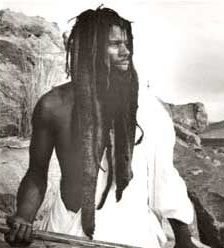
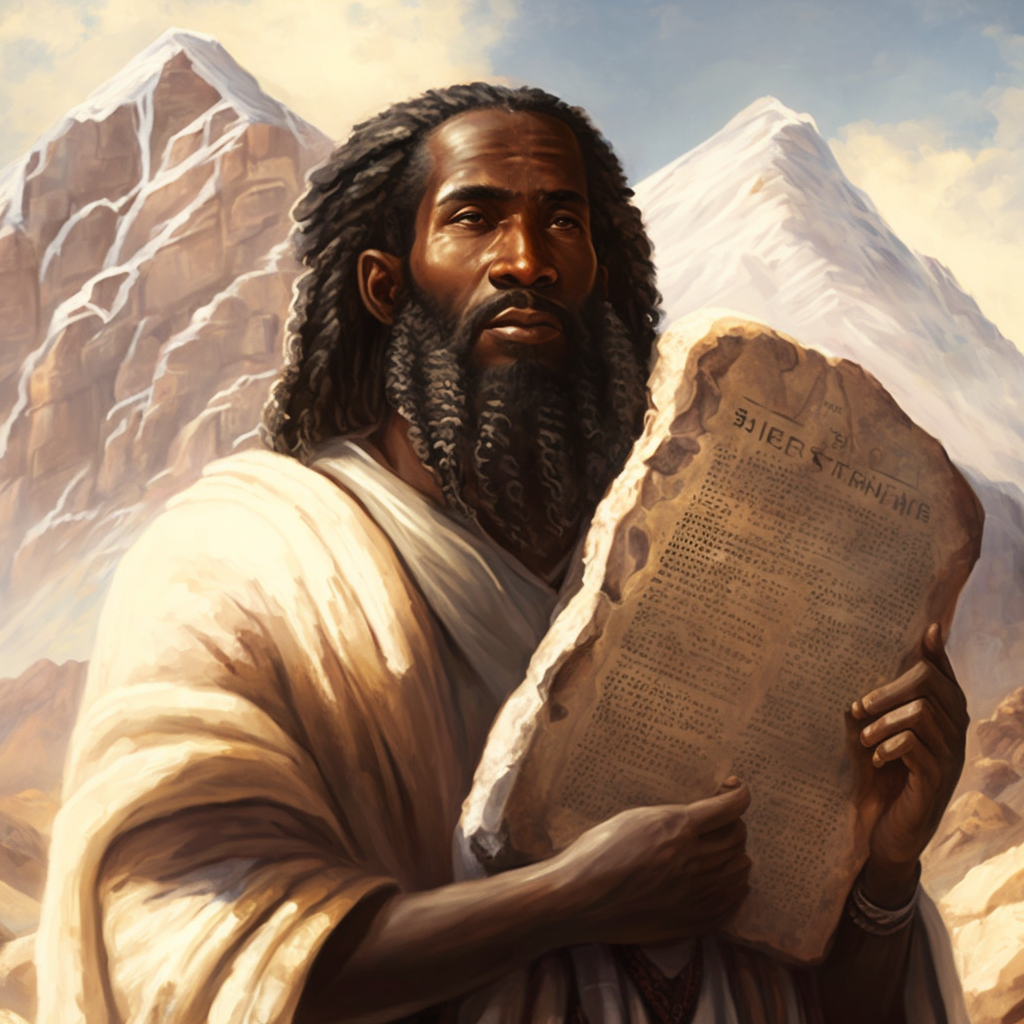
The popular European image of Moses as a pale northern European man with flowing white hair tells us more about European artists than about the ancient eastern Mediterranean. Moses, if historical within the setting described, belonged to an African–Levantine world of Egypt, Canaan, Sinai and neighbouring peoples. He was not an English gentleman who accidentally missed the boat to London.
At the same time, ancient identity cannot be squeezed neatly into today’s rigid “Black versus white” categories. Ancient Egyptians and Levantines had varied appearances, lineages and identities. They understood themselves through land, language, kinship, city, people, cult and kingdom—not through the modern racial boxes produced by recent centuries. We can rightly reject the whitewashing of African civilizations without replacing it with another oversimplification.
Kemet was an African civilization. That truth does not need careless arguments. The Nile Valley was connected with Nubia, the Sahara, the Mediterranean and western Asia. Ancient people moved, traded, intermarried, fought, learned and changed. History is a river, not a row of modern passport offices.
Now let us speak of Akhenaten.
Akhenaten, earlier called Amenhotep IV, was a real Pharaoh of Egypt’s Eighteenth Dynasty, generally dated to the fourteenth century BCE. He elevated the Aten—the solar disk—and created a new royal centre at Akhetaten, now called Amarna. He redirected enormous religious attention toward Aten and challenged the power of older temples, especially the cult of Amun. After his death, much of his religious programme was rejected, his city abandoned and his memory attacked.
Because Akhenaten’s theology focused intensely on Aten, many writers have called him the first monotheist. Yet scholars debate whether his system was strict monotheism, royal monolatry, henotheism or a unique religious revolution centred on the king’s relationship with Aten. Even the words we use can push ancient realities into modern boxes.
The resemblance between Akhenaten’s religious reform and later Israelite monotheism has inspired many theories. Sigmund Freud famously speculated that Moses was an Egyptian connected to Atenism and transmitted aspects of that religion. Others have proposed that Atenist ideas travelled into Canaan during the period of Egyptian control. There are even interesting literary parallels between the Great Hymn to Aten and Psalm 104, though the path of transmission is uncertain.
These comparisons are worthy of study. They show that the ancient world was interconnected. Egypt ruled and influenced parts of Canaan for centuries. Ideas travelled with diplomats, scribes, merchants, soldiers, captives and priests. A wall between “Egyptian thought” and “Israelite thought” would have been far more porous than later religious pride likes to admit.
But no accepted ancient document says that Akhenaten trained Moses, selected him as leader, sent him out with food and horses, or commanded Egyptian initiates to guide the Hebrews. No evidence securely places Moses in Akhenaten’s inner circle. That story may serve as a modern reconstruction or esoteric tradition, but it cannot be announced as “what truly happened” unless evidence appears.
This is precisely where many truth seekers fall into the same hole they dug for religious literalists. They say, “The Bible has been distorted,” which may be partly correct, and then immediately present another detailed story without showing its source. Pharaoh’s name, Moses’ initiation grade, the private meeting, the horses, the food and perhaps even the weather on departure are supplied with astonishing confidence. One begins to wonder whether the writer stood behind a pillar taking minutes.
My purpose is not to mock sincere alternative research. It is to rescue it from overstatement.
The strongest position is this: Moses stands at the meeting point of Egyptian influence, Israelite sacred memory and the universal image of the lawgiver. His story may preserve the memory of real groups, events and cultural exchanges, but its present form is a theological narrative, not a modern court transcript. Akhenaten offers a fascinating comparison, not a proven employer. The Egyptian root of Moses’ name is plausible; “Munius the initiate” is not established. The unnamed Pharaoh must remain unnamed until evidence names him.
And yet—listen carefully—the spiritual power of the story remains.
Moses is the consciousness that awakens inside the house of Pharaoh. He grows within the system but hears the pain of the oppressed. He cannot remain comfortable after knowledge reaches him. He leaves the palace, enters the wilderness and encounters the Fire that burns without consuming. He returns to confront the very power that educated him.
Whether one reads Moses historically, devotionally or esoterically, this pattern speaks to every awakened person. Many of us were raised inside systems we later began to question. The school taught us one history. The church gave us one God-image. Society instructed us to measure success by money, obedience and approval. Then something burned within us without destroying us. A voice asked, “Who are you beneath what they named you?”
At that moment, Moses is born in consciousness.
The Pharaoh outside may be a ruler. The Pharaoh within is fear, pride, conditioning and the part of us that benefits from bondage. It says, “Do not disturb what has always been done. Return to sleep. Bricks must be made.”
But the awakened will answers, “Let my people go.”
This inner truth does not require us to falsify the outer history. In fact, the cleaner the history becomes, the brighter the symbol can shine.
III. EGYPT, THE HEBREWS, MA’AT AND THE MEMORY OF EXODUS
We must now correct one of the greatest confusions in the discussion: the modern State of Israel and ancient Israel are not the same historical category.
The modern State of Israel proclaimed independence in 1948. That is a modern political event. But the word Israel, an ancient people identified by that name, and later kingdoms of Israel and Judah existed long before 1948. The Merneptah Stele, an Egyptian victory inscription from the late thirteenth century BCE, mentions a people called Israel in Canaan. The sign used indicates a people rather than a territory or established state. Later inscriptions and archaeology attest kingdoms in the region.
Therefore it is incorrect to say Israel did not exist in any form until 1948. The accurate statement is that the present State of Israel was established in 1948, while ancient Israelite peoples and political formations belong to antiquity. These truths can stand together. We do not need to erase ancient Israel in order to acknowledge the modern history and continuing suffering of Palestinians. One injustice is not healed by flattening another people’s history.
Truth has no need to join a political football team.
What, then, were the Hebrews?
The Bible presents them through the family of Abraham, Isaac and Jacob, whose household went into Egypt during famine and grew into a people. Independent evidence has not confirmed the patriarchal family story as a report of identifiable individuals. Yet movements of Semitic-speaking peoples between Canaan and Egypt are well documented across long periods. Egypt employed, settled, traded with, fought and absorbed people from western Asia. Famine, labour, warfare and migration all moved populations through the region.
So the broad background is historically plausible even where the particular sacred genealogy cannot be verified.
The word Habiru or Apiru also appears in ancient Near Eastern texts. Some writers equated it directly with “Hebrew,” but the connection is not simple. Habiru seems largely to have described a social condition—people on the margins, mercenaries, dependants, fugitives, workers or outlaws—rather than one ethnic nation. Some early Israelites could conceivably have belonged to groups described that way, but Habiru and Hebrew are not proven to be identical labels.
Once again, one similar sound is not a marriage certificate.
What about slavery?
Ancient Egypt used forced labour, war captives, corvée labour and various forms of servitude. But these institutions were not identical to the racialized plantation slavery familiar from the Atlantic world. The biblical narrative describes severe oppression of Israelites, while independent Egyptian sources do not confirm the exact mass enslavement and miraculous departure described in Exodus. A smaller group leaving Egypt and carrying a powerful liberation memory is one scholarly possibility; another is that the story reflects Canaan’s long experience under Egyptian imperial control; others read it chiefly as a national foundation story formed later.
We should resist two extremes. One says, “Every detail happened exactly as the film showed.” The other says, “No historical memory can exist because no papyrus gives us the bus timetable.” Ancient history rarely offers that comfort.
Absence of evidence is not always final proof of absence, but it matters—especially when a claim involves a very large population and spectacular events. A careful mind weighs both facts. It neither turns silence into certainty nor pretends silence is irrelevant.
The Exodus can therefore be approached through several layers.
On the historical layer, it may preserve memories of migration, forced labour, Egyptian power, departure and cultural exchange, though its scale and details are unconfirmed.
On the national layer, it tells Israel, “You were once oppressed; therefore you must remember the stranger, the poor and the enslaved.” The memory of suffering becomes an ethical command.
On the theological layer, it declares that empire is not the highest power and that the cry of the oppressed reaches the Divine.
On the esoteric layer, it describes the Soul’s escape from bondage, its passage through the waters, purification in the wilderness and reception of law on the mountain of higher consciousness.
These layers need not fight. The mistake comes when one layer puts on the clothing of another and demands to be called the only truth.
Let us examine the sea.
The Hebrew expression Yam Suph is often translated “Red Sea,” but it is commonly understood as “Sea of Reeds” or “Reed Sea” in relevant Exodus passages. Scholars debate its location, and the geography of the route remains uncertain. The image may concern lakes or marshlands near Egypt rather than the deep body of water that popular films show rising like two glass skyscrapers while fish stare at the Israelites in surprise.
The physical mechanism, if a historical event lies behind the tradition, has been explained in many ways: wind, shallow marsh, tidal conditions, unusual weather, or later poetic development. The religious text presents deliverance through divine action. The mystic sees Water as the great threshold between states of being.
One claim in the earlier form of this article connected the sea-parting episode to an Egyptian chronicle called “The Tale of the Golden Lotus.” I have not found a reliable ancient Egyptian text under that title that scholars recognize as the source of the Exodus sea narrative. It may be a confusion with another work, a modern title, an oral claim or an unverified reference. Until the actual manuscript, museum number, translation and scholarly publication can be produced, it should not be taught as fact.
There is spiritual strength in correcting oneself. The ego says, “I have printed it before; therefore I must defend it forever.” The Light says, “If greater knowledge corrects me, I shall grow.” A teacher who cannot revise is no longer teaching. He is guarding a statue of his former understanding.
Now let us turn toward the laws of Ma’at.
Ma’at was among the deepest foundations of Kemetic thought. She represented truth, justice, balance, right order and the harmony that allows creation and society to remain whole. Ma’at was not merely a list of polite behaviours. She was cosmic order expressed through human conduct. Pharaoh was expected to uphold Ma’at against disorder. The dead stood before judgment, their heart weighed against her feather. In the Negative Confession associated with Spell 125 of the Book of the Dead, the deceased declared freedom from many wrongs.
Here we encounter ethical statements that resemble commandments found in later traditions: not killing, not stealing, not lying, not committing certain abuses. These parallels are real and deserve attention. Egypt’s moral, legal and religious ideas were ancient, sophisticated and widely influential. Israelite culture grew within the broader ancient Near East, where laws and wisdom crossed borders.
But similarity does not by itself prove that Moses copied the Ten Commandments directly from one particular list of Ma’at’s declarations. Proving direct borrowing requires more than placing two sentences side by side. One must study dates, languages, forms, transmission routes, purpose, structure and differences. Many societies condemn murder and theft because societies that enthusiastically celebrate both tend to have very short meetings.
The better conclusion is richer than a simple “copy and paste” accusation.
The ethical world of ancient Israel did not emerge in a vacuum. Egyptian wisdom, Mesopotamian law, Canaanite culture and Israelite experience formed part of an interconnected world. The laws associated with Moses share the human search for order that Ma’at expressed with extraordinary beauty centuries earlier. Some influence is entirely plausible; direct extraction of the whole Decalogue from the Negative Confession remains unproven.
Spiritually, however, Ma’at and Sinai speak across the ages.
Ma’at says that the universe has balance and that conduct gives weight to the heart. Sinai says freedom requires covenant and responsibility. It is not enough to leave Pharaoh; Pharaoh must also leave you. A people can escape physical chains and still carry the overseer inside the mind. Without inner law, yesterday’s slave may become tomorrow’s oppressor.
That is why the journey does not end at the sea.
Many people want the miracle of liberation but not the discipline of transformation. They want Pharaoh defeated on Monday and by Tuesday they are constructing a golden calf because Moses has taken too long on the mountain. Human beings can become impatient with enlightenment. Give them forty days of silence and somebody will manufacture a deity from jewellery.
The wilderness is therefore essential. It is the space between the old identity and the new one. In the wilderness, the mind complains because the familiar prison at least had familiar food. Every awakened person knows this stage. You discover that an inherited belief is false, but you have not yet built a mature understanding to replace it. The old church no longer holds you, but every rumour now fascinates you. You have left Egypt, but Egypt has not finished leaving your nervous system.
This is the dangerous stage in awakening.
A seeker may begin to believe every conspiracy, insult everybody still inside religion and confuse suspicion with intelligence. He thinks that because one institution lied, every strange claim must be true. He condemns priests for demanding blind faith, then gives blind faith to a stranger with a podcast and a ring light.
The wilderness tests discernment.
Ma’at demands balance. Moses’ law demands moral responsibility. The mystical path demands self-mastery. Together they tell us that freedom without order becomes another bondage.
What of the Levites?
The Bible presents Levi as an Israelite tribe with priestly functions. Some scholars have observed Egyptian-looking names among figures connected with the Exodus tradition and have proposed that a smaller Egyptian-connected group, perhaps including Levites, helped carry an Exodus memory into Israel. This is a scholarly hypothesis worth examining. It is not the same as proof that Akhenaten appointed Egyptian mystery-school priests and sent them to organize the Hebrews.
The latter can be offered as an esoteric reconstruction, but we must label it honestly.
This is not a small matter. When Af’rakan writers criticize Europe for taking African knowledge, removing the source and presenting the result as their own, we must demonstrate a higher standard. We cannot demand citations from the colonizer and then cite the invisible library of “trust me, my brother” when it suits us.
Our ancestors deserve better. They left temples, tombs, inscriptions, papyri, art, mathematics, medicine, architecture and philosophy. Their greatness is not so fragile that it needs us to invent a meeting between Moses and Akhenaten. Kemet remains magnificent whether or not Moses attended one of its mystery schools. Ma’at remains profound whether or not the Decalogue was copied line for line. The Nile does not become shorter because scholarship asks a difficult question.
In fact, the honest picture reveals something spiritually grand: cultures do not evolve in sealed containers. Egypt influenced Canaan; Canaan interacted with Egypt; Mesopotamian ideas travelled west; Nubia and Egypt shaped one another; Mediterranean peoples exchanged symbols, goods and stories. Humanity has always been one great classroom in which students borrow notes, argue with teachers and occasionally pretend they invented the entire subject.
The wise seeker studies the exchanges without erasing anyone.
IV. YHWH, THE FOUR LETTERS AND THE INNER EXODUS
The God revealed to Moses in the biblical tradition is represented by four Hebrew consonants: YHWH, commonly called the Tetragrammaton, meaning “four letters.” Because the name came to be treated as too sacred to pronounce, readers substituted titles such as Adonai, “Lord.” The exact ancient pronunciation is not certain. “Yahweh” is a common scholarly reconstruction; “Jehovah” is a much later form produced through the meeting of the consonants with substitute vowel signs and Christian transmission.
Therefore YHWH is historically a sacred divine name in Israelite tradition. Its meaning has been interpreted in relation to being, becoming and the statement in Exodus often translated, “I Am Who I Am” or “I Will Be What I Will Be.” Scholars debate the history and early worship of this deity, as ancient Israelite religion developed over time rather than appearing in one completed package with a ribbon around it.
Later Jewish mystical and Hermetic traditions contemplated the four letters as more than an ordinary name. They became a sacred pattern, a formula of manifestation and a map of divine process. Various systems linked them to worlds, elements, stages of creation, masculine and feminine forces, and the descent of the unmanifest into form.
This esoteric reading is powerful, but again we must speak clearly: YHWH functioned historically as a divine name; interpreting it as a cosmic formula belongs to later mystical traditions. The two statements can coexist. We do not need to pretend the later commentary was engraved in the first moment of the name’s use.
The four letters invite meditation because they point beyond an image of an old man seated in the sky. The Divine cannot be captured by four consonants, four thousand pages or four million sermons. A sacred name is not the prison of the Infinite; it is a doorway through which consciousness approaches what language cannot contain.
This is why the name was guarded. Silence around a name can teach that the Ultimate is greater than speech. The tongue reaches its boundary, and the Soul continues.
At this level the Moses narrative becomes an initiation drama.
Egypt, within the spiritual allegory, is the field of material formation. But take note: this symbolic role must not be used to demonize the historical civilization of Kemet. Biblical Egypt can symbolize bondage within one story while historical Egypt remains a magnificent source of wisdom, art, government, spirituality and science. A symbol in someone else’s national narrative is not the total biography of a civilization.
In the inner reading, Egypt is the condition in which consciousness has forgotten its divine origin and now makes bricks for external masters. It is the mind occupied entirely by survival, fear, social programming and inherited identity.
Pharaoh is the hardened ego that claims ownership of your life-force. Pharaoh says, “Your time belongs to me. Your thoughts belong to me. Your children will inherit the same labour. You may worship, but only in the way that protects my throne.”
This Pharaoh can wear many faces. It may be a political system, a religious movement, an addiction, an abusive relationship, material obsession or ancestral fear. It may also be the part of you that refuses liberation because liberation demands responsibility.
Moses is the awakened Will. He is born among the oppressed but raised within the palace, showing that liberation often learns the language of the system it will later confront. He carries knowledge from both worlds. He knows the pain of the slave and the structure of power.
The basket upon the water is the protected seed of purpose. Before the awakened Will is strong enough to name itself, the current of life carries it through danger. The water that could drown the child becomes the vehicle that delivers him.
The burning bush is consciousness illuminated but not consumed. Ordinary fire destroys its fuel. Spiritual Fire reveals an energy whose source is beyond the visible form. The awakened person discovers a flame within that does not depend upon applause, institution or external permission.
And what is the first command before that Fire? Remove your sandals, for the ground is holy.
This means: remove the covering that separates you from direct contact. Put aside the pride with which you walk through ordinary life. The sacred is not somewhere else. The ground beneath your feet becomes holy when awareness enters it.
The return to Egypt is the courage to revisit the condition you escaped inwardly. Many people receive insight in meditation but refuse to bring it into their relationships, habits and society. They enjoy the burning bush but do not want the meeting with Pharaoh. They want enlightenment that never inconveniences anybody.
Such enlightenment is spiritual decoration.
Moses must return. Truth must enter the system that denies it.
The plagues can be read as the collapse of false order. When an entire civilization rests on imbalance, the distortion touches water, land, body, wealth, light and inheritance. Each plague strips confidence from the power that claimed to be absolute. What looked like cosmic order is exposed as a fragile arrangement maintained by force.
Yet the mystic must not use this allegory to celebrate the suffering of innocent people. The narrative itself is morally difficult, especially the death of firstborn children. A mature seeker does not dance around another person’s pain simply because the suffering occurs in his preferred sacred story. We may examine the theology, symbolism and ancient context while admitting the ethical weight.
The Passover is the marking of consciousness. The seeker chooses what shall pass away and what shall be preserved. A threshold is established. One state of being is ending; another is about to begin.
The departure is not freedom completed. It is freedom begun.
This is a lesson Af’raka must understand. A flag, anthem and Independence Day do not automatically remove colonial consciousness. A nation may drive out an external ruler and continue using the ruler’s mental furniture. The governor changes colour while the throne remains exactly where the empire placed it. Then everybody dresses beautifully once a year, waves flags and congratulates the prison for receiving new paint.
True Exodus requires the removal of Pharaoh from the imagination.
The Sea of Reeds is the threshold that cannot be crossed through ordinary certainty. Behind you stands the returning past; before you moves the unknown. You cannot remain where you are, and you do not yet know how the path will open.
Every genuine awakening reaches this water.
The religious mind may say, “Believe and the sea will open.” The mystic adds, “Align your will, take the step, listen for the movement of nature and recognize the passage when it appears.” Whether one reads the event as miracle, memory, metaphor or a union of all three, the water teaches transition.
The waters close behind the seeker because some doors should not remain open forever. You cannot return to complete unconsciousness after seeing. You may pretend not to know, but the knowledge will disturb your sleep.
The wilderness is purification. It removes dependence, reveals complaint and tests leadership. The people soon miss Egypt—not necessarily because Egypt was good, but because the familiar pain can feel safer than unfamiliar possibility.
How many people pray for freedom and then defend the chains because the chains come with a monthly routine? How many criticize religious control but panic when no pastor tells them exactly what to think? How many demand political change but sell their vote for rice and return home blaming the universe?
The wilderness reveals whether we wanted freedom or merely wanted a kinder Pharaoh.
Manna symbolizes provision that cannot be hoarded without decay. It teaches daily trust and right measure. The ego wants a warehouse; Spirit gives enough and observes whether greed will invent scarcity.
The golden calf is the return of consciousness to visible certainty. Moses is absent, the mountain is hidden by cloud, and the people become uncomfortable with a God they cannot hold. So they melt their wealth into an image and call the work of their own hands divine.
We still do this. Our calves are more fashionable now. Some are bank accounts, political celebrities, spiritual influencers, luxury cars and men who place “Prophet” before their name after three dreams and one successful Facebook advert.
The human mind loves a god it can photograph.
Sinai is the mountain of higher awareness. A mountain joins earth and sky. To ascend it is to leave the noise of the camp and enter a state where law is not merely imposed from outside but perceived as the structure necessary for freedom.
The tablets represent consciousness receiving form. Insight must become conduct. Vision must become discipline. A man who speaks beautifully about vibrations and treats everyone around him badly has not ascended; he has simply decorated his ego with spiritual vocabulary.
The law says that awakening has obligations.
Do not steal—not only another person’s property, but their dignity, labour, history or voice.
Do not murder—not only with a weapon, but through systems that consume lives for profit.
Do not bear false witness—not only in court, but in articles, pulpits, classrooms and historical claims.
Honour what brought you into being—not through blind ancestor worship, but by remembering the root from which your life grows.
Do not make an idol—not only from gold, but from scripture, institutions, race, nation, teacher or your own opinion.
The greatest idol of the truth seeker can become the belief that he alone possesses the truth.
Here the four letters return.
YHWH, contemplated mystically, points to Being beyond fixed image. It tells the seeker that the Divine is not limited to the name, statue or doctrine through which one people approaches it. The sacred formula becomes a movement: from unmanifest Will into conception, from conception into formation, from formation into living expression.
The name becomes breath.
Breath enters without a passport. It does not ask whether the lungs are Christian, Muslim, Kemetic, Jewish, traditionalist, atheist or still thinking about it. The same invisible air sustains all. Human beings then receive that breath and use it to argue over which group owns the Infinite. Surely the gods must occasionally watch us with the spiritual equivalent of raised eyebrows.
The esoteric Exodus is therefore not the story of one ethnic group defeating another for all time. It is the repeated liberation of consciousness from every structure that claims to own the Soul.
Whenever knowledge releases a mind from fear, Exodus occurs.
Whenever a woman leaves a system that taught her she was spiritually inferior, Exodus occurs.
Whenever an Af’rakan child discovers that the history of the continent did not begin with slavery, Exodus occurs.
Whenever a religious person learns to love truth more than doctrine, Exodus occurs.
Whenever an awakened person admits that one of his treasured theories lacks evidence, even that is Exodus—for the ego has lost one more slave.
This inner movement is the sacred centre of the narrative. It survives every debate about dates, dynasties and routes because it describes a pattern in the Soul.
But let us never use spiritual symbolism as an excuse to speak falsely about history. The outer and inner paths must meet in Ma’at. Truth, balance and right order are themselves spiritual disciplines.
CONCLUSION: BRACE YOURSELF FOR A TRUTH THAT DOES NOT NEED YOUR EGO
So what truly happened in the days behind the Moses tradition?
The honest answer is that no living writer possesses the full account.
We know that ancient Egypt and Canaan were deeply connected. We know Semitic-speaking peoples lived, worked and travelled in Egypt. We know Akhenaten carried out a remarkable religious revolution in the fourteenth century BCE. We know a people called Israel was present in Canaan by the late thirteenth century BCE. We know the Moses name has a plausible Egyptian linguistic background. We know the Hebrew Scriptures preserve an Exodus tradition that became central to Israelite and Jewish identity. We know Kemetic Ma’at expressed a powerful vision of truth, justice and cosmic order long before the final biblical texts took shape. We know YHWH is represented by four sacred Hebrew consonants and later received vast mystical interpretation.
We do not know the name of the Exodus Pharaoh. We have no accepted contemporary Egyptian record identifying Moses. We cannot prove that Akhenaten trained or commissioned him. We cannot honestly call Moshe a documented rank of Egyptian initiation. We cannot identify the Habiru simply as the Hebrews. We cannot say ancient Israel began only in 1948. We cannot prove that the Ten Commandments were copied directly from one list of Ma’at’s declarations. And until a verifiable ancient source appears, we should not present “The Tale of the Golden Lotus” as the Egyptian original of the divided-sea story.
This is not the destruction of the article’s message. This is its purification.
The central warning remains: power can distort history. Institutions can claim teachers. Empires can repaint sacred faces. Later communities can arrange old memories to serve new purposes. But the warning must also turn toward us. The counter-historian can distort. The spiritual teacher can repeat an attractive claim. The wounded people can create a glorious past so detailed that evidence is no longer invited into the room.
Finger-pointing is easy. Self-correction is initiation.
The seeker of Light must not be loyal to an error merely because the error came dressed in African colours. Our liberation cannot be built with the same crooked tools used to miseducate us. Af’raka does not rise by shouting the opposite of Europe. Af’raka rises by remembering herself accurately, honouring her ancient civilizations, developing her present children and creating knowledge worthy of her ancestors.
The mind in bondage asks, “Which authority should I obey?”
The rebellious but untrained mind asks, “Which authority should I automatically reject?”
The awakened mind asks, “What does the evidence show? What does the symbol teach? What remains unknown? What does my conscience require?”
That is the mind that can cross the sea.
Do not fear the word myth. A myth may contain a deeper truth than a list of dates. Do not fear history. Evidence may protect sacred teaching from foolish exaggeration. Do not fear uncertainty. The Mystery has never depended upon your ability to explain everything before nightfall.
Most importantly, do not fear correction.
If new evidence appears tomorrow, the true mystic adjusts. He does not threaten the archaeologist with Holy Ghost fire. He does not accuse the museum of lowering his vibration. He looks again. He meditates again. He compares. He listens. His loyalty is to Truth, not to the comfort of always appearing right.
I have said many times that research is more than searching. Search finds a claim. Research identifies its source, studies its context, compares evidence, weighs objections and remains willing to change its conclusion. Search gives you ten links. Research may give you one careful sentence—and sometimes that sentence is, “We do not yet know.”
The ignorant person thinks this sentence is weakness. The wise person recognizes its power.
Moses, whether approached as historical core, sacred lawgiver, cultural memory or mystical symbol, still stands before Pharaoh. He still asks consciousness to leave bondage. He still calls the seeker from the palace of inherited certainty into the wilderness of direct encounter. He still climbs the mountain and returns with the demand that liberation must become ethical life.
Akhenaten still reminds us that a religious revolution can rise in the centre of power and still be erased by those who come after. Ma’at still holds the feather beside the heart. YHWH still escapes every image and points toward Being. The sea still waits before every person who has seen enough truth to leave the old shore but has not yet gathered the courage to walk.
Therefore, brace yourself.
Brace yourself to discover that some things you rejected contain wisdom.
Brace yourself to discover that some things you defended contain distortion.
Brace yourself to honour Kemet without inventing for her.
Brace yourself to read scripture without surrendering your reason.
Brace yourself to enter mystery without abandoning discipline.
Brace yourself to be corrected by the very Light you asked to receive.
For the Light is gentle, but it is not sentimental. It will illuminate your enemies, your institutions, your ancestors and your own hidden assumptions. It does not stop at the door of the beliefs you love most. If it did, it would not be Light; it would be decoration.
The final Exodus is the departure from unconsciousness.
The final Pharaoh is the ego that would rather protect a familiar story than meet a greater truth.
The final Promised Land is not a territory stolen from another person. It is a state of awakened being where knowledge, justice, memory and compassion exist in balance.
See the Light.
Follow the Light.
Be one with the Light.
MAN, KNOW THYSELF.
Best wishes and Peace Profound.
Written by Knight Fredel
All Rights Reserved © 2019–2026
SEE ALSO:
CHRISTIANITY Vs. MESSIANIC – By Knight Fredel
FINGER-POINTING IS NOT THE WAY: THE HAND THAT ACCUSES CANNOT REBUILD AFRAKA – By Knight Fredel
THE CHURCH KILLED – By Knight Fredel
EDITORIAL RESEARCH NOTES
This expanded edition deliberately separates historical evidence from sacred narrative, scholarly hypothesis and esoteric interpretation. Readers who wish to go deeper may begin with the following materials:
- The biblical book of Exodus does not name its Pharaoh, and surviving Egyptian records do not identify a historical Moses or independently record the biblical Exodus. The Egyptian linguistic background of the name Moses is widely discussed, but no Egyptian person in the records has been securely identified with the biblical figure.
- Archaeology has not confirmed the large-scale migration through Sinai described by a literal reading of Exodus. Scholars continue to debate whether the tradition contains memories of a smaller departure, Egyptian rule over Canaan, several historical experiences combined, or primarily a later foundation narrative.
- Objects from Akhenaten’s reign at Amarna are commonly dated to approximately 1353–1336 BCE. Connections proposed between Akhenaten and Moses remain speculative; no known ancient document makes Moses an initiate or agent of Akhenaten.
- The Merneptah Stele provides an Egyptian reference to a people called Israel in Canaan in the late thirteenth century BCE. The present State of Israel, by contrast, proclaimed independence in 1948.
- The British Museum preserves the Papyrus of Ani sections containing Spell 125 and the Negative Confession. The Metropolitan Museum of Art explains the judgment scene in which the heart is weighed against Ma’at, the proper order of the universe. Ethical parallels with biblical commandments are important, but direct literary copying of the Decalogue from one Egyptian text has not been demonstrated.
- Yam Suph is commonly rendered “Sea of Reeds” in discussions of the Exodus route. The precise location and historical background remain debated.
- YHWH is the four-consonant divine name called the Tetragrammaton. “Yahweh” is a scholarly reconstruction and “Jehovah” a later form. Reading the four letters as a cosmic formula belongs especially to later mystical and esoteric systems.
- The title “The Tale of the Golden Lotus” could not be verified as an ancient Egyptian chronicle underlying the sea-parting narrative. It should not be republished as fact unless a traceable manuscript, museum catalogue record or reliable scholarly edition is supplied.
Selected Sources for Further Reading
- Moses: historicity, Egyptian name and the unnamed Pharaoh — Encyclopedia.com
- An Archaeological Perspective on the Exodus traditions — TheTorah.com
- The Exodus story as cultural memory — TheTorah.com
- Akhenaten-era tablet from approximately 1353–1336 BCE — The Metropolitan Museum of Art
- Psalm 104 and the Great Hymn to Aten, including the limits of the Moses–Aten theory — TheTorah.com
- The Merneptah Stele and the ancient reference to Israel — World History Encyclopedia
- United Nations record of the modern State of Israel’s 1948 proclamation — United Nations
- Who were the Habiru? — TheTorah.com
- The Papyrus of Ani, Spell 125 and the Negative Confession — British Museum
- The heart weighed against Ma’at — The Metropolitan Museum of Art
- Yam Suph and the “Sea of Reeds” — TheTorah.com
- YHWH, the Tetragrammaton and the later form “Jehovah” — World History Encyclopedia
MEMBERSHIP NOTE
To learn more about the registered membership, monthly discourse and premium magazine editions, visit Awake Afraka. Because programmes and fees may change, confirm the current registration and subscription details directly on the official platform before publication or payment.
Where are all these gods from,can you enlighten me more a bit please