

THE TRAGIC OF DEPRESSION AND THE CURSE OF KNOWLEDGE

ISSUE 014
The Tragic of Depression is sometimes a symptom of the Curse of Knowledge, the Dark Night of Awakening and the Courage to Remain -
Written By Knight Fredel

Reader safety note:
This article discusses depression and suicide. If you feel that you may harm yourself, do not remain alone. Move away from anything you could use to hurt yourself, tell a trusted person plainly that you are in danger, call Nigeria’s national emergency number 112, or go immediately to the nearest hospital emergency department. Readers outside Nigeria can find verified local crisis services through FindAHelpline. Spiritual teaching can support recovery, but it must never replace urgent professional help.
Depression is one of the quietest tragedies in the human world. It may sit beside you at dinner, answer messages with a laughing emoji and tell everybody, “I am fine.” It can wear clean clothes, attend meetings, lead prayers, post motivational quotations and still return home carrying a darkness nobody else can see.
This is why we must speak carefully.
Depression is not ordinary sadness wearing a dramatic black robe. Sadness usually has an object: a loss, disappointment, betrayal or painful event. Depression can reach beyond the event and settle over the whole inner landscape. It can disturb sleep, appetite, energy, concentration, self-worth, pleasure and the ability to imagine a future. It can make simple tasks feel like negotiations with a mountain. At its worst, it can persuade a person that death is the only remaining door.
That persuasion is a symptom, not a revelation.
The voice of depression may sound deeply philosophical. It may say, “Nothing matters,” “Everybody will be better without you,” or “There is no path from here.” But a thought can feel absolute while still being produced by an injured and exhausted mind. Pain is a powerful lawyer; it presents only the evidence supporting despair.
My purpose is not to reduce every inner crisis to brain chemistry, nor to explain every spiritual wound with clinical language. Human beings are biological, psychological, social and spiritual at once. The body affects the mind. The mind affects the body. Poverty, trauma, grief, loneliness, illness, abuse, discrimination, chronic pain, unemployment, sleep deprivation and inherited vulnerability can all participate. Meaning and spiritual identity also matter.
The tragedy begins when we insist upon only one explanation.
Some religious people say depression is caused entirely by demons or insufficient faith. Some materialists dismiss every spiritual experience as malfunctioning neurons. One group may tell the sufferer to pray harder; another may speak as though medicine alone can answer the Soul’s question of purpose. Both can become incomplete when they stop listening to the person in front of them.
The human being needs Light from several windows. Therapy may help. Medication may help. Rest, nutrition, movement and medical assessment may help. Prayer, meditation, meaning, creativity, community and spiritual direction may also help. We do not need to make healing choose one uniform.
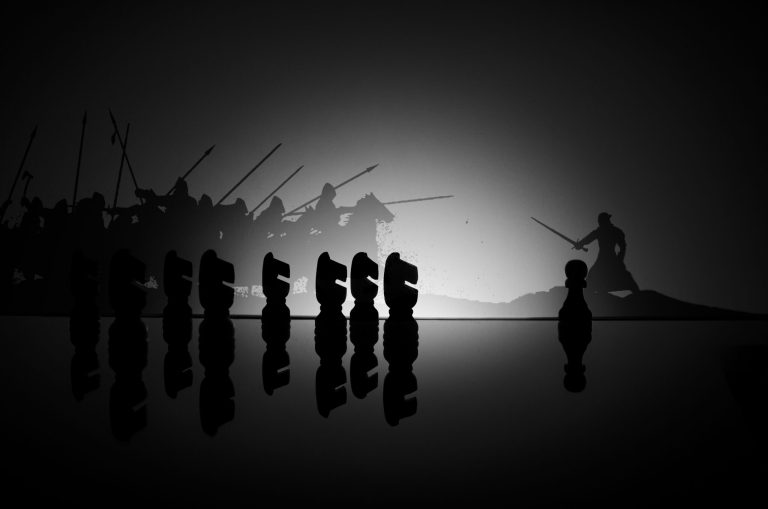
The most effective way to face life’s challenges is not always to attack them alone. Sometimes facing the problem means admitting, “I cannot carry this safely without help.” Courage is not the refusal of assistance. Even warriors require a formation.
1. THE INVISIBLE WAR: WHEN THE MIND BECOMES A DARK ROOM
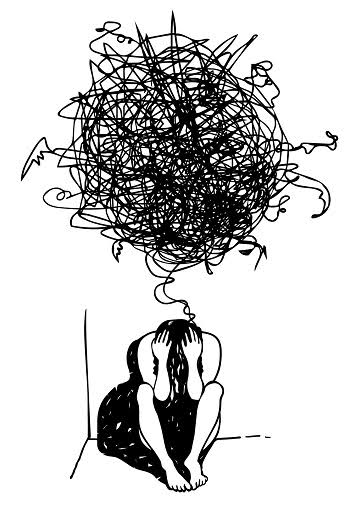
Depression does not always arrive loudly. Sometimes it removes colour one shade at a time.
The person stops enjoying what once gave pleasure. Messages remain unanswered. Bathing, eating, working and leaving the bed begin to require unreasonable effort. Sleep may disappear or become an endless hiding place. The mind slows, yet painful thoughts accelerate. The person feels guilty for being tired, then becomes tired from feeling guilty.
From outside, relatives may say, “But you have everything.” This sentence often increases the pain. A person can have money, family, spiritual knowledge and public respect while the inner system is collapsing. Depression is not an accountant checking whether somebody has collected enough blessings to qualify.
Others say, “People are suffering more than you.” Yes, somebody somewhere is carrying a heavier stone, but that does not remove the stone on this person’s chest. Pain is not healed through competition. If two people are drowning at different depths, neither requires a lecture on who is closer to the ocean floor.
Clinical depression can involve persistent emptiness, hopelessness, irritability, loss of interest, low energy, poor concentration, changes in sleep or appetite, feelings of worthlessness and thoughts of death. Not everyone experiences it in the same way. Some cry constantly. Some cannot cry at all. Some remain productive because work is the last wall preventing collapse. Some become angry because sadness has found armour.
To call all of this laziness is cruelty dressed as advice.
Depression also changes time. A difficult hour feels permanent. The past becomes a museum of regret. The future appears sealed. The present becomes a room without windows. This is why suicidal thinking is so dangerous: it takes a temporary condition, however long it has lasted, and presents an irreversible act as the only reasonable conclusion.
But crises move. Intensity changes. Treatments work. Human connection interrupts isolation. A night that seems endless can still have a morning not presently visible from the bed.
Religious communities can be places of tremendous support. They can provide belonging, practical assistance, ritual, hope and people willing to sit with the suffering. Yet religion becomes harmful when it shames illness. Telling a depressed person that real believers are always joyful does not produce joy; it produces better acting.
The person then hides symptoms to protect the community’s image of faith. He smiles in church, breaks in private and assumes God is disappointed. The community congratulates itself because the prayer appeared successful. Everybody goes home satisfied except the one still fighting for breath.
Atheistic or strictly materialist communities can also fail when they treat the hunger for meaning as childish. A person may understand neurons and still ask why life should be lived. Scientific explanation can describe mechanisms without exhausting meaning. Knowing how music travels through air does not explain why one song makes a grieving person weep.
Neither belief nor unbelief automatically protects a person from depression. Faith can become a strong protective resource, but it is not a guarantee. Intelligence is not a guarantee. Spiritual initiation is not a guarantee. Depression does not stand at the temple door asking to see one’s level of consciousness.
What matters is response.
Facing depression means naming it without shame. It means telling somebody trustworthy what is happening before the mind becomes completely isolated. It may mean seeing a doctor to rule out physical contributors, meeting a licensed mental-health professional, accepting medication when appropriate, changing harmful conditions and building a safety plan for dangerous hours.
It also means refusing spiritual bypassing—the habit of using spiritual language to avoid emotional wounds and practical realities. “Everything happens for a reason” can be comforting, but it can also silence grief. “Raise your vibration” may sound advanced while leaving trauma untreated. “You chose this before birth” can become an accusation against the suffering.
Within my metaphysical understanding, the Soul may enter embodiment carrying purposes, lessons and karmic relationships. But no human being possesses enough knowledge to tell every depressed person, with certainty, that they personally selected each abuse, illness or tragedy. Such a teaching must produce compassion and responsibility, never blame.
If a Soul chose a difficult classroom, helping the student is not interference with the lesson. Perhaps your compassion is part of the curriculum.
2. CURSED BY KNOWLEDGE: WHEN SEEING BECOMES A BURDEN

Knowledge is usually presented as freedom, and often it is. Knowledge breaks manipulation, exposes lies and gives language to what fear once kept hidden. But knowledge also takes away certain forms of innocence. Once you have seen behind the curtain, you cannot honestly return to believing the shadows are the whole performance.
Ancient stories understood this price.
Cassandra was given knowledge of coming events but cursed so that her warnings would not be believed. Prometheus brought fire—symbol of knowledge and civilization—to humanity and suffered for it. In the Eden story, eating from the tree of knowledge opened the eyes of the first humans, but the opening brought shame, responsibility and exile from unconscious innocence. In the mysteries, wisdom is rarely handed over like a birthday gift. Somebody pays through sacrifice, solitude or transformation.
This is why I sometimes say that I am cursed by knowledge.
I do not mean that knowledge is evil or that some deity placed an angry spell upon my head. The curse is the burden of perception. It is knowing what others do not see, sensing what may be approaching and carrying impressions that cannot be easily explained. It is looking into a person’s situation and becoming aware of suffering, betrayal, collapse or even death—then discovering that awareness is not the same as power.
There are truths one can use to help. A warning may inspire medical attention, caution, reconciliation or a wiser decision. But there are other moments when every possible intervention appears woven into the event itself. The knowledge does not provide a clean exit. It only reveals part of a pattern whose full design remains beyond the seer.
Imagine that a man dreams or receives a vision that he will suffer a road accident. Terrified, he decides not to leave his house for one entire week. He refuses work, ignores calls and believes he has defeated fate. Nothing happens during that week, and he congratulates himself.
But because he remains absent without explanation, he loses his job. Two weeks later, financial pressure forces him to search urgently for employment. An opportunity takes him to another town he would never have visited if he still had his former work. On that unfamiliar road, the accident occurs.
His attempt to escape the vision becomes one of the causes that carries him toward it.
This is a spiritual parable, not proof that every dream predicts a fixed future. A vision may be literal, symbolic, psychological, intuitive, mistaken or shaped by fear. Sometimes the accident represents a collision in career, relationship or identity rather than a physical crash. Sometimes anxiety presents itself in prophetic clothing. Discernment is therefore essential.
If every disturbing image becomes an unquestionable command, intuition turns into a tyrant. The mystic may abandon work, relationships and ordinary responsibility in an attempt to obey possibilities that were never certainties. He can manufacture self-fulfilling prophecies while believing he is escaping fate.
The wise response to a warning is measured action. Drive carefully. Repair the vehicle. Avoid intoxication and reckless speed. Rest before travelling. Inform somebody of the concern without terrifying them. Then continue living. Precaution is wisdom; surrendering one’s entire life to fear is another accident.
The curse of knowledge also appears through empathy. Some people enter a room and feel the sorrow others are hiding. They notice the silence beneath laughter, the fatigue inside anger and the farewell concealed in an ordinary sentence. Whether we call this sensitivity, intuition, pattern recognition or spiritual perception, it can become exhausting.
The sensitive person begins carrying emotions that do not belong entirely to him. He feels responsible for saving everyone. When he cannot, guilt enters. He asks, “If I saw it, why could I not prevent it?”
But perception is not omnipotence.
Seeing a storm does not make one the ruler of the weather. A doctor may recognize a serious illness and still be unable to guarantee recovery. A counsellor may see danger and do everything ethically possible, yet another person retains free will. A mystic may receive an impression but lack the full context, timing or meaning.
Knowledge becomes poisonous when it joins the illusion of total responsibility. You may warn, guide, pray, intervene lawfully, encourage treatment and remain present. You cannot control every choice, every road, every body and every outcome. The Source did not place the entire universe in one nervous system.
There is another sorrow in knowing too much: the truth about human nature. One begins to see how love can contain control, how charity can hide vanity, how religion can become business and how people often defend lies that keep them comfortable. The awakened person sees the machinery beneath the social smile.
At first this can feel like liberation. Later it may feel lonely. You cannot discuss every perception because others may think you are negative, proud or unstable. You begin editing yourself to remain socially acceptable. The mouth smiles while the inner witness stands apart, tired from seeing contradictions nobody wants named.
This is the dark side of knowledge: not that truth is wrong, but that the human heart needs time, companionship and discipline to carry it. Wisdom is not measured only by what you can perceive. It is also measured by what you can hold without being destroyed—and what you can release because it was never yours to govern.
3. WHY AWAKENING CAN FEEL MORE PAINFUL THAN IGNORANCE
People often imagine spiritual awakening as permanent happiness. They picture white garments, peaceful music and a person smiling gently while the universe sends convenient signs. But genuine awakening can begin as demolition.
Old beliefs collapse. Relationships change. Ambitions lose their flavour. The seeker sees how much of his identity was assembled from fear, family expectation, religion, social approval and the desire to appear successful. What once provided certainty no longer works, yet the new foundation is not complete.
This interval is sometimes called the dark night of the Soul or a spiritual emergency. It can involve grief, confusion, isolation, altered meaning and intense questioning. Such experiences may be spiritually significant, but they can also overlap with depression, trauma, anxiety, mania or psychosis. The label awakening must never be used to dismiss symptoms requiring professional assessment.
It may be both a spiritual transformation and a mental-health crisis. Human experience is impolite enough to carry two truths at once.
Why, then, do some awakened people appear more depressed than those who live without such questioning?
First, awareness removes anaesthesia. A person who accepts society’s definitions without question may find ready-made meaning: get educated, earn money, marry, buy property, raise children and repeat. There is nothing wrong with these things. But the awakened seeker asks, “Is this all? Who am I beneath the roles? What survives death? Why does suffering exist? What is freedom inside a world governed by cause and effect?”
These questions can enlarge consciousness, but they also disturb sleep.
Second, awakening increases sensitivity to injustice. The seeker sees poverty beside luxury, religious manipulation beside desperate faith, ecological destruction beside speeches about development, and loneliness hidden beneath constant digital connection. What others dismiss as normal begins to feel unbearable.
Ignorance can operate like an anaesthetic. But anaesthesia is not peace; it is the temporary absence of sensation. Awakening restores sensation before it teaches the Soul how to endure what is felt.
Third, the awakened person may lose belonging. Friends no longer understand the questions. Family members fear changed beliefs. Religious communities may accuse the seeker of rebellion. New spiritual circles may be filled with competition, grand titles and people who discovered the secrets of the cosmos last Tuesday.
The seeker stands between worlds—unable to return fully to the old identity, not yet rooted in the new. This spiritual homelessness can deepen depression.
Fourth, knowledge can create superiority, and superiority creates isolation. The awakened person begins calling everyone else asleep, ignorant or low-vibrational. He interprets disagreement as proof of another person’s unconsciousness. Soon he has protected his awakening from the dangerous inconvenience of human relationship.
This is not enlightenment. It is the ego wearing a star-shaped crown.
Real awakening increases compassion. The ignorant person is not an inferior species. Every Soul unfolds through different experiences and timing. Some people who never use mystical language possess extraordinary wisdom, kindness and emotional stability. Some people who speak daily about dimensions cannot apologize for one ordinary mistake.
There is no reliable evidence that spiritually awakened people as a group are clinically more depressed than everyone else. But religious and spiritual struggles are associated with mental-health distress, and spontaneous awakening experiences can sometimes be difficult to integrate. Therefore, the responsible teaching is not “the awakened are doomed to sadness.” It is that expanded awareness requires integration.
Integration means bringing insight into the body, relationships, work and daily conduct. Eat. Sleep. Pay attention to health. Maintain boundaries. Do useful work. Laugh. Keep friends who can speak honestly. Let wisdom enter ordinary life instead of floating above it.
The awakened person also suffers from social comparison. He sees classmates buying a Mercedes, marrying, building homes and announcing success online. His own life appears delayed. Depression whispers that everybody has reached the promised land except him.
But social media is a theatre that sells selected scenes as complete lives. The new car may exist beside debt. The beautiful marriage photograph may stand in front of private misery. The celebrated entrepreneur may be terrified. And yes, some people are genuinely flourishing. Their progress is not evidence of your failure.
Do not minimize your pain by saying others are dead or more unfortunate. Use comparison only to restore proportion, not to shame yourself. Gratitude and grief can occupy the same body. You can appreciate what remains while still seeking help for what hurts.
Awakening does not require pretending the material world is meaningless. Money, shelter, safety, companionship and purposeful work matter. The mistake is treating material success as the entire purpose of incarnation. A wealthy personality can remain spiritually undeveloped; a spiritually curious person can still need rent.
The Soul may seek evolution, but the body requires breakfast. Enlightenment has yet to negotiate successfully with an empty stomach.
4. TURN ON THE LIGHT: ACCEPTANCE WITHOUT SURRENDER
The phrase face your challenges must be understood correctly. Facing depression does not mean arguing with yourself until you become cheerful. It does not mean suppressing tears, refusing medication or announcing that your vibration is too advanced for therapy. It means turning toward reality with every available resource.
Acceptance is the beginning. Acceptance says, “This is what I am experiencing now.” It does not say, “This is what I must experience forever.” Acceptance removes the second wound—the shame, denial and self-hatred added to the original pain.
Resignation says, “Nothing can change.” Acceptance says, “Change begins from the place where I truly stand.”
If you are clinically depressed, seek qualified help. Psychological treatments and medications can be effective. A doctor can assess symptoms, physical health, medications, substance use and sleep. A therapist can help identify patterns, process trauma, build coping skills and create a safety plan. Spiritual practice may accompany this work, but it should not replace it.
If thoughts of suicide appear, speak plainly. Do not hide behind “I am tired” if what you mean is “I am afraid I may kill myself.” Tell a trusted person. Do not stay alone during immediate danger. Reduce access to anything you could use to harm yourself. Go to a hospital or call emergency services. The objective during a crisis is not to solve the whole meaning of existence before morning. It is to survive the wave.
Waves rise, peak and change.
For those supporting someone, do not preach. Listen. Ask directly whether the person is thinking of suicide; asking does not place the idea in their mind. Take the answer seriously. Stay with them, help remove immediate means of harm and connect them with professional or emergency support. Do not promise secrecy when a life is in danger.
Turn on the Light through practical acts:
- Create a simple daily structure when the mind cannot manage complexity.
- Protect sleep and seek medical help for severe insomnia.
- Eat regularly, even when appetite disappears.
- Move the body gently; a short walk is still movement.
- Reduce alcohol and drugs, which can deepen depression and weaken judgment.
- Limit social media when comparison becomes self-punishment.
- Write down people and places you can contact during dangerous hours.
- Delay irreversible decisions. Make no permanent agreement with a temporary storm.
- Return gradually to meaningful work, creativity, service, Nature and safe community.
Meditation can help, but not every technique is suitable during every crisis. Intense fasting, sleep deprivation, isolation or prolonged practices may worsen instability in vulnerable people. Spiritual discipline requires wisdom. More is not automatically higher.
Prayer can help, but prayer should open the hand toward assistance. If you ask the Divine for rescue and a therapist, doctor, friend or emergency worker appears, do not reject the answer because it arrived without wings.
Within my spiritual worldview, death is not the end of consciousness, and the Soul continues its journey. I also believe that unresolved patterns may return until understanding and transformation occur. But this is metaphysical conviction, not a scientifically established description of what follows suicide. It must never be used to threaten a suffering person with punishment in another life.
The Soul is not condemned for becoming ill.
No one should say, “If you die, you will return to something worse,” as though fear were the best rope with which to pull somebody from an abyss. The stronger message is this: remain because your present mind cannot yet see every future available to you. Remain because treatment may work. Remain because meaning can be rebuilt. Remain because the chapter speaking most loudly is not the entire book.
Years ago, I believed that if I could return twenty years into the past with a clean slate, I would take the same steps and repeat the same so-called mistakes. I understood that my disappointments, failures, wrong decisions and moments of success all contributed to the person I became. They gave me discernment, endurance and a deeper knowledge of human nature.
Today I would add something.
I would not erase the experiences that formed me, but I would meet myself inside them with greater compassion. I would seek help earlier where help was needed. I would not romanticize every wound simply because wisdom later grew around it. The fact that a scar taught you something does not mean the knife was holy.
Suffering can become initiation, but suffering alone does not guarantee wisdom. Some pain deepens a person; some pain simply injures until care arrives. The alchemy is not in the fire alone. It is in how the fire is contained, interpreted and transformed.
You did not come to Earth only to collect material success. Yet you also did not come merely to suffer. Soul evolution includes love, creativity, pleasure, learning, relationship, service, rest and the courage to receive help. The universe is not improved by making misery the only convincing evidence of spirituality.
The world of appearances is not the whole Reality, but your life is real enough to protect. Your pain is real enough to treat. Your body is real enough to feed. Your future is real enough to leave open.
The deepest realization is not that nothing matters because the world is an illusion. It is that appearances change, identities change and conditions change—therefore despair has no right to call itself eternal.
Knowledge may feel like a curse when it reveals what cannot be controlled. But wisdom begins when knowledge learns humility. You do not need to save every person, predict every road or understand every karmic thread. You need to act with compassion where you have power, release what is beyond your authority and remain available to Life.
The darkness is not proof that Light has died. Darkness is the condition in which Light becomes visible.
Turn on the Light by telling the truth about your pain.
Turn on the Light by allowing another human being to sit beside you.
Turn on the Light through medicine when medicine is needed, through therapy when the wound requires language, through prayer when the Soul requires remembrance and through action when life requires rebuilding.
You do not have to carry the entire staircase tonight. Find the next step.
And if you cannot see the next step, call someone who can hold a lamp until morning.
MAN, KNOW THYSELF—BUT DO NOT ABANDON THY SOUL
Blessed Be; with Love and Light.
Written By Knight Fredel
All Rights Reserved © 2019 – 2026
Immediate support
If you may harm yourself or someone else, treat it as an emergency:
- In Nigeria, call 112 or go to the nearest hospital emergency department.
- Do not remain alone; contact a trusted person and state clearly that you are unsafe.
- Move away from weapons, toxic substances, large quantities of medication or anything else you could use to harm yourself.
- Outside Nigeria—or for additional Nigerian crisis services—use FindAHelpline to locate verified support by country.
Editorial reference points
- Depression is a common mental-health condition that can affect mood, interest, sleep, appetite, concentration and functioning; effective psychological treatments and medications exist: World Health Organization.
- Suicide can be prevented through timely, evidence-based interventions, early identification, follow-up care and reduced access to lethal means: World Health Organization.
- Warning signs can include hopelessness, feeling trapped or burdensome, withdrawal, unbearable pain, speaking about death and putting affairs in order: National Institute of Mental Health.
- Nigeria’s 112 national emergency number connects people in life-threatening situations with emergency-response services: Nigerian Communications Commission.
- Research recognizes that religious and spiritual struggles can be associated with mental-health distress; spiritual experiences should therefore be integrated carefully rather than automatically romanticized or pathologized: American Psychological Association and peer-reviewed research on spontaneous spiritual awakenings.












Let men think for themselves………