
FREEDOM: The Door No Saviour Can Open for You – Written

ISSUE 6
Freedom: Created for Awake Afraka Magazine

I see many Black people searching for freedom. They speak of it, pray for it, sing about it, march for it and argue about it on social media with the energy of people who have already packed their bags for the promised land.
Yet many of the same people refuse to release the chains holding them back.
This is the strange comedy of bondage: the prisoner cries for freedom while polishing the chain. He complains that the chain is heavy, but becomes offended when you suggest that he remove it. It has been with him for so long that it now feels like protection. It tells him what to think, whom to fear, which master to trust and which questions he must never ask. The chain has become familiar, and familiarity is often mistaken for safety.
Four hundred years ago, the chains were visible. They were placed around African hands, necks and legs. Iron announced itself honestly. It did not pretend to be education, civilisation, patriotism or salvation. It simply said, “You are owned.”
Today, the chain has been upgraded.
It no longer needs to make noise around the ankle because it has found a quieter apartment inside the mind. It wears a respectable suit. It carries a certificate. It may speak through inherited religion, distorted history, political propaganda, tribal hatred, economic dependence, cultural shame and the belief that salvation must always arrive from somewhere else.
This is mental slavery.
The mentally enslaved person may move freely, vote, own a telephone, run a business and celebrate Independence Day. Yet if another person still defines his history, controls his desires, names his enemies and decides what he is permitted to imagine, then the body may be outside the plantation while the mind remains at work inside it.
Freedom begins when the mind recognises the chain.
1. The Chains That Learned to Hide

Many Africans have refused to open their eyes to the fact that political independence and complete freedom are not the same thing. In Nigeria, we celebrate Independence Day every 1 October. The flag rises. Speeches are delivered. Important people sit beneath decorated canopies while ordinary people watch another annual performance of national confidence.
Nigeria truly received formal independence from Britain on 1 October 1960. That legal transfer of sovereignty was not imaginary, and it was won through the labour of nationalists, workers, thinkers and ordinary people who refused permanent colonial rule. We should honour that achievement.
But we must also possess the courage to say that independence was incomplete.
The flag became independent before the mind did.
The anthem changed, the Union Jack came down and African leaders entered government offices, but many colonial structures remained standing. The borders remained. The civil service remained. The inherited laws, economic arrangements, educational priorities and cultural measurements remained. The new nation received the keys to a house whose rooms had already been designed by somebody else.
We celebrate the day the colonial administrator left the front office, yet we rarely ask who still owns the building, controls the supply lines, determines the price of its resources and writes the manual used to train its managers.
This is where the idea of neo-colonialism becomes useful. Neo-colonialism does not always require a former colonial governor to telephone the president every morning and issue dramatic instructions. Control can work through debt, trade, military agreements, foreign corporate power, control of technology, cultural influence, aid conditions, international finance and local elites whose interests are better aligned with external wealth than with their own people.
The modern puppet does not always need visible strings. Some have learned to move whenever money enters the room.
To say this is not to claim that every African president is personally installed and remotely controlled by a secret colonial office. Such an accusation requires evidence. The deeper truth is more disturbing because it is structural: a leader can be African in face, name and clothing while managing a system that continues to drain African life.
The old colonial master wanted land, minerals, labour and obedience. If the same resources still leave the continent while the people remain poor, then changing the skin colour of the administrator has not completed liberation. The whip may be absent, but extraction has become electronic and extremely polite.
This is why the celebration of independence must become more than flag worship. A flag is a symbol, not an exorcism. It does not automatically remove corruption, heal self-hatred, rebuild education or free an economy. If waving cloth were enough to produce liberation, fabric sellers would be the greatest revolutionaries on Earth.
Mental slavery survives because it teaches the oppressed to admire the standards of the oppressor. The African learns to distrust his own language, spiritual knowledge, appearance, medicine, history and community. He may believe that intelligence must carry a foreign accent. He may treat African knowledge as superstition until a foreign university publishes it, gives it a complicated name and sells it back to him.
We reject our ancestral symbols, then purchase the same symbols from an international fashion company at four times the price. Apparently the problem was never the symbol. It simply lacked foreign packaging.
Religion has also participated in this confusion, but the matter must be understood properly. Judaism, Christianity and Islam were not invented by the British Empire. Judaism is ancient; Christianity emerged many centuries before modern Britain; Islam arose in seventh-century Arabia and had entered parts of Africa long before European colonial rule. History should not be forced to confess to crimes it could not possibly have committed.
However, empires and ruling powers have repeatedly used religion as an instrument of control. European colonial systems often worked alongside Christian missions. Political authorities have also used Islam, Christianity and traditional religion to organise loyalty, justify hierarchy and divide communities. The problem is therefore not simply the existence of religion. The problem is religious indoctrination—the surrender of reason, culture and conscience to an authority that claims to speak for heaven.
A sacred book may become a lamp in the hands of a seeker and a chain in the hands of a controller. The words may be the same. The intention is not.
The mentally enslaved person is trained to believe that everything inherited from his conqueror is holy while everything inherited from his ancestors is demonic. He is taught to look towards the same civilisation that diminished him for the definition of God, history, beauty, intelligence and lawful existence. He is permitted to pray for freedom, provided the prayer never questions the structure of the prison.
This is why people can cry for liberation on Monday and defend their chains on Tuesday. They desire relief from the pain of bondage, but not the responsibility that freedom demands. They want the prison improved. They want the walls painted. They want a kinder warder and perhaps better Wi-Fi. What they do not want is the frightening open space beyond the gate, where every step becomes their own decision.
Freedom is attractive from a distance. Up close, it comes carrying responsibility.
The free mind cannot blame a master for every choice. It must think, investigate, build, fail, learn and rise. It must accept the burden of becoming its own authority. Many people secretly prefer dependence because dependence provides someone to obey and someone to blame.
This is the hidden chain: the fear of standing without a master.
2. When the Saviour Becomes Another Master
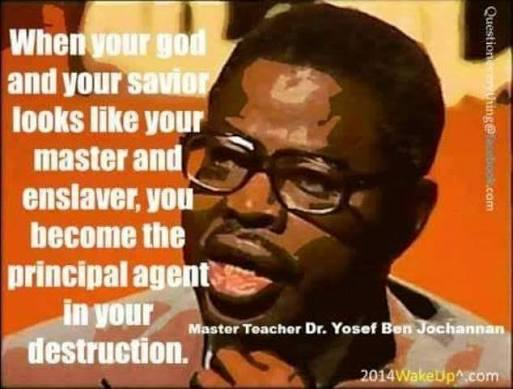
My people continue to search for a saviour. They wait for a political messiah, a religious redeemer, a military hero, a revolutionary voice or a mysterious strongman who will appear, defeat every enemy, repair the nation and carry everyone into the promised land.
This expectation is itself a form of slavery.
I cannot free another human being. No Mystery Teacher, Light Worker, president, prophet or freedom fighter can manufacture freedom inside a mind that refuses to release bondage. One may help, teach, protect, organise and illuminate. But the final act of liberation belongs to the person being liberated.
A true freedom fighter shows you the door and places the key in your hand. He explains the nature of the lock. He may stand beside you while your hands tremble. But he will not insist that only he can turn the key. The moment one man declares himself the exclusive owner of your liberation, he is no longer leading you out of slavery. He has discovered a business opportunity.
Beware of any leader who says, “Without me, you are nothing. Without me, the movement dies. Without me, the promised land disappears.” Such a man has not built a free people. He has built a congregation around his personality.
If an entire people cannot think when one leader is absent, they are not yet free. They have simply placed all their mental furniture inside one man’s head.
The false freedom fighter needs worship. His face appears on every banner. His words cannot be questioned. His mistakes are redefined as strategy. If he contradicts himself, followers announce that ordinary minds cannot understand his wisdom. If innocent people die, they become useful symbols. If he becomes comfortable while they suffer, they are told that sacrifice is necessary.
The true teacher behaves differently. He does not create dependence. He trains people to outgrow their need for him. He does not become the door; he helps them recognise the door. He does not demand that their spiritual sight end at his face.
This is why any person who claims that he alone was called to save you must be examined carefully. The claim may sound heroic, but concealed behind it may be hunger for power, money, fame or historical importance. The costume of liberation has covered many private ambitions.
The fraudster understands a simple weakness in human nature: suffering people are eager to believe anyone who speaks confidently about rescue. A person who has been lost for a long time may follow the first stranger who points dramatically towards a mountain, even when the stranger has never climbed it.
The modern saviour arrives with powerful slogans. He identifies an enemy, promises restoration and tells the people that doubt is betrayal. The crowd begins to surrender individual judgment. Soon, they are no longer seeking freedom; they are defending the leader’s interpretation of freedom.
This is how one prison becomes another.
A promised land into which you are carried unconscious is not your promised land. It is another prison yard with improved scenery.
If a leader must silence you to liberate you, he is not liberating you. If a movement requires you to hate everyone outside it, the movement has not broken your chains; it has merely painted them in national colours. If a religious teacher says you cannot hear the Divine without passing through him, he has placed himself between your soul and its Source and begun charging spiritual customs duty.
Real freedom does not forbid questioning. It becomes stronger under examination.
This does not mean every leader is fraudulent or that organisation is unnecessary. Communities need leadership, discipline and shared direction. A door may be visible, yet people still require cooperation to reach it. The danger begins when leadership becomes ownership.
The true leader builds structures that survive him. The false leader builds emotional dependence that collapses without him. The true leader teaches principles. The false leader distributes loyalty tests. The true leader wants awakened companions. The false leader prefers obedient followers because awakened people ask inconvenient questions—and inconvenient questions have ruined many profitable miracles.
Freedom therefore begins with reclaiming the power to question even those we admire. Respect is not worship. Loyalty is not blindness. Unity is not the burial of individual thought.
The Light Worker can raise the lamp. He cannot force another person to open his eyes.
3. Biafra, Borrowed Identity and the Danger of Political Messiahs
The modern Biafran movement offers a powerful example of why genuine grievances must never be allowed to become a substitute for personal discernment.
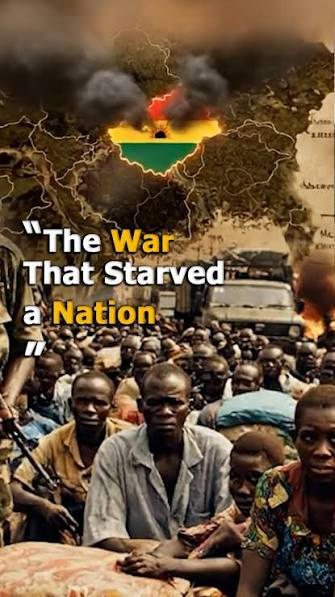
The pain behind Biafran agitation is not imaginary. The Nigerian state was created through British colonial amalgamation. The massacres of Igbo people, the declaration of Biafra in 1967, the civil war and the mass starvation and deaths that followed left wounds that did not disappear merely because officials announced that the war had ended. Political exclusion, insecurity, underdevelopment and distrust have continued to feed separatist feeling.
Any honest discussion of Biafra must begin by respecting this history.
Nnamdi Kanu and the Indigenous People of Biafra did not invent every grievance in the South-East. They gave a powerful modern voice to grievances already present. Many people followed because they felt unheard, humiliated or abandoned by the Nigerian system. To dismiss them all as foolish is another form of intellectual laziness.
The deaths surrounding pro-Biafra protests must also be described responsibly. Amnesty International documented that Nigerian security forces killed at least 150 IPOB members and supporters during largely peaceful gatherings between August 2015 and August 2016. Those killings cannot honestly be blamed upon the victims because they listened to the wrong leader. The officers and institutions responsible for unlawful violence must answer for their actions.
A seeker of truth must be capable of holding two thoughts at once: the state may commit grave injustice, and a movement opposing the state may still contain dangerous leadership, poor strategy or manipulative rhetoric. Condemning one does not require worshipping the other.
This is where many minds become trapped. They imagine only two available positions. Either the government is right and every agitator is evil, or the agitator is sacred and every criticism is betrayal. But truth does not wear a party uniform.
Nnamdi Kanu became a messianic figure to many followers. His speeches mixed political grievance, promised liberation, religious symbolism and the idea that the Igbo possess a special Israelite destiny. In 2018, after disappearing from public view following a military operation around his home, he reappeared in Israel and publicly said he owed his survival to the Jewish state. Many followers remained in Nigeria, still facing arrests, bullets and uncertainty.
This contrast naturally produced questions, and questions should be allowed. A leader who asks others to face danger must be answerable for the strategy exposing them to it. Followers must never surrender their right to ask whether a movement protects life, builds institutions and moves realistically towards its declared goal.
But questioning does not give us permission to invent evidence. There is no reliable public proof that Nnamdi Kanu was secretly paid by colonial powers to stage the Biafran struggle. Repeating such an accusation as fact would reproduce the very mental slavery this article opposes—the surrender of evidence to emotional certainty.
We do not need an invisible conspiracy when visible words, decisions and consequences are already available for examination.
Judge a leader by what he teaches. Judge the movement by what it builds. Judge the strategy by whom it protects and whom it sacrifices. Ask whether followers are becoming more intelligent and independent or more emotionally dependent upon one voice.
The connection between Igbo identity and Judaism must also be approached with knowledge. Nnamdi Kanu did not introduce the idea from nothing. Scholarly research traces Igbo claims of Jewish ancestry in written sources to the eighteenth century, while identification intensified during and after the Nigerian Civil War. Kanu later amplified this identity and joined it more closely to separatist politics.
Whether the Igbo possess ancient Israelite ancestry remains debated and cannot be settled by political enthusiasm alone. Cultural similarities may be meaningful, but similarity is not automatically proof of direct descent. A people searching for identity must investigate history, language, archaeology, genetics, oral tradition and spiritual memory without forcing every piece of evidence to bow before a desired conclusion.
There is nothing wrong with an Igbo person choosing Judaism as a spiritual path. Freedom includes the right to seek the Divine according to conscience. The danger begins when a new identity becomes another instrument of inferiority—when an African feels he must descend from somebody outside Af’raka before he can consider himself sacred.
Why must greatness always arrive through foreign ancestry?
If you can respect yourself only after declaring that your ancestors came from Israel, Egypt, Europe or another distant land, then the old chain may still be present. It has simply purchased a new passport.
The British did not create Judaism. They did not create Christianity or Islam. The modern State of Israel was established in 1948 after a long and complicated history involving Jewish nationalism, Arab resistance, the British Mandate, international diplomacy, war and the United Nations. The creation of a modern state is not the creation of an ancient religion. Confusing the two may sound dramatic at a gathering, but history will sit quietly in the corner and refuse to cooperate.
It is true that British power helped shape the modern Middle East and drew political boundaries whose consequences continue. It is also true that British colonialism combined territories to create Nigeria. But Biafra was not invented recently as a simple British theatre for depopulation. The Biafran project emerged from Nigeria’s political crisis, ethnic violence, military coups and the attempted secession of the Eastern Region in 1967.
External powers may exploit local conflicts. Arms dealers profit when brothers fight. Foreign governments may support whichever side serves their interests. Political actors may manipulate grief, identity and fear. These dangers are real. Yet we must investigate them specifically, not turn suspicion into a universal explanation.
The spiritual lesson is larger than Nnamdi Kanu, IPOB, Nigeria or Biafra. Any movement can become another chain when followers replace self-knowledge with leader-worship. A people may leave one master only to kneel before a flag, an ideology or a heroic voice on the radio.
True self-determination requires more than drawing a new border. If the minds inside the new country remain governed by tribal hatred, borrowed identity, corruption, religious control and dependence upon a supreme leader, then the prison has not disappeared. It has merely opened a branch office.
Freedom must be built inside the people before it can survive inside the state.
4. The Key Is Already in Your Hand
How can you free people who do not want to be free?
Yes, they cry every day on social media and in the streets. They complain about leaders, poverty, foreign influence, religion and corruption. But complaint is not always a sign of readiness. A prisoner may hate the discomfort of the cell while still fearing the responsibility beyond it.
Many people are not prepared to release the chain because the chain gives them identity. It tells them which tribe is superior, which religion owns God, which politician is a messiah and which foreign culture should be copied. Without those instructions, they would have to meet themselves—and self-knowledge is often more frightening than oppression.
When will our people believe in themselves?
When will we stop looking upward towards a master or outward towards a saviour? When will we understand that the promised land is not a gift one powerful person carries in his pocket?
No one will save you in the manner you have imagined.
Others may assist you. Ancestors may inspire you. Teachers may educate you. Leaders may organise you. Friends may support you. The Divine Light may illuminate your path. But none can perform the inner decision by which a human being becomes free.
If you want freedom, you must first recognise the chain holding you. Name it honestly. Is it fear? Is it religious indoctrination? Is it tribal hatred? Is it cultural shame? Is it dependence upon a political hero? Is it economic helplessness? Is it the belief that your history began in slavery? Is it the habit of blaming everyone while refusing personal discipline?
You cannot break a chain you insist is jewellery.
Once the chain is recognised, seek the key. The key may be education, spiritual discipline, economic cooperation, historical knowledge, media literacy, political organisation, cultural restoration or the courage to ask forbidden questions. Different locks require different keys.
Then open the door.
Nobody can do this final act for you. If another person must remain present forever to keep you free, you are dependent upon that person, and dependence is a quieter form of bondage. The teacher’s purpose is fulfilled when the student can walk without holding the teacher’s garment.
Freedom is not something that can be given; it is something that must be taken.
But understand the meaning of “taken.” It does not necessarily mean bloodshed, reckless confrontation or the sacrifice of young people upon the altar of somebody else’s ambition. Freedom is taken when you reclaim responsibility for your mind. It is taken when you educate yourself, build lawful power, create independent institutions, organise communities and refuse to cooperate with deception.
It is taken when the African supports African enterprise instead of praising self-reliance while sending every coin outward. It is taken when parents teach children complete history. It is taken when citizens demand transparent government and refuse to sell their votes. It is taken when believers seek the Divine without surrendering reason to religious merchants.
Political freedom without economic capacity remains fragile. Economic freedom without mental freedom merely creates wealthy imitators. Mental freedom without moral discipline can produce clever criminals. True freedom must touch the whole being—mind, body, community, economy and soul.
To become free, we must become masters of our craft. This does not mean becoming masters over other people. It means refusing to remain careless with our gifts. Develop skill. Build knowledge. Learn production. Create technology. Protect land. Study law. Understand finance. Preserve language. Organise beyond tribe. A continent that consumes everything and produces too little will continue kneeling before those who control supply.
Prayer without construction will not build sovereignty.
Another person may help lead you towards the door, but if he carries you through it upon his back, he may later remind you that you owe him your obedience. The promised land then becomes another prison yard because its gatekeeper owns the story of how you arrived.
This is why anyone who claims to “give” you freedom should be examined. Freedom granted from above may be withdrawn from above. Freedom rooted within consciousness becomes harder to confiscate.
The colonial powers formally transferred political authority to African states, yet mental and economic liberation remained unfinished. Religious indoctrination, distorted histories and inherited systems continued doing work that visible chains could no longer perform. The answer is not to reject every foreign idea. Wisdom belongs to no race. The answer is to stop accepting ideas merely because they are foreign and rejecting truth merely because it is African.
A free mind can learn from the whole world without disappearing inside it.
Af’raka must come to the realisation of Self and return to her roots—not by crawling backwards into the past, but by carrying ancient wisdom consciously into the future. Our roots should nourish new branches. Restoration is not costume. It is the recovery of principles: community, sacred responsibility, balance with nature, respect for ancestry, truthful history and knowledge of the Divine within.
The continent must rise beyond tribal rivalry and imported division. Christianity, Islam and traditional spirituality should not become knives handed to neighbours. A person’s path towards the Divine should deepen love, wisdom and responsibility. If religion makes us easier to manipulate, it has become another chain.
The same applies to politics. A movement should awaken citizens, not manufacture worshippers. A leader should increase the intelligence of the people, not become the replacement for it.
I and other Light Workers can offer the key. We can show the door. We can warn you when the chain has disguised itself as a crown. But we cannot cross the threshold on your behalf.
That responsibility remains yours.
Open your eyes. Recognize the chain. Take the key. And open the door.
Walk into your freedom with your consciousness awake, because a sleeping person can be carried from one prison into another without noticing that the walls have changed colour.
Those who have ears, let them hear.
Those who have eyes, let them see.
FREEDOM IS NOT SOMETHING THAT CAN BE GIVEN. IT IS SOMETHING THAT MUST BE TAKEN.
MAN, KNOW THYSELF.
AND LET AFURAKA RISE AGAIN.
Love and Light.
Written by Knight Fredel
Editorial reference points
- Nigeria’s formal independence and the colonial structure from which it emerged: Nigeria Independence Act 1960.
- Documented killings and repression of pro-Biafra activists: Amnesty International—“Bullets were raining everywhere”.
- Nnamdi Kanu’s public reappearance in Israel in 2018 and his statements at the time: AFP report carried by The Times of Israel.
- Historical development of Jewish identification among some Igbo communities: Shai Afsai, “Nigeria’s Igbo Jews,” Anthropology Today.